


Hello fellow Sharks,
The portfolio beat Mr. Market last week and sits at +39.8% YTD, 3.1x the market since inception. If you want to skip straight to the numbers, jump to the Portfolio Update.
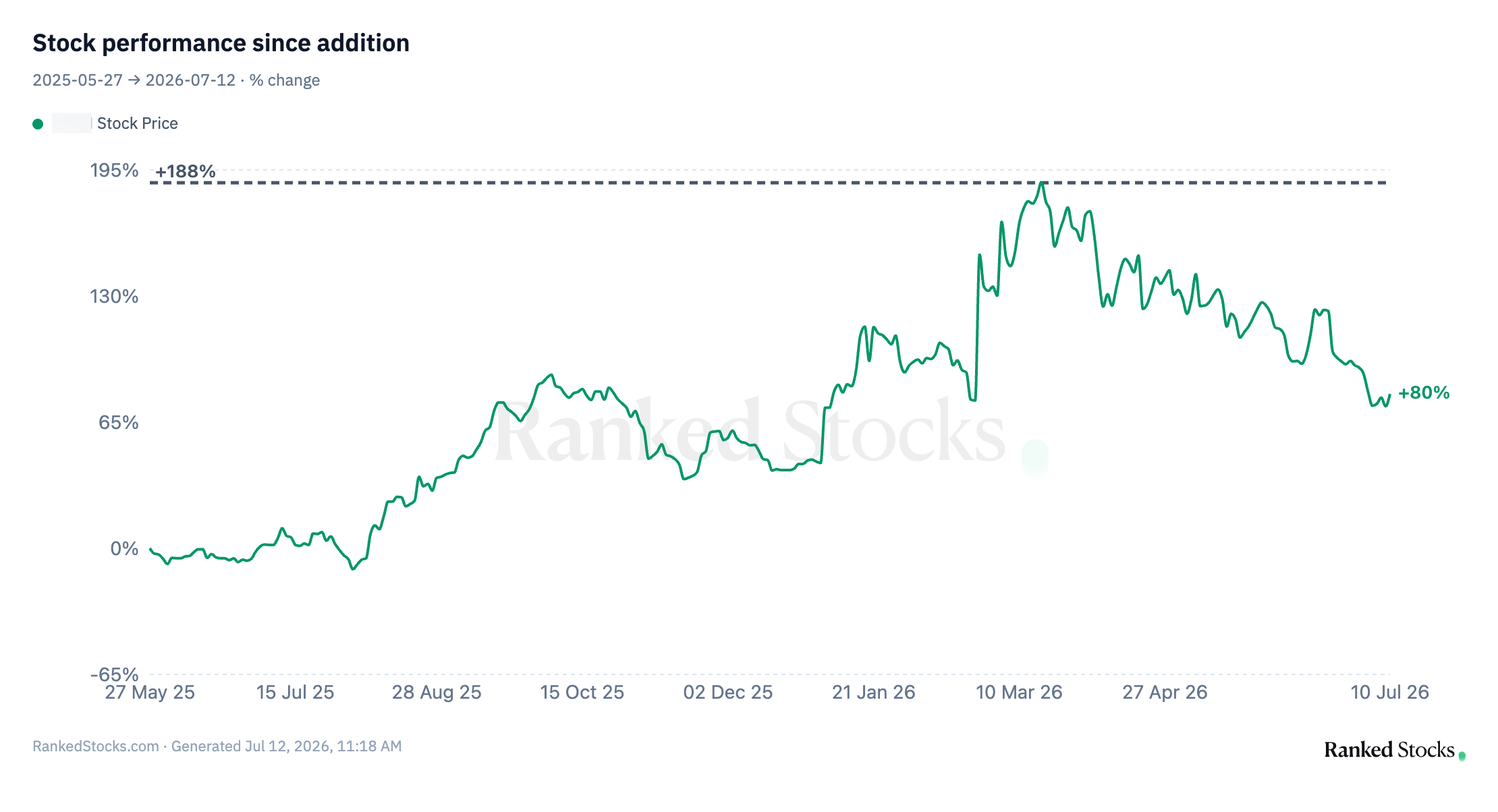
It has been a busy week. The July stock pick is almost done. I have also been refreshing the thesis on the May 2025 pick:

At one point we were up 188% on this position; it has since retracted to a gain of 80%.
A year has passed since my last refresher, so the position is due a second look. That refresher will most likely be available to paid subscribers only.
Some RankedStocks news. I just shipped a great feature: alerts. Any financial site can ping you when a price moves. RankedStocks also alerts you when the RS score or any factor changes: valuation, growth, profitability, sentiment, or outlook. A price alert tells you what the market did; a factor alert tells you the business changed. Only one of those is worth interrupting your day for, and this week’s Thought explains why. And in case you missed it: the whole site is now free.
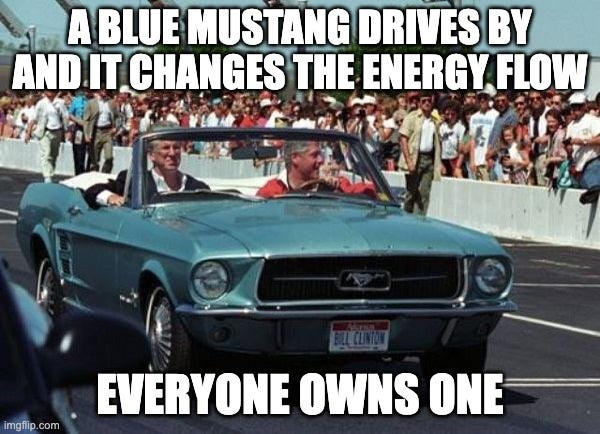
As for the Thought of the Week, these past couple of weeks I have been listening to audiobooks while walking Nagnush. A book I read years ago struck a different chord this time and turned into the best description of Mr. Market I’ve found anywhere, from an author who wasn’t writing about markets at all. It also explains what the Mustang above is doing at the top of this article.
Enjoy the read, and have a great Sunday.
~George
Table of Contents:
Thought Of The Week
The Voice in Your Head Is Mr. Market
You may remember that we all went to Chile in December 2025. In April, my wife, my daughter and I flew back; my mother stayed behind for a bit, and her dog came home with us. Since then I’ve walked him twice a day, every day.
With her, he was used to three or four walks a day. With me, he gets two, because two is what my calendar can give him. I pay down the guilt with distance. We go long, and I fill the hour with audiobooks.
I have a rule for audiobooks. They get two kinds of books: ones I’ve already read and want a refresher on, and ones that seem worth hearing but don’t earn a slot in my few real reading hours. The Untethered Soul by Michael Singer sat in the first bucket. I read it once years ago, filed it under interesting, and moved on.
This time was different. Heraclitus said you never step into the same river twice, because it’s never the same river and you’re never the same man. Books are rivers. While the words hadn’t changed since my first listen, I had.
Maybe it was the state of mind I carried onto the walk: the AI names were correcting, and I had meditated before clipping on the leash, a practice I reinstated a month ago. Somewhere in the second chapter, on a loop around the neighborhood while Nagnush audited every mailbox, it clicked: Singer keeps describing a character I’ve known my whole career.
He was describing Mr. Market.
Every time a passage mapped to markets, I typed a quick note on my phone mid-walk. Back home, I searched each one in my Kindle copy and highlighted it. The indented passages in this article are the highlights.
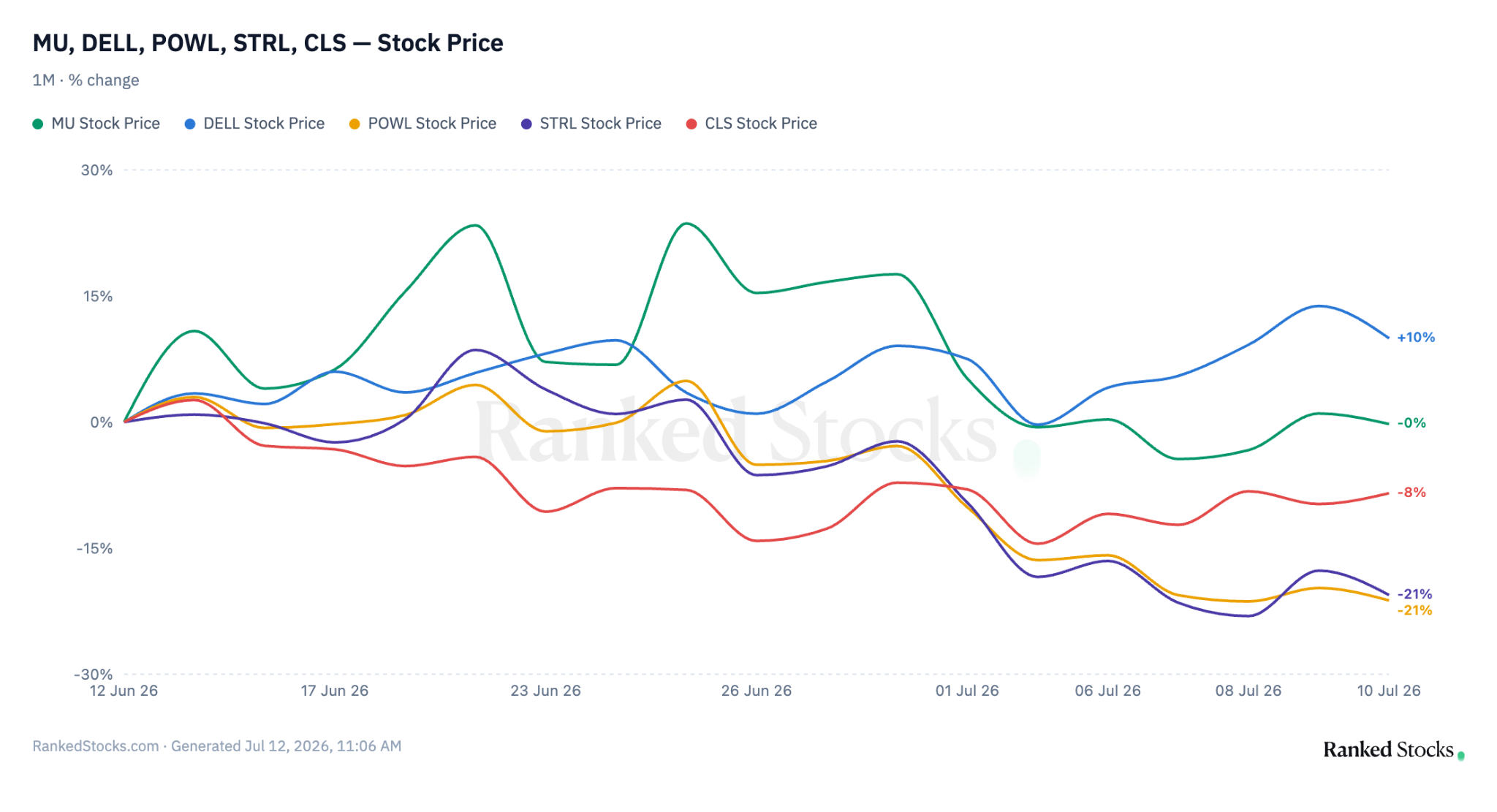
The timing sharpened the whole thing. The portfolio has had a loud few weeks, and the AI-related names have been the loudest: Powell [POWL 0.00%↑], Sterling [STRL 0.00%↑], Micron [MU 0.00%↑], Dell [DELL 0.00%↑], and Celestica [CLS 0.00%↑] all swung hard while their own businesses reported nothing that justified the ride.
The trigger sat in Seoul: Samsung estimated a 19-fold rise in Q2 operating profit, beating expectations, yet the market traded on the worries about what comes next, and the whole complex sold off. I covered why I think the AI cycle itself is intact in Weekly #87.

Weeks like these are when the voice in your head talks the most. Singer’s book turned out to be the best manual I’ve found for understanding what that voice is.
Ben Graham taught us how to handle the madman outside.
Singer explains the one inside.
So this week: what the book says, the places where it describes Mr. Market almost line for line, and how I used it during the swings in our AI names.
The maniac Graham hired
In chapter 8 of The Intelligent Investor, Ben Graham asks you to imagine owning a stake in a private business alongside a partner called Mr. Market. Every day, without fail, he shows up and names a price at which he’ll buy your share or sell you his. Some days the number is sensible. Many days it’s absurd in one direction or the other, because your partner has incurable emotional problems. You’re free to ignore him. He’ll be back tomorrow with a new quote and no memory of yesterday’s.
Most people read that as a lesson about the stock market. Read it again after Singer and you notice what Graham did: he took an emotion that lives inside everyone and moved it outside, into a character, so his students could finally see it.
Now listen to Singer explaining how to get to know the voice in your head:
The way to catch on to what your inner roommate is really like is to personify it externally... Just imagine that another person is now saying everything that your inner voice would say. Now spend a day with that person.
That’s Mr. Market. Graham ran the exact exercise Singer prescribes, six decades earlier. He took the crowd’s inner monologue, gave it a body, and sat it across the desk so we could watch it rave from a safe distance.
Which raises the uncomfortable part. The daily quote on your screen is the sane half of the arrangement. A price is a number that clears buyers and sellers. The mania Graham warned about needs a mind to run on, and the only mind at your desk is yours.
Five places the book describes Mr. Market line for line
1. He never stops quoting. Singer’s opening observation:
In case you haven’t noticed, you have a mental dialogue going on inside your head that never stops. It just keeps going and going.
Swap “inside your head” for “on your terminal,” and you have Graham’s partner. The exchange quotes MU every second of the trading day, whether or not anything happened at the company. The voice quotes your feelings about MU on the same schedule. You’re running two tickers: one for the stock, one for your emotions about the stock.
2. He argues both sides of the same trade.
Notice that the voice takes both sides of the conversation. It doesn’t care which side it takes, just as long as it gets to keep on talking... It will change sides in a moment if that seems to help.
That’s a perfect description of any stock’s price action across a volatile month. At the highs, my voice tells me the memory supercycle is generational and trimming would be a crime. Three red sessions later, on the same facts, the same voice explains that cycles always end and the smart money is clearly leaving. Graham’s Mr. Market flips from euphoria to despair on nothing; Singer shows you the flip happening in-house.
3. He’s wrong constantly and never gets fired. Singer imagines hiring an advisor who gives you the advice your inner voice gives you:
Had you listened to the advisor, you never would have picked up the phone. Wouldn’t you fire them on the spot? ... No, you never hold it responsible for the trouble it causes. In fact, the next time it gives advice, you’re all ears.
One reason I started Beating The Tide was to keep a public record of my picks, with the thesis and the post-mortems attached. A side benefit: the record keeps me honest, and it lets us check the voice’s track record on our own names.
CLS is my favorite example.
The market sold the stock down after earnings beats, three quarters running. I wrote up the pattern in the Q1 déjà vu review…

… and Weekly #66 covered the 12% drop that came with no valid reason attached.

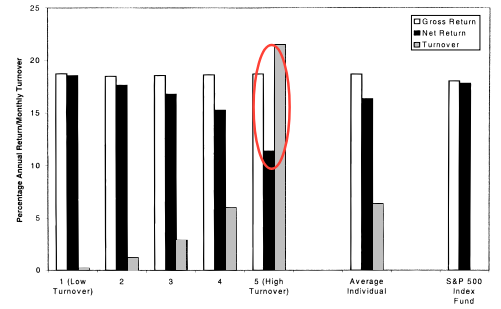
Each drop was a pitch from the voice: something must be wrong, get out. Anyone who took the pitch sold a record-margin business to whoever was doing the arithmetic. The cost of listening is measurable: Barber and Odean studied 66,000 brokerage households and found the most active traders underperformed the market by about 6.5 points a year.
4. He’s loudest exactly when he should be quietest. Singer explains when the voice talks most:
For example, in some cases the mental voice talks for the same reason that a teakettle whistles. That is, there’s a buildup of energy inside that needs to be released.
Volatility is the flame under the kettle. Notice that the voice’s volume tracks your P&L swings, and carries no relationship to the amount of new information. On the days our AI names moved 5% or more, the businesses published nothing. The voice still filed hourly reports, followed by reports from Bloomberg and the rest of the talking heads. I wrote about what the tape looks like at maximum kettle-whistle in Weekly #24, when the VIX hit 45.

5. He narrates instead of informs. This one deserves its own section.
A price is a fact. The story about the price is a choice
My favorite passage in the book is about weather:
You’re walking outside in the winter, you start to shiver, and the voice says, “It’s cold!” Now how did that help you? You already knew it was cold. You’re the one who’s experiencing the cold. Why is it telling you this?
Singer’s answer is the most useful sentence in the book for anyone who owns stocks:
You re-create the world within your mind because you can control your mind whereas you can’t control the world.
MU down 6% is a fact. “The AI trade is unwinding” is narration. The fact arrives from outside and is beyond your control. The narration is manufactured inside precisely because it’s the only part you can control. That’s why narrating feels productive during a drawdown: it converts an uncontrollable price into a controllable story. It also explains the existence of an entire industry. Financial media is the inner voice. The red numbers already announced the turmoil; CNBC airs “Markets in Turmoil” to sell the narration, and demand for narration peaks exactly when the kettle whistles. Markets in turmoil is a broadcast. Minds in turmoil are the audience. I made the broader case for tuning this out in Weekly #23.

The test I now apply to any sentence the voice produces on a red day: does this sentence contain information that the price itself didn’t already give me? “STRL is down 9%” fails the test; I can see the screen. “STRL’s largest end market just cut capex guidance” passes it, and notice that sentences which pass the test come from filings and calls, never from the voice. The voice’s only input is the price.
There is always another problem
Early in the book, Singer makes an observation about the mind that doubles as the most accurate description of market sentiment I’ve read:
Honestly, when was the last time you really had nothing bothering you? Before you had your current problem, there was a different problem. And if you’re wise, you will realize that after this one’s gone, there will be another one.
Run that against our own archive. In the 21 months this newsletter has been tracking them, the market’s problem of the day has been tariffs, then a VIX at 45, then tariffs again, then a Fed nominee, then a war, then another war and now the durability of AI capex. Each one was presented as the reason to wait. Each one passed, and a new one checked in before the old one checked out. The voice runs the same inventory system: it has never once reported that everything is fine, because a mind with nothing to solve is out of a job.
Singer traces this to fear, and to what fear does to the world it looks at:
If you have a lot of fear, you won’t like change. You’ll try to create a world around you that is predictable, controllable, and definable.
In markets, the demand for a predictable, controllable, definable world has a name: waiting for clarity. It sounds prudent. It’s the most expensive habit in investing because clarity is the one product the market prices instantly and fully. By the time the AI capex question is settled, the settlement will be in the quotes. The uncertainty premium is the payment for showing up while the voice still has a problem with inventory. That’s the mechanism behind Weekly #77’s higher-order thinking: the crowd’s first-order fear is the second-order buyer’s margin of safety.

Why a 9% drop can feel like 2008
The book’s deepest idea is the samskara, and it explains something about drawdowns that took me years to learn on the Moneda credit desk. Singer defines it like this:
A Samskara is a blockage, an impression from the past. It’s an unfinished energy pattern that ends up running your life.
His example: years ago, you thought you saw your girlfriend’s light blue Mustang with someone else in it. You never dealt with it, just pushed it down. Five years later, married, happy, driving with your family, a light blue Mustang passes:
Five years ago, for just a few moments, an event took place. You never discussed it with anybody, and now five years later, a light blue Mustang drives by and it changes the energy flow through your heart and mind.
Every market participant is driving around with a garage full of light blue Mustangs. 2008 if you’re old enough. March 2020. The 2022 bear. The position you rode to zero early in your career and never wrote the post-mortem for. Mine includes a Brazilian sugar producer from my junk-bond years that taught me what leverage does to a cyclical, a lesson I paid tuition for in the 2014-15 downcycle.
When a portfolio name gaps down 9%, the pain you feel is a compound object: today’s price plus every unprocessed drawdown in the archive. This is why the emotional intensity of a red open is data about your history rather than data about the company’s future. Once I understood that, the intensity itself became useful. The stronger the urge to act immediately, the more likely it is that a Mustang just drove by, and the less likely it is that anything happened to the business.
The archive stores euphoria too. Singer is careful to point out that good experiences get stuck the same way:
Yes, you store positive impressions too. When a wonderful experience happens to you, it doesn’t make it through because you cling to it.
The positive samskara has its own trading desk. Everyone who watched a friend ride Nvidia [NVDA 0.00%↑] through 2023, or watched our own POWL run, carries a stored flash of that feeling, and the voice replays it every time a hot name gaps up: this one is the next one, get in before it runs. The same discipline applies on both sides: the feeling is archived footage, and the witness asks for today’s documents.
I’ve been victim to this
The recent stretch in MU gave me a live exercise. At its peak the stock was up close to 26% for the month; it finished flat. The rest of the cohort split, as the chart at the top of the article shows: DELL ended up about 10%, while POWL, STRL, and CLS ended down.
I bet your inner voice said at least one of these phrases, if not all of them. Mine did:
“You’re sitting on a 4x in MU. Nobody ever went broke taking a profit.”
“Lock in MU here, buy it back 10% lower, that’s free money.”
“This is how tops start. Remember 2022? It started exactly like this.”
Then I noticed the tell, and it’s the single most useful thing this book did for my process. Every pitch cited the price. None cited the thesis. Nothing about HBM supply agreements, data center backlogs, electrical gear lead times, or a single line from a 10Q. The voice had no new facts about our companies. The week’s one real datapoint was Samsung’s beat, and the voice read a competitor’s record quarter as a warning about the cycle’s future. It was arguing from the tape, and from my archive of Mustangs.
So I did what I always do when the voice gets loud, which is also what I did when the disposition effect nearly cost me my best compounders: I asked the two questions from Weekly #81.

Would I open this position at today’s price? Has anything changed in the thesis? Those questions have a useful property: the voice can’t answer them. They require documents, and the voice doesn’t read.
The thorn, or why protection becomes the problem
Singer’s best parable is about a thorn. Imagine one lodged in your arm, touching a nerve. You have two options: take it out, or make sure nothing ever touches it. He walks through the second option: you thin out the woods so branches can’t brush it, you build a sleeping apparatus, then a full collision-sensing device with wheels and hydraulics. You declare victory. His verdict:
It turns out that the life of protecting yourself from your problem becomes a perfect reflection of the problem itself. You didn’t solve anything.
Portfolios are full of thorn-protection devices. The thorn is the pain of watching a position fall. The apparatus is everything we bolt on to avoid ever feeling it: stop-losses that convert temporary declines into permanent exits (I stopped using them 14 years ago), trimming winners to a size that no longer matters so we can sleep, sitting in cash waiting for clarity that’s never on the schedule, checking the app a dozen times a day so the drop can’t surprise us. Each device is sold as risk management. Each one is the thorn running the portfolio from inside the arm.
The alternative is to pull it out: accept, in writing, that drawdowns are the toll the market charges for multibagger returns. Weekly #64 made this case: no investment is risk-free, and that’s the point.

POWL and STRL only became 1,000% positions because they were allowed to fall double digits along the way without being sold. Every one of those drawdowns touched a nerve.
Let go now, or fall
Chapter 8 contains the closest thing the book has to a trading rule:
When your stuff gets hit, let go right then because it will be harder later.
Singer then describes, step by step, what happens when you don’t, and he might as well be narrating a capitulation. First the disturbance pulls your consciousness in. Then perception distorts:
Now, as you look out through your disturbed energy, everything is distorted by the haze of your disturbance. Things that looked beautiful now look ugly.
Any long-term holder knows that haze. It’s the state where a business you researched for months suddenly looks broken because the stock is down, where record backlog reads as a peak instead of a foundation. And then Singer names the point of no return:
It’s one thing if the disturbance is going on inside of you. But the moment you allow it to express itself, the moment you let that energy move your body, you have descended to another level. Now it’s almost impossible to let go.
In a portfolio, letting the energy move your body has a specific name: a market order at 9:31 on a red morning. The feeling becomes a trade, the trade becomes a fact, and the fact has commissions, taxes, and a hole where a compounder used to be. My standing rule follows directly: no sell decisions while the market is falling. Decisions happen on quiet days.
Companies and investment theses do break.
I closed Heritage [HRTG 0.00%↑] at +20.8% this year and AXIA [AXIA 0.00%↑] on the ADR delisting, and both were sells I stand behind. The difference is the sourcing. A broken thesis cites facts: a delisting, reserve deterioration, a customer walking. The voice cites price. My test: if I can write the sell case without mentioning where the stock is trading, it might be a thesis break, and it gets the full work-up. If the sell case collapses without the price in it, it’s the roommate talking, and the answer is the same one I give him every time.
Unconditional process
Late in the book, Singer asks the reader a single question: do you want to be happy, or do you not want to be happy? The trick is in what comes next. Most people answer yes with conditions attached, and he lists the conditions life will test you with. Read his list closely:
Now, if you say yes, it might happen that your wife leaves you, or your husband dies, or the stock market crashes, or your car breaks down on an open highway at night.
The stock market crash is on the list. A meditation teacher reached for a market crash as one of the four archetypal tests of whether a person meant what they committed to. He understood something most people haven't accepted: the crash is a scheduled examination. The date is unknown; the event is certain.
Singer’s point about happiness converts directly into a point about process. A commitment with conditions attached is a mood. “I’m a long-term investor unless the drawdown passes 20%” describes a person who will sell at the bottom, with extra steps. “I hold quality compounders unless the thesis breaks” only counts if it survives the week the voice screams, which is the one week the commitment exists for. The whole value of a process is delivered in the moments when following it feels wrong. On calm days a process and a mood are indistinguishable; the selloff in our AI names is precisely where they separate.
So the question Singer would ask any of us is the portfolio version of his happiness question:
Do you want to be a long-term owner, or do you want to be one unless it hurts?
The witness has a desk
The book’s core move is a question: if you can hear the voice, who’s listening? Singer:
There is nothing more important to true growth than realizing that you are not the voice of the mind—you are the one who hears it.
He calls that listener the witness. In meditation, you reach it by stepping back. In investing, the written thesis is the witness’s memory. The DCF is its sense of value that doesn’t reprice at 9:30. The 5% position cap from Weekly #79 is its guarantee that no single kettle-whistle can force an action.

The quarterly audit is its calendar, deliberately out of sync with the voice's schedule, which is always now. The journal is where the voice's pitches go to be graded later instead of being executed immediately. Even my RankedStocks scorecard belongs to the witness: a first opinion from a machine with no amygdala attached. The new alerts I just shipped extend the same idea: set them on the RS score or any factor rather than on price, and the machine interrupts you when the business changes, staying quiet when only the quote does.
Note what’s missing from that list: any attempt to silence the voice. Singer is explicit that you’ll lose that fight:
Do not fight it. Do not ever fight your mind. You will never win.
The goal is cheaper than silence. The voice can talk all it wants; it just doesn’t get order-routing privileges. Graham said the same thing about his Mr. Market: you’re free to ignore the quote. Singer adds the part Graham left out, which is that ignoring the quote outside is easy compared to ignoring the analyst inside who keeps repeating it.
Live workout: the voice vs. the witness, name by name
Here’s the exercise applied to the AI cohort, ordered by size of gain. For each: what the voice pitched during the volatility, and what the witness asks instead. The witness’s question is always the same two from Weekly #81: would I buy today, and did the thesis change. I’ll keep the numbers out of this section on purpose; the deep dives and updates linked carry them.
STRL, +1,000% name that has recently retracted to +790%.
The voice’s pitch during the drawdown: “data center construction is the bubble’s ground zero.” The witness’s answer is that we already acted, calmly, months ago: I trimmed STRL when the asymmetry was spent and documented why in the Q1 update. Trimming on valuation during calm is what letting go early looks like in practice. Selling the rest into a red tape would be the fall.

POWL, the second +1,000% name that has recently retracted to +767%.
The voice’s pitch: “a gain like this doesn’t survive a capex pause, take it.” The witness’s read: demand for electrical equipment stretches across data centers, grid hardening, and energy, lead times remain long, and the thesis question is demand durability rather than the tape. I’m holding the unicorn at fair value, a decision made on a quiet day, in writing.

MU, my top pick for 2026.
The inner voice: “memory is cyclical, this is the top, lock the 4x.” The witness’s file says the supply side of this cycle is behaving unlike any prior one and the customers keep pre-paying; I raised the target after Q3 results in Weekly #88, off filings rather than feelings. Volatility in the stock has run far ahead of volatility in the thesis.

DELL, the operator thesis.
The voice hates round-trips: “you’ve watched a 220% gain wobble, protect it.” The witness re-reads the Q1 FY2027 update: the AI server backlog is the largest in the company’s history, and the original mispricing (the market confusing commodity with uninvestable) hasn’t fully closed.

CLS, Mr. Market’s favorite gift shop.
Three post-earnings drops after three beats, and Weekly #54 already showed what happens when we ignore Mr. Market. The voice reads each drop as a verdict. The record reads each drop as an entry that worked.
The middle way
The book closes with the Tao, and regular readers will recognize the shape: it’s the pendulum from Weekly #70.

Singer:
The extremes create their opposites; the wise avoid them.
All-in and all-out are the two extremes the voice loves, because both are dramatic and drama is its product. The middle way in a portfolio is position sizing: sails held neither so loose that the wind is wasted nor so tight that one gust tips the boat. Singer’s sailing image is the best description of sizing I’ve read outside a finance book. Hold the rope just right and the same wind that capsizes the over-levered moves you forward. That’s the whole argument of Weekly #79 in one image.
And one more line from the Tao chapter, which I’m considering framing and hanging in my office 😊:
Remember, whoever remains present with fixity of purpose comes out on top in the end.
Portfolio Update
Last week, the portfolio outperformed Mr. Market, closing some of the ground we lost two weeks ago.
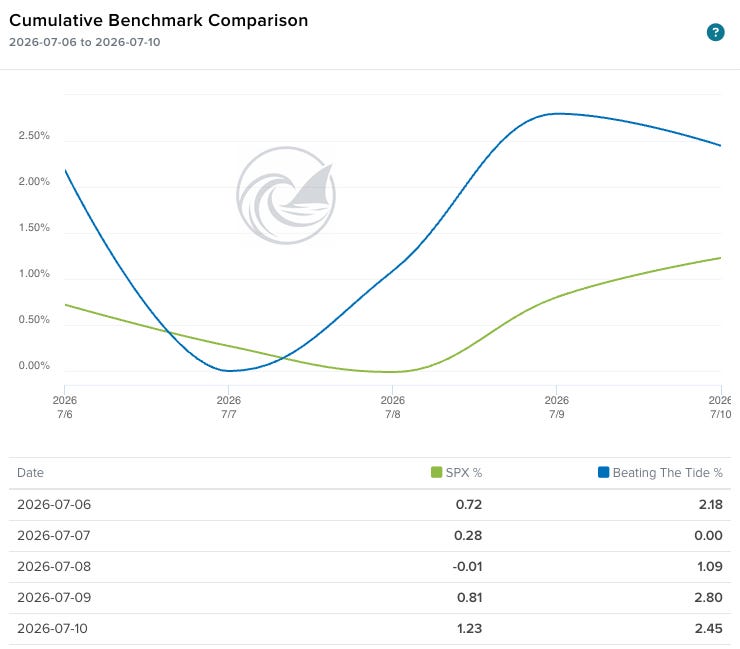
Portfolio Return
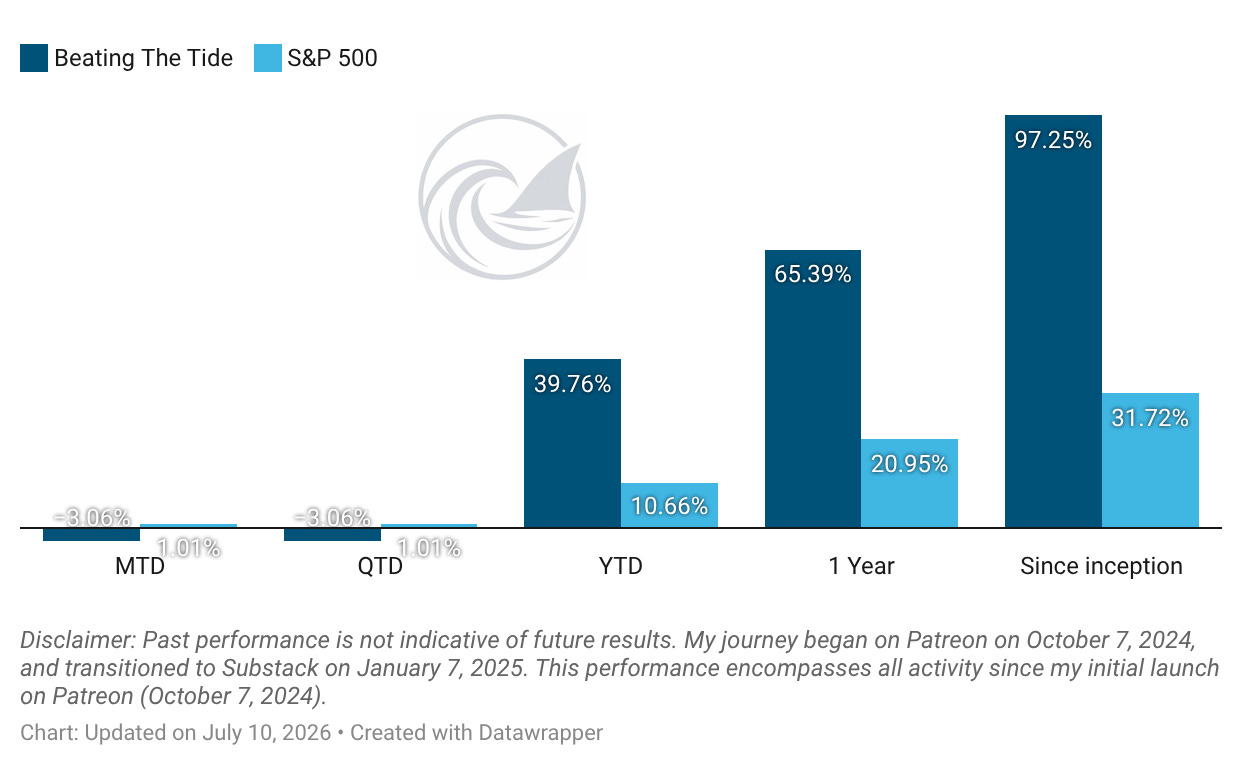
Month-to-date: -3.1% vs. the S&P 500’s +1.0%.
Year-to-date: +39.8% vs. the S&P 500’s +10.7%. That is a gap of 2,910 basis points.
Since inception: +97.3% vs. the S&P 500’s +31.7%. That’s 3.1x the market.
Contribution by Sector

Tech and energy led the gains, partially offset by gold.
Contribution by Position
(For the full breakdown plus commentary on earnings results and the big movers, see Weekly Stock Performance Tracker)
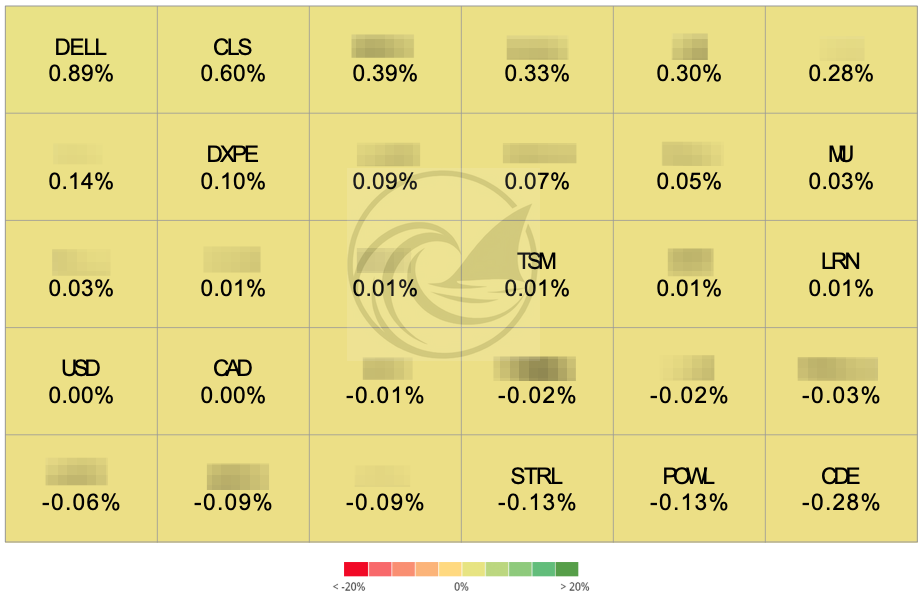
+89 bps DELL 0.00%↑ (Thesis)
+60 bps CLS 0.00%↑ (TSX: CLS) (Thesis)
+10 bps DXPE 0.00%↑ (Thesis)
+1 bps TSM 0.00%↑ (Thesis)
+1 bps LRN 0.00%↑ (Thesis)
-13 bps STRL 0.00%↑ (Thesis)
-13 bps POWL 0.00%↑ (Thesis)
-28 bps CDE 0.00%↑ (Thesis)
That’s it for this week.
Stay calm. Stay focused. And remember to stay sharp, fellow Sharks!
Further Sunday reading to help your investment process:
thx for the open ranker and methodology !
is there a concept that given some RS score + components, zero or near0 narrative needed?
(everything green, or some such, implies x% weight at cost)
but keep the narratives coming!