


Hello fellow Sharks,
Even as the S&P 500 slipped further last week, our portfolio regained ground continuing to widen the gap. Since inception, it has delivered 3.3x the S&P 500. If you want to skip straight to the numbers, jump to the Portfolio Update.
The Thought Of The Week is in response to several questions you sent me this week. I hope this covers most of what you are looking for. If you have any pending questions, please let me know.
The reality of war is that it is fundamentally uncertain. We don’t know if Operation Epic Fury will end in a few weeks or if it will drag on for years. To be fair, when the Russia-Ukraine war began, I thought it would take a few weeks. I obviously got that very wrong.
For my March stock pick, I have been analyzing an energy company. You would think a company in this sector would thrive as oil prices spike, but the stock has actually been dropping as the conflict in Iran progresses.
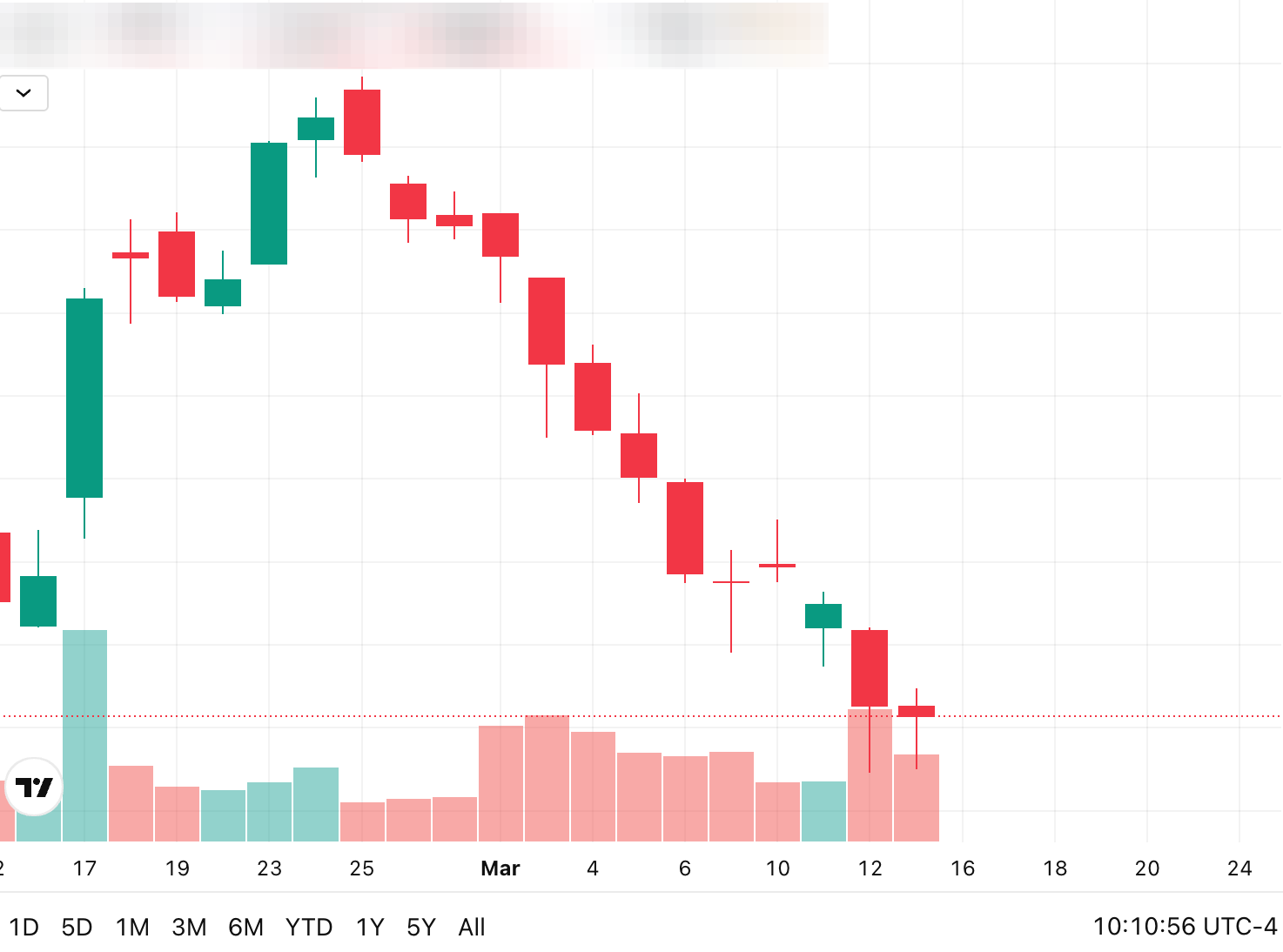
This is because the company operates primarily in the MENA region. I have questioned if this is the right move given the current instability. Still, I have to remind myself that history shows wartime is often constructive for stock returns over the medium and long term.
Enjoy the read, and have a great Sunday.
~George
Table of Contents:
New Feature: You Can Rank Your Portfolio On www.RankedStocks.com
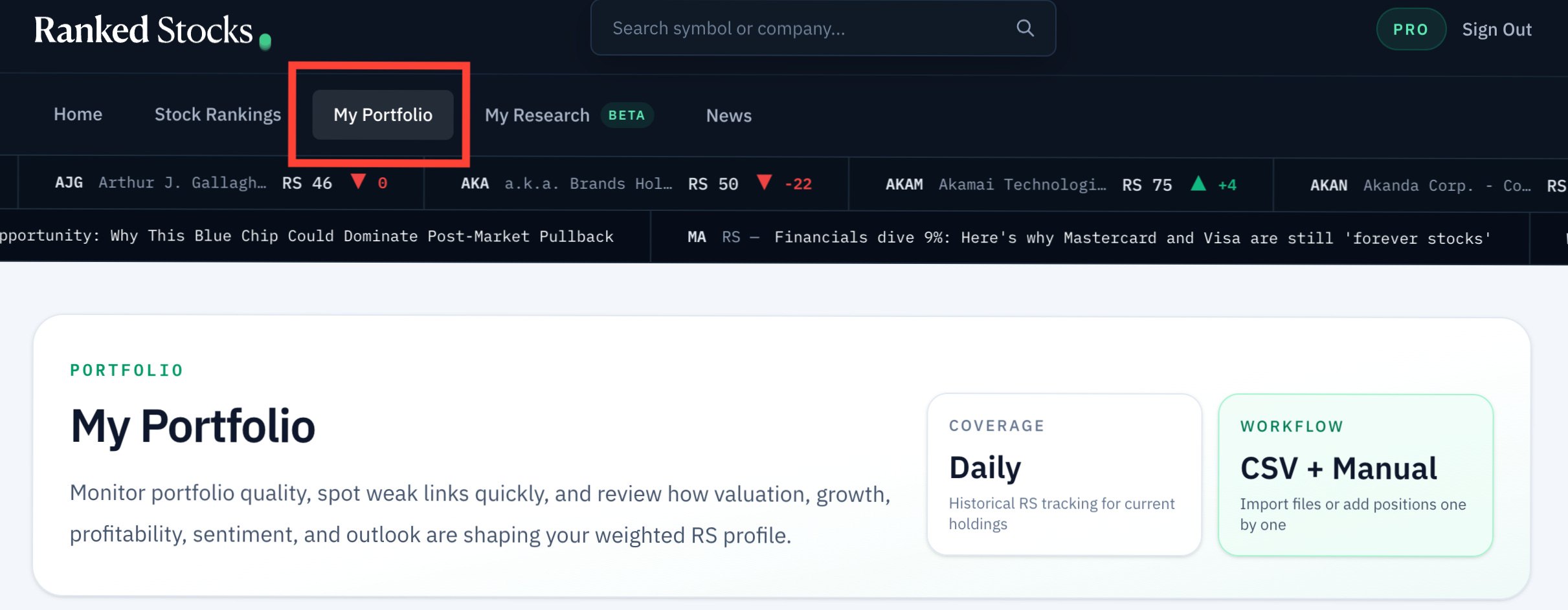
This week, we shipped one more feature at Ranked Stocks. My objective is to make Ranked Stocks the ultimate research tool for stock investing. Now you can upload your portfolio to Ranked Stocks and have it ranked!
Just go to the My Portfolio tab at the top of the page.
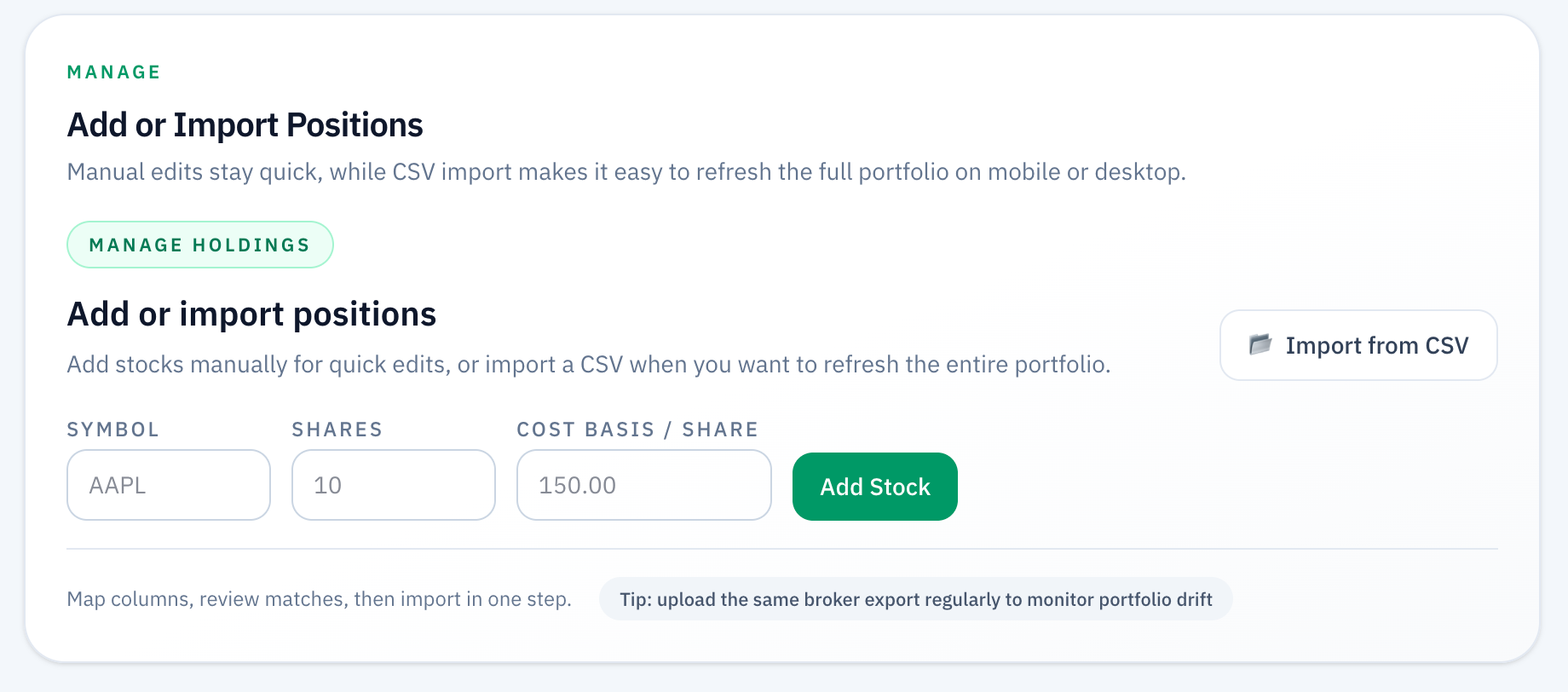
Then at the bottom of the page, you can upload a CSV with your holdings or add them manually.
1. Rank Your Portfolio
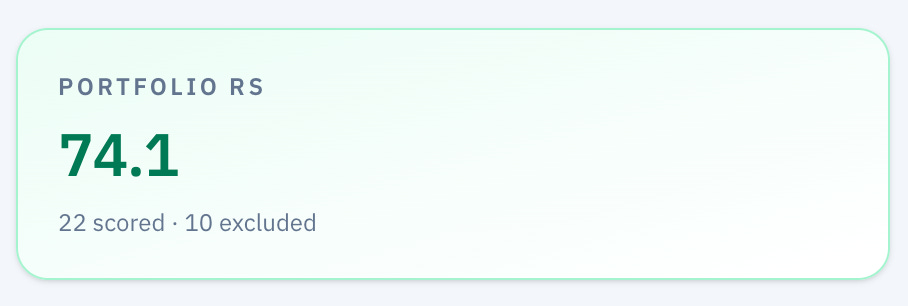
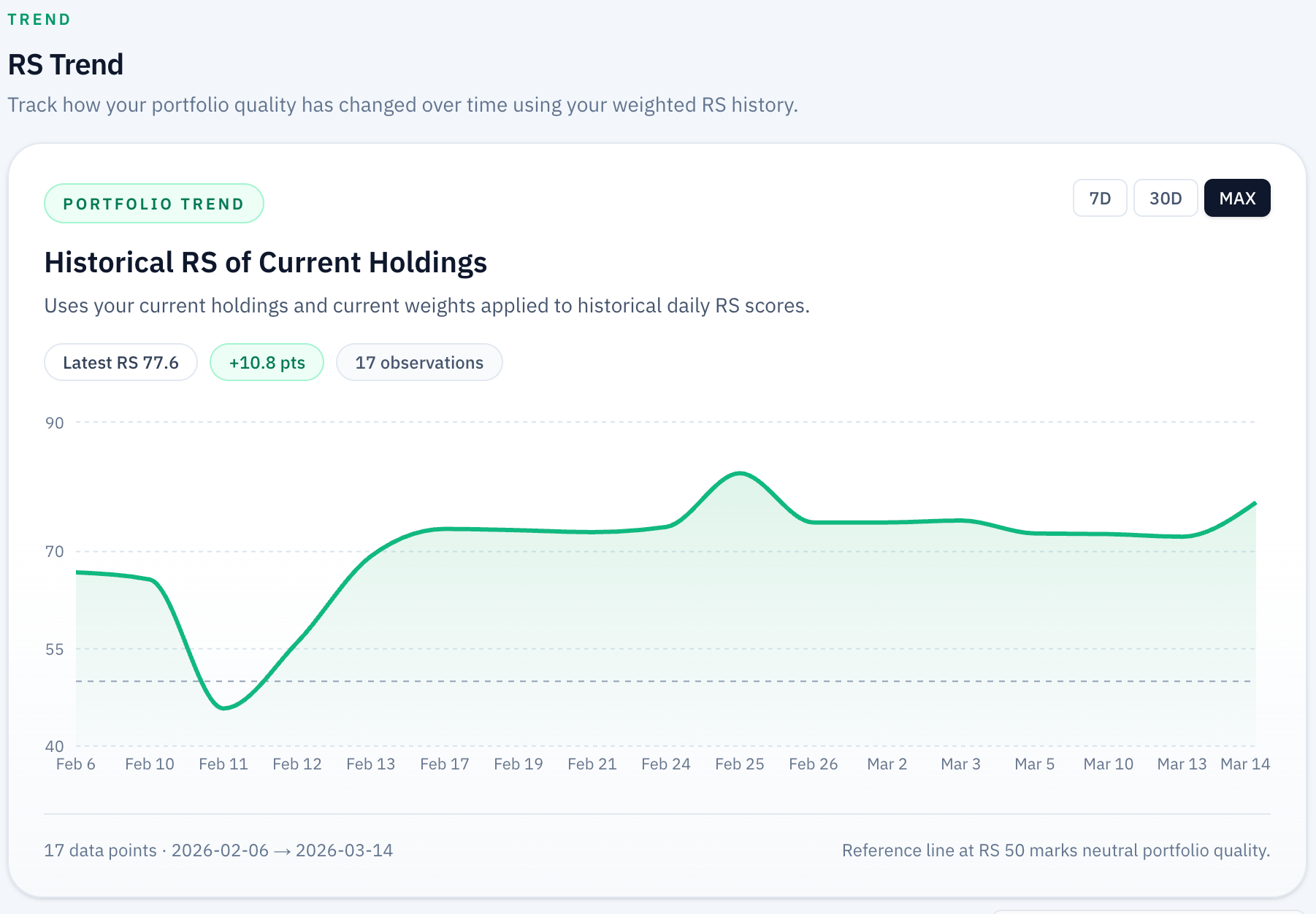
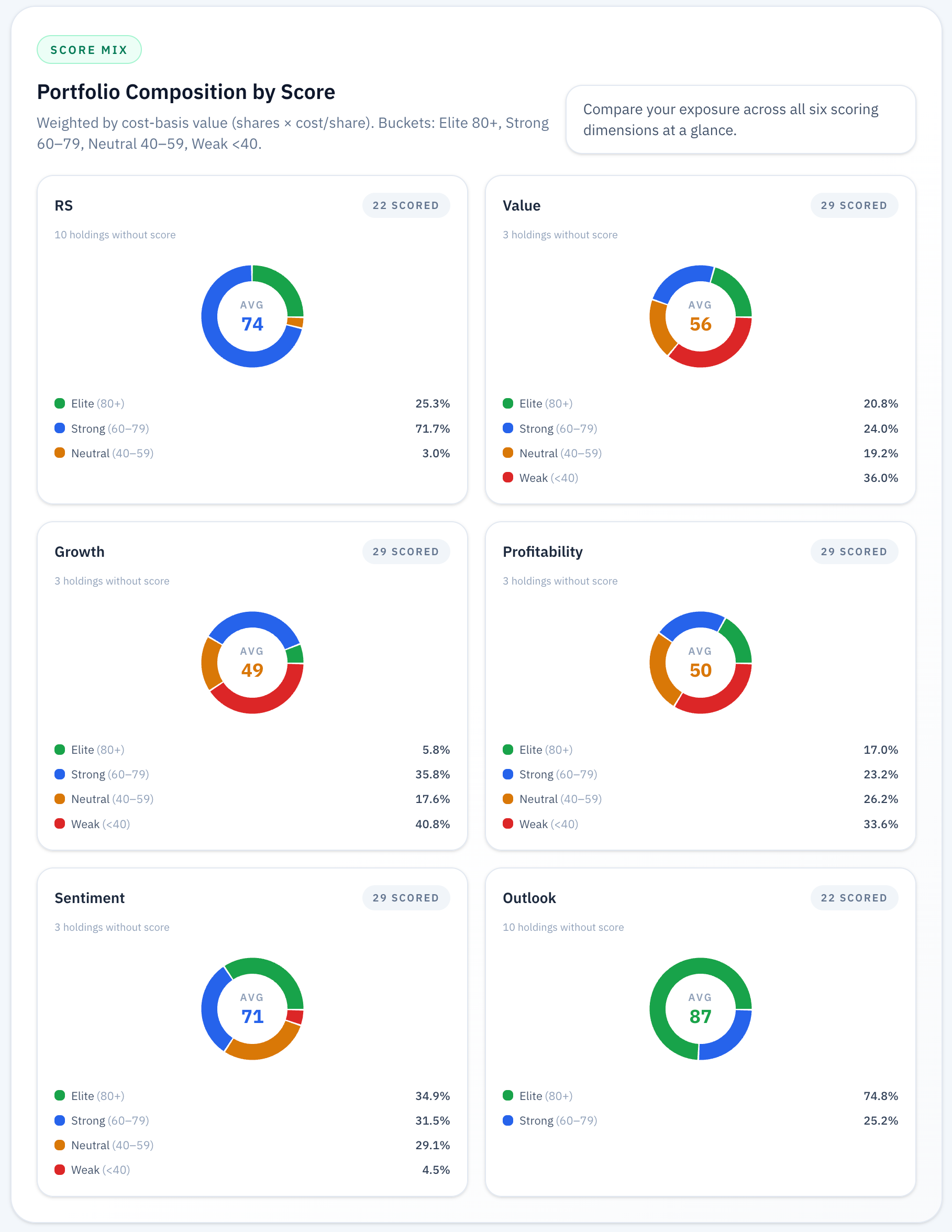
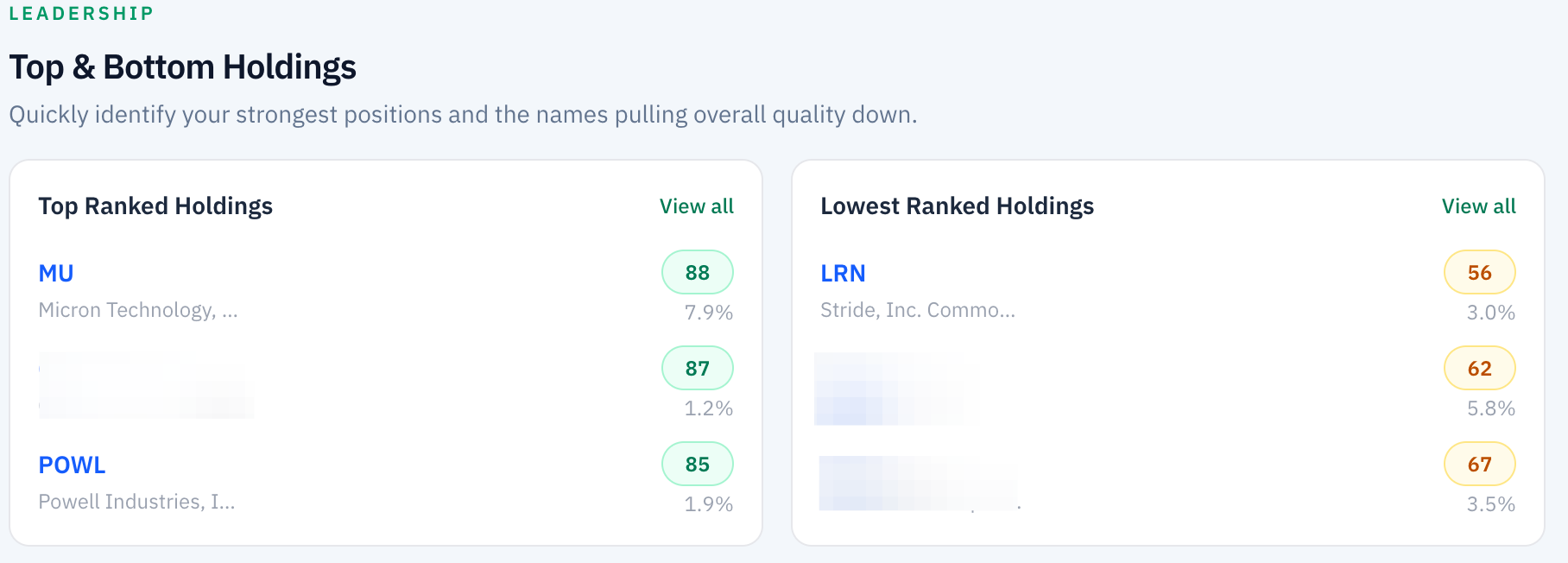
I uploaded the Beating The Tide portfolio and got it ranked. 74 is a good score, keep in mind some of our holdings were excluded…we are expanding the coverage every week, so eventually there won’t be any position excluded.
2. See The Historical Score of Your Portfolio
3. Check the Score Mix
4. Review which holdings have the highest and lowest scores
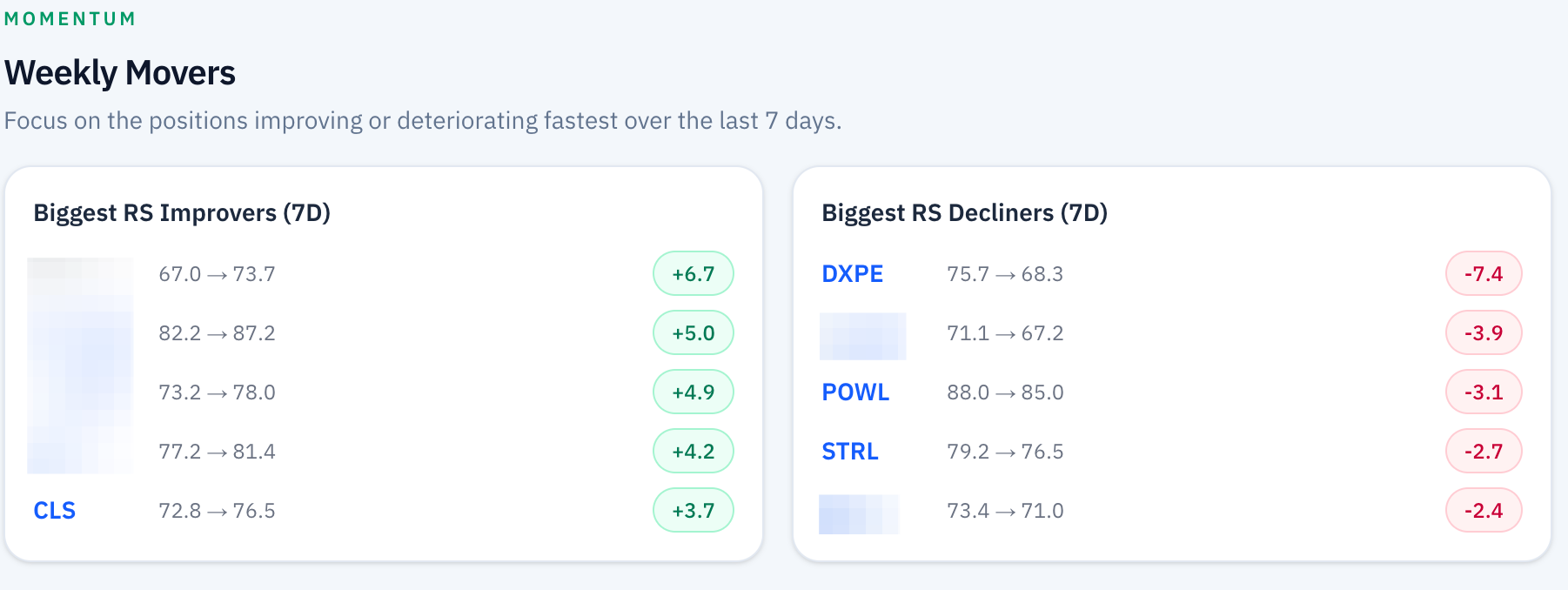
5. See the biggest improvers and decliners
6. Review the score details per position
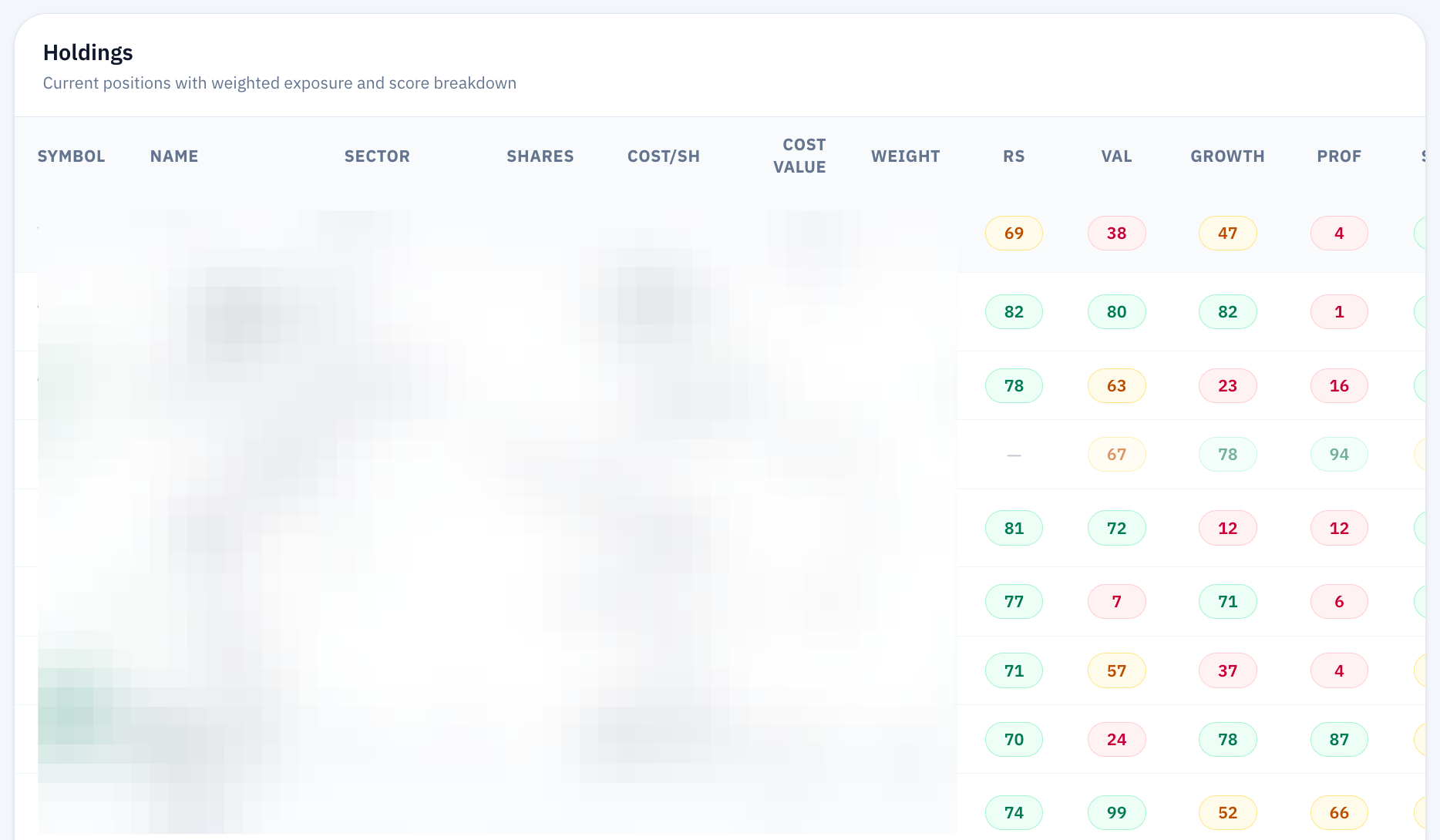
Check it out and let me know what is your portfolio’s RS score!
Earnings Results: 2/3 EPS Beats
This week, 2/3 companies beat either EPS or revenue consensus estimates. Paid subscribers can read the detailed earnings analysis here.
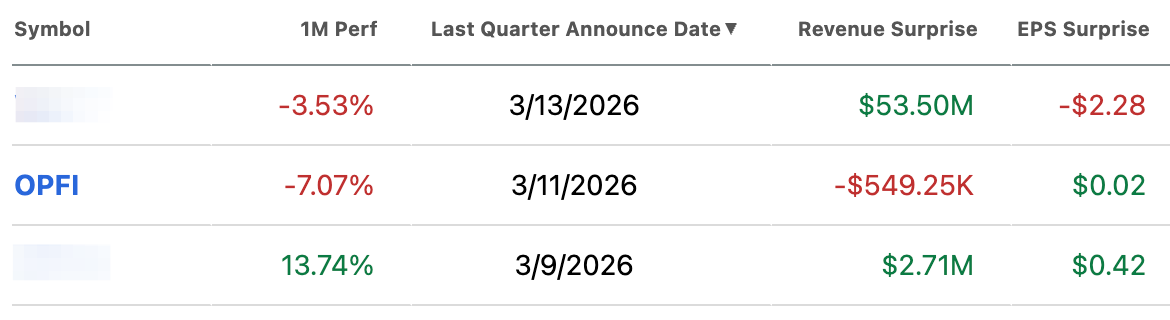
During the week, I will be releasing a detailed review for OPFI earnings results.
Thought Of The Week: Investing Through the Fog of War
The most dangerous thing someone can do during Operation Epic Fury is exactly what feels safest: selling everything and going to cash. History, data, and the greatest investors who ever lived all converge on one conclusion: geopolitical crises produce short, sharp drawdowns that punish those who flee and reward those who stay.
We are Sharks, we stay!
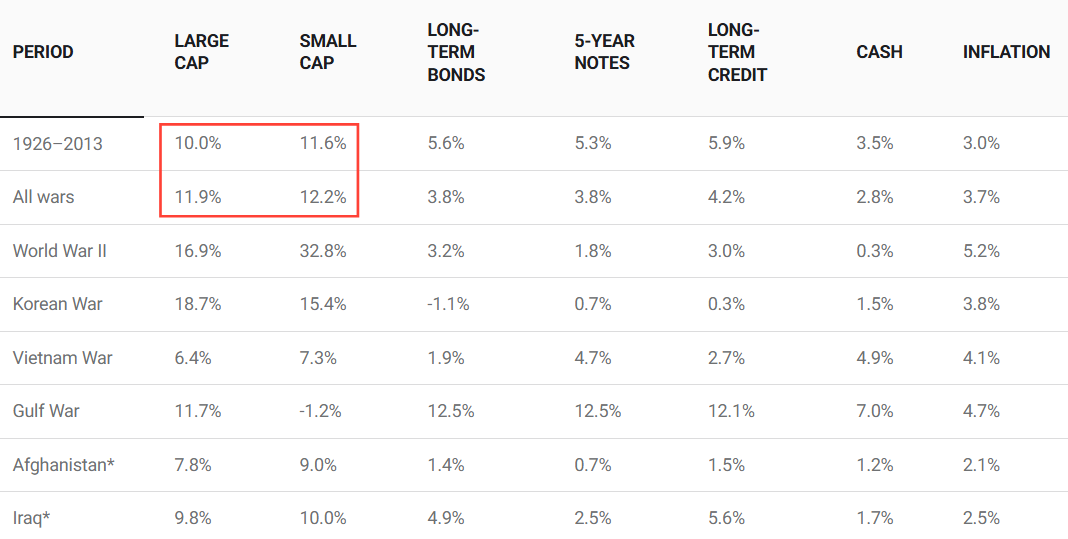
The S&P 500 has been positive one year after 73% of armed conflicts since WWII…
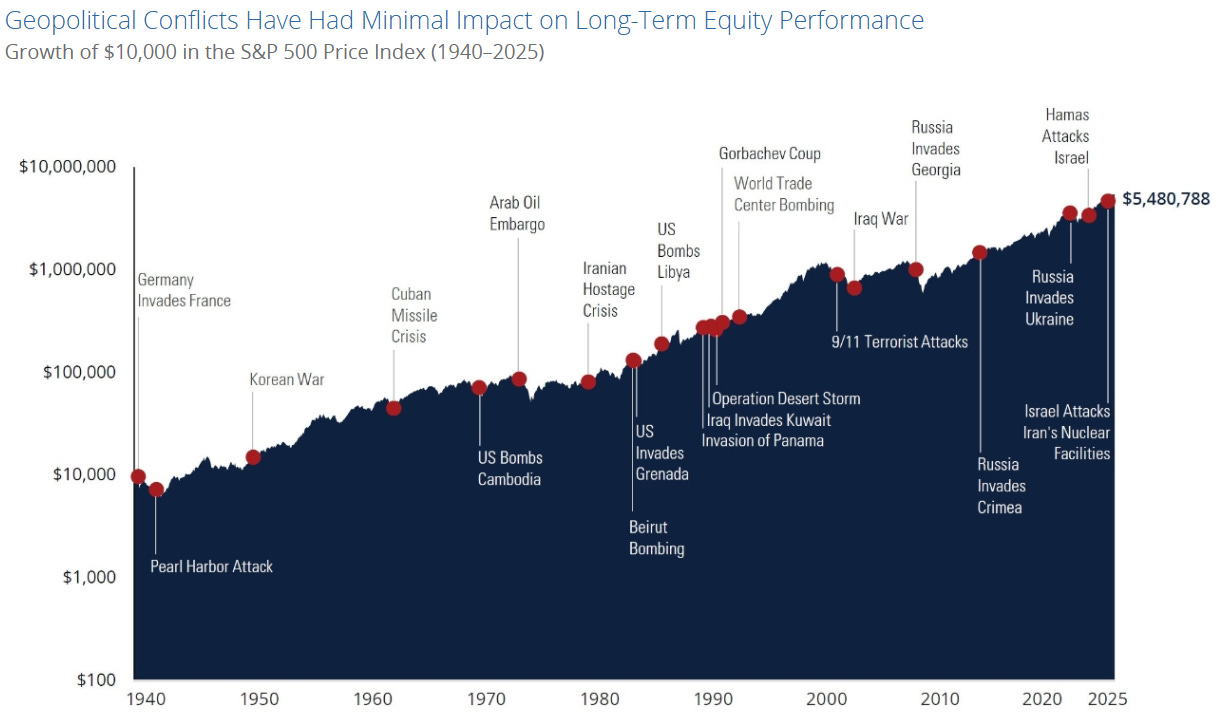
… and wartime stocks have outperformed bonds or just holding cash.
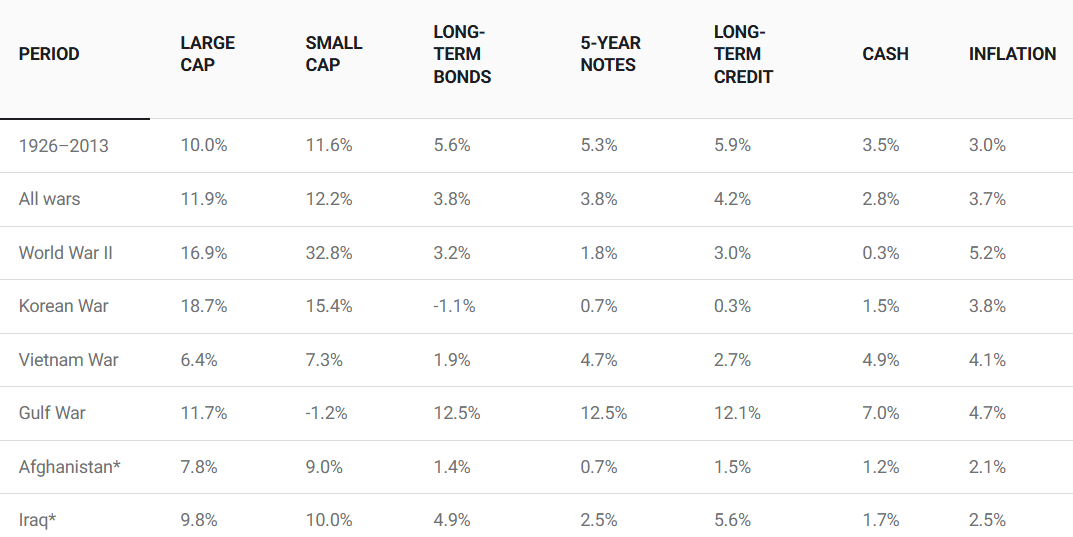
The current Iran conflict fits a familiar pattern: maximum fear, modest equity damage, and enormous long-term opportunity cost.
What the greatest investors say about investing during war
From Graham in 1949 to Howard Marks in 2025, the message is consistent: uncertainty is the investor’s friend because it drives prices down, and the worst response to crisis is inaction disguised as prudence.
Warren Buffett: “The last thing you’d want to do is hold money during a war”
He bought his first stock (three shares of Cities Service) at age 11 in the spring of 1942. At the time, the U.S. was suffering devastating losses in the Pacific. He paid $38.25 per share, watched it quickly sink to $27, and then sold as soon as it recovered to $40.
After commissions, he walked away with a tiny profit of about five dollars. He felt relieved until the stock price shot up to $200. This was his first hard lesson in the “American tailwind.” He realized that by chasing a small, safe profit during a crisis, he missed a life-changing gain.
Buffett told CNBC: “The one thing you can be quite sure of is if we went into some very major war, the value of money would go down, that’s happened in virtually every war that I’m aware of. The last thing you’d want to do is hold money during a war.” When asked whether escalation to a cold war or even WWIII would deter him, he was unambiguous: “If you tell me all of that’s going to happen, I will still be buying stocks.”
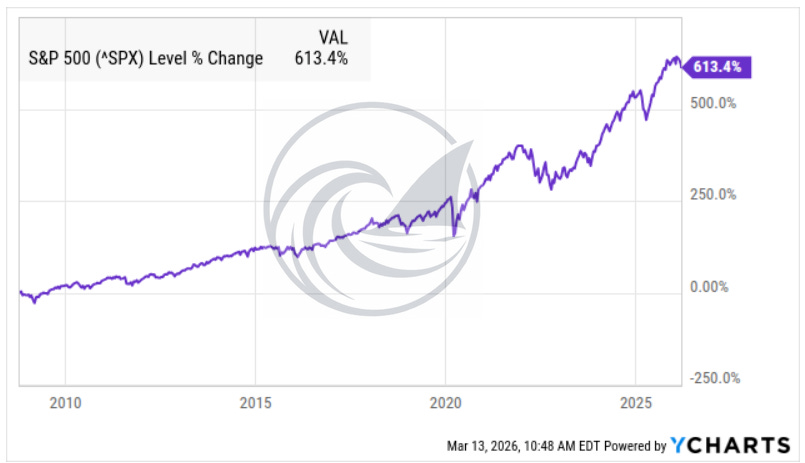
His October 2008 New York Times op-ed, “Buy American. I Am.,” was published while the S&P 500 was in freefall: “A simple rule dictates my buying: Be fearful when others are greedy, and be greedy when others are fearful. And most certainly, fear is now widespread, gripping even seasoned investors.” The S&P fell another 26% after that column. But anyone who bought on publication day was up 613% as of today.
Perhaps his most powerful framing: “Over the long term, the stock market news will be good. In the 20th century, the United States endured two world wars and other traumatic and expensive military conflicts; the Depression; a dozen or so recessions and financial panics; oil shocks; a flu epidemic; and the resignation of a disgraced president. Yet the Dow rose from 66 to 11,497.” (source)
John Templeton: the man who bought war
In September 1939, as Hitler’s armies swept across Europe, Templeton borrowed $10,000 and bought 100 shares of every stock on the NYSE trading under $1 per share, 104 companies, 37 of which were already in bankruptcy. Only four turned out worthless. After an average holding period of four years, the portfolio returned approximately 400%. His most spectacular pick, Missouri Pacific Railroad, went from $0.125 to $5.00.
His core principle: “Bull markets are born on pessimism, grow on skepticism, mature on optimism, and die on euphoria. The time of maximum pessimism is the best time to buy.” And: “To buy when others are despondently selling and sell when others are greedily buying requires the greatest fortitude and pays the greatest reward.”
Howard Marks: “Deciding not to act isn’t the opposite of acting”
Marks deployed $450 million per week at Oaktree during the final 15 weeks of 2008. His September 2008 memo, “Nobody Knows,” articulated the binary framework: “Will the world end or won’t it? We will invest on the assumption that it will go on, that companies will make money, that they’ll have value, and that buying claims on them at low prices will work in the long run. What alternative is there?”
I think Marks is spot on. What is the real alternative here? We already know that bonds tend to lag behind stocks and cash simply gets eaten alive by inflation. Allocating a portion of a portfolio to gold as a safe haven isn’t a mistake. In fact, it is part of my strategy.

I’ve written before about my thesis that gold truly begins to outperform the moment the VIX passes 45.

We saw that play out as gold has outperformed the S&P 500 since I published that article.
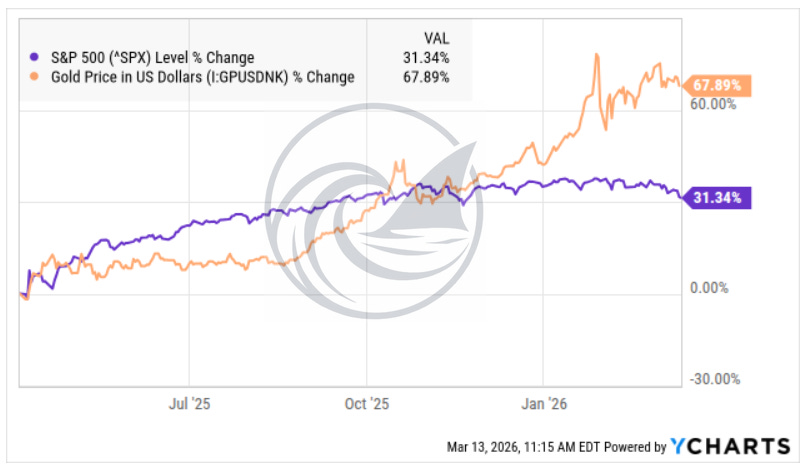
While we are Sharks who stay invested in productive companies, we are also pragmatists.
In his April 2025 memo addressing tariff-driven market turmoil, Marks recycled the same title: “Everyone was happy to buy 18-24-36 months ago, when the horizon was cloudless and asset prices were sky-high. Now, with heretofore unimaginable risks on the table and priced in, it’s appropriate to sniff around for bargains: the babies that are being thrown out with the bath water.”
His most actionable insight: “We must make our decisions in the absence of certainty. But we also have to bear in mind that deciding not to act isn’t the opposite of acting; it’s an act in itself.” Sitting on the sidelines during a crisis is a deliberate bet that things will get worse and history shows that bet usually loses.
Operation Epic Fury and the market right now
I have watched this conflict escalate since the protests began in December. It turned into a full military buildup after the tanker seizure in early February. Operation Epic Fury launched on February 28 with nearly 900 strikes in the first day and resulted in the immediate death of Supreme Leader Ali Khamenei.
As of March 13, the war is still active. The White House has four clear goals. They intend to destroy the ballistic missiles, sink the navy, cut off proxies, and end the nuclear program for good.
Oil is the primary way this war hits us. Brent crude jumped from $70 to over $100 in just two weeks because the Strait of Hormuz is effectively closed.
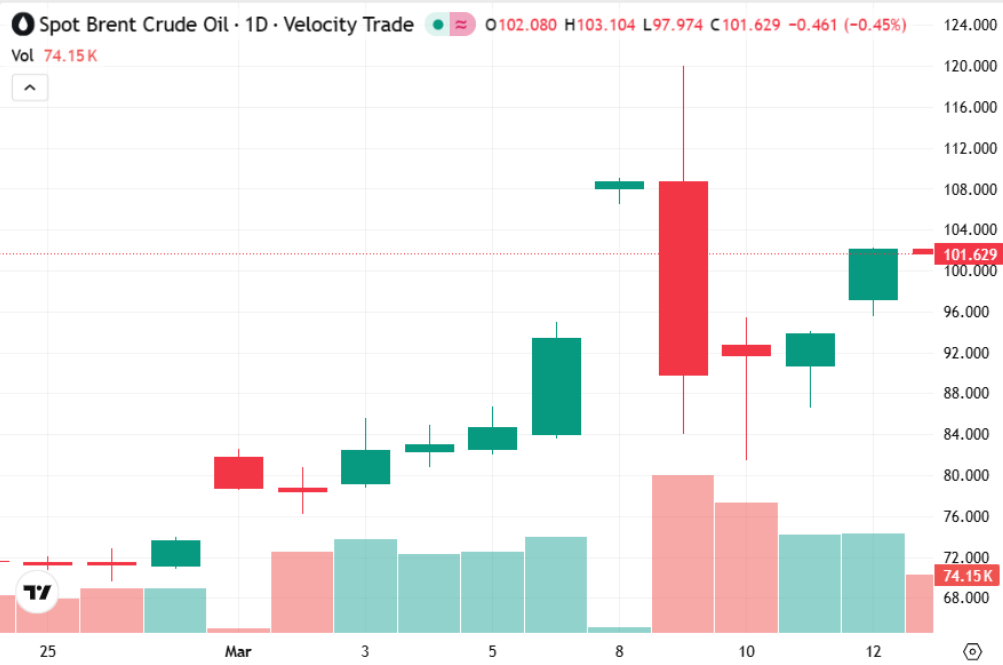
Iran is using the world’s most important oil chokepoint as a tool of pressure. Even with a massive 400 million barrel reserve release, the global supply gap remains severe. The first 100 hours of the war alone cost the U.S. $3.7 billion.
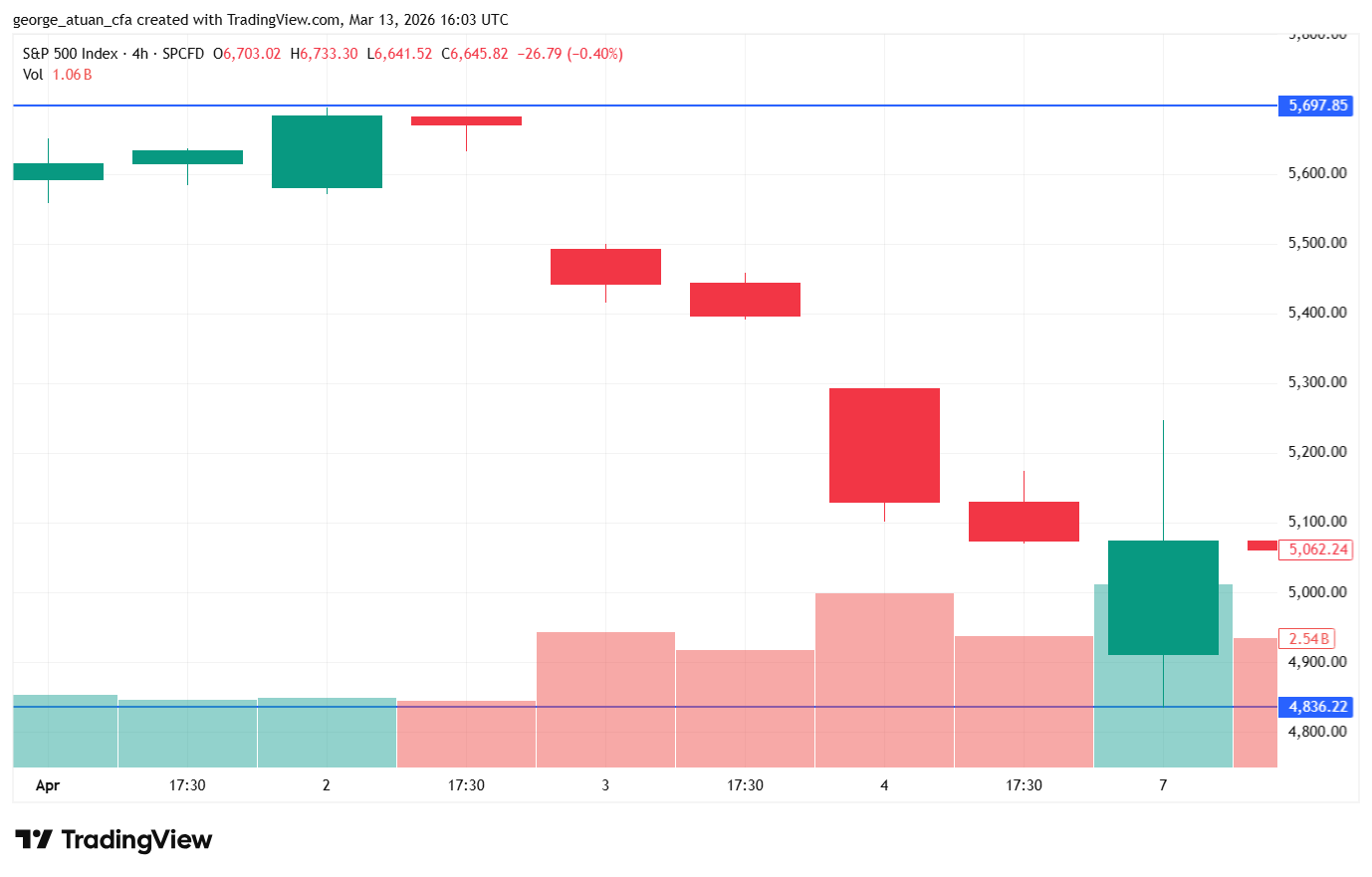
The market is holding up better than the headlines suggest. The S&P 500 is down 5% from its all-time high.
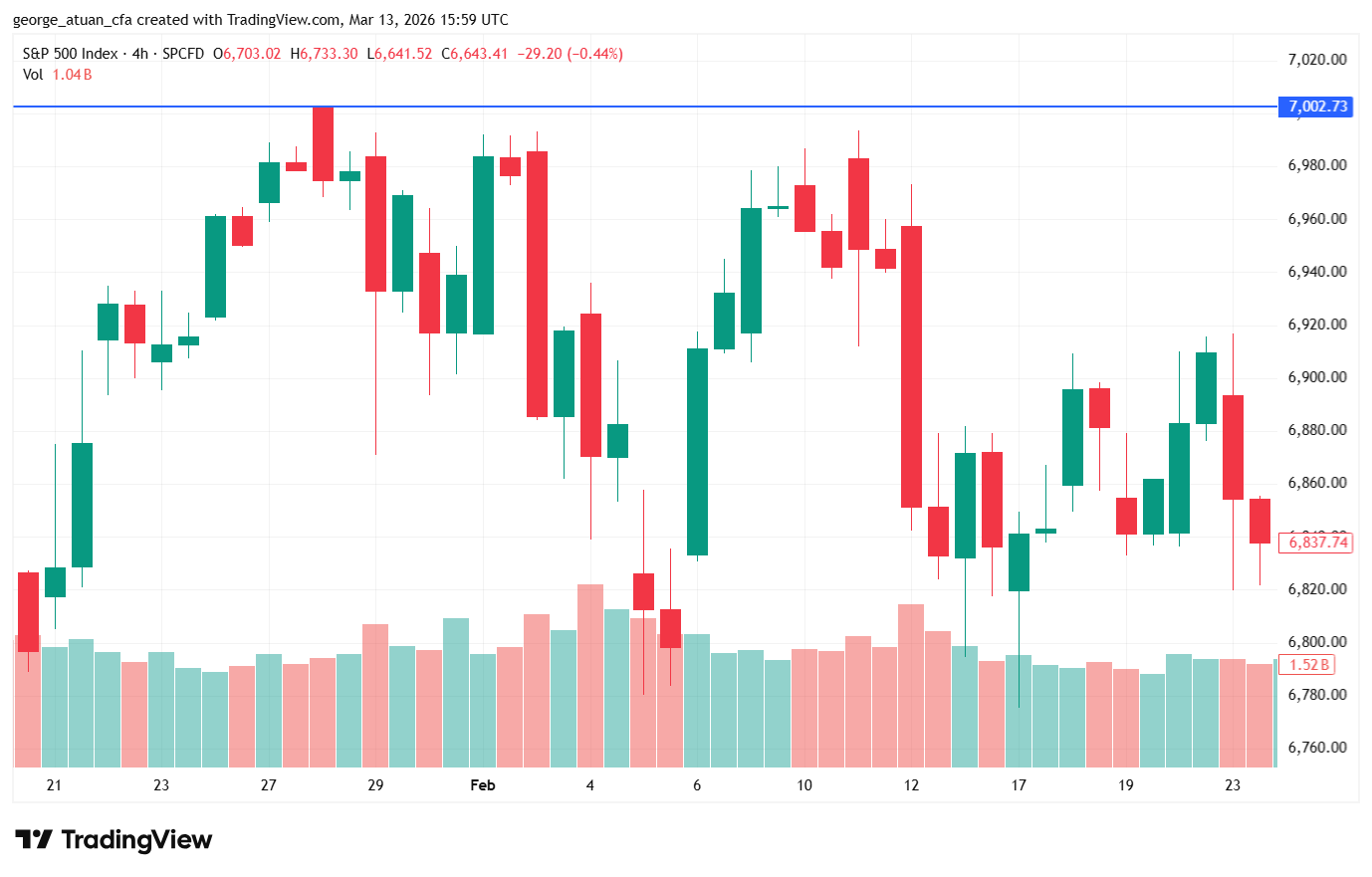
I find this notable because the drop is actually milder than the tariff shocks we saw in April 2025 of 15%.
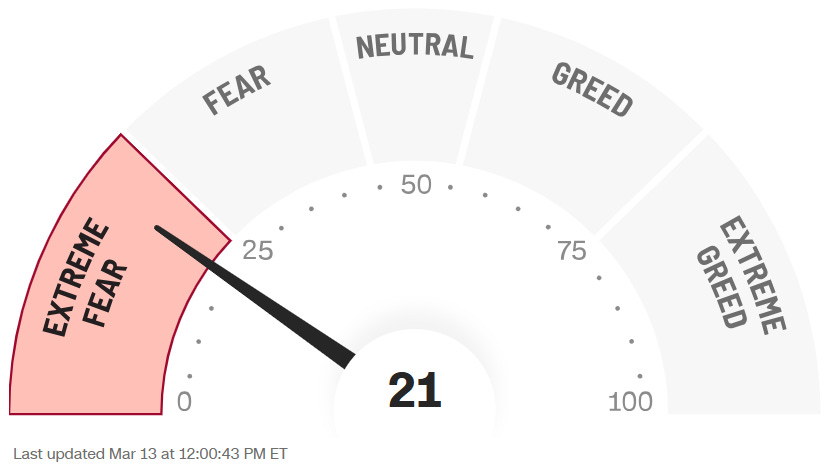
The fear index is high…
… and the damage is across all sectors except energy, utilities and communications.
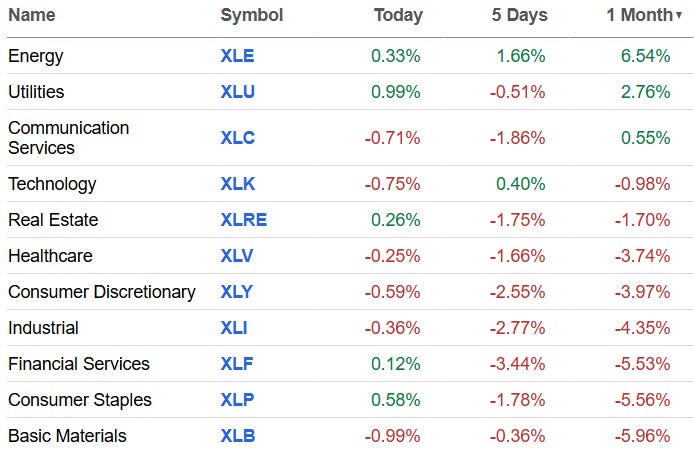
Energy stocks are hitting records or near-year highs. On the other side, travel, airlines, and cruise lines are getting hammered. The extreme fear in the market is creating the exact kind of price gap that sharks look for.
What prediction markets say
I am tracking the Polymarket Iran ecosystem, which now includes 231 active markets and over $529 million in total volume. This is one of the largest event clusters in the history of the platform. The main market regarding when the conflict ends shows a 48% probability that military operations conclude by April 30.
These markets are pricing a conflict measured in weeks rather than months. This is consistent with the historical pattern of brief U.S. military operations. I also cannot ignore the insider trading controversies. Six wallets made roughly $1.2 million by correctly betting on the February 28 strike date. Most of those accounts were funded within 24 hours of the attack, which suggests that some participants had early access to the timing of the strikes.
The crisis-by-crisis record
Wars and military conflicts tend to produce modest, temporary drawdowns. The Korean War saw a 5% drop on day one, followed by an +11.2% return in year one. The Gulf War’s -19.9% drawdown recovered within 4-5 months, and the S&P returned +10.2% in the following year. The start of the Iraq War in March 2003 actually marked the beginning of a major rally: +27.0% in year one.1
The pattern holds for surprise attacks, too. After Pearl Harbor, the S&P 500 dropped -19.8% but was essentially flat one year later and returned +11.7% annualized over the next three years. After 9/11, the immediate 11.6% weekly decline was recovered within one month (though the broader dot-com bust continued independently). The Cuban Missile Crisis (the closest the world came to nuclear war) produced a mere -6.6% drawdown that recovered in two weeks, followed by a +32.0% return in the next year.
The catastrophic exceptions share a common feature: they coincided with or caused economic recessions. The 1973 Arab Oil Embargo triggered a -48.2% drawdown that took seven years to recover. The 2008 financial crisis produced a -56.8% collapse that required 5.5 years. COVID-19’s -33.9% crash recovered in just five months.
The critical distinction for the current Iran situation: geopolitical crises alone almost never cause long-term market damage. What truly damages markets is the combination of geopolitical shock and economic recession. As long as corporate earnings are growing and the economy holds, markets recover often faster than expected. CFA Institute data shows wartime annualized large-cap stock returns of +11.9% actually exceeded the overall long-term average of +10.0% across all U.S. wars from 1926 to 2013.
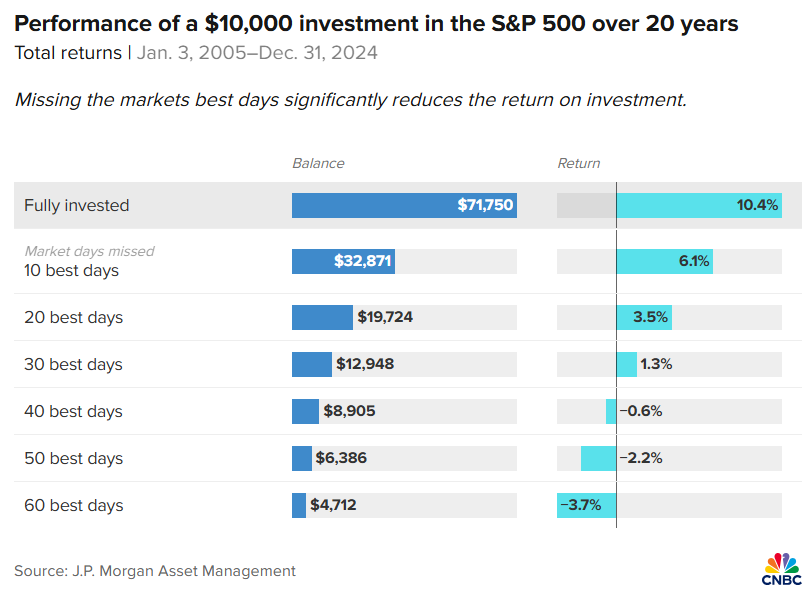
The devastating math of missing the best days
Perhaps the most powerful argument against panic-selling comes from data on what happens when investors try to time the market and miss the best trading days.
A $10,000 investment in the S&P 500, fully invested for 20 years, grew to $71,750 (10.4% annualized). Miss just the 10 best trading days (out of 5,040 trading days total) and that drops to $32,871 (6.1% annualized). Miss 60 best days and you’re left with $4,712, a negative return that destroyed more than half of your original capital.
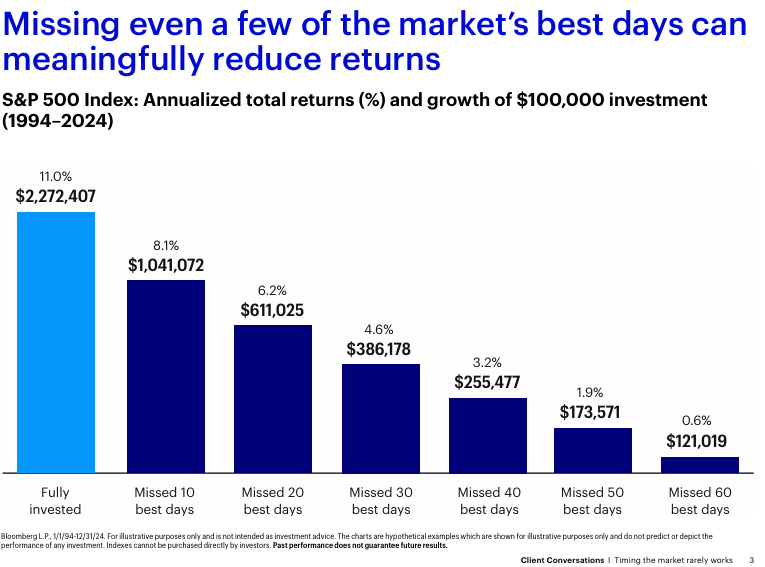
The Invesco data over 30 years (1994-2024) is even starker. A $100,000 investment grew to $2,272,407 if fully invested. Missing the 10 best days, cut that to $1,041,072 effectively halving the gain. Missing 30 best days reduced it to $386,178.
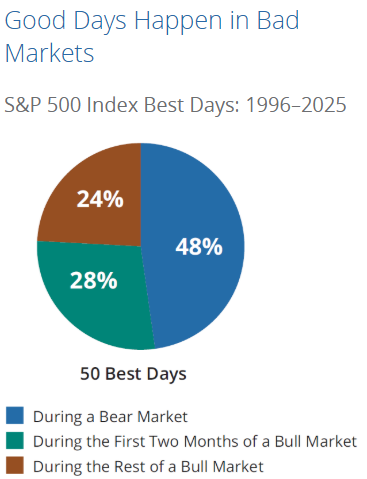
The critical insight that makes this data devastating for market timers: 7 of the 10 best trading days occurred within two weeks of the 10 worst trading days. Hartford Funds found that 76% of the stock market’s best days occurred during bear markets or the first two months of a new bull market.
Vanguard’s research shows 2% of trading days account for 80% of positive market returns. This is taking the 80/20 rule to the extreme!

In other words, the best days happen precisely when investors are most terrified and most likely to be sitting in cash. Every single one of the 15 best market days of the past 30 years occurred during a crisis.
What to actually do with your portfolio right now
Action #1. Stay invested.
This is the single most important decision. Every piece of data points in the same direction. Going to cash feels safe, but has a ruinous expected value.
If you have cash to deploy, dollar-cost average in. I think the optimal DCA window is within six months, beyond 18 months, the opportunity cost of delayed investment becomes prohibitive.
Action #2. Diversify with intention.
The current crisis has created sharp sector divergences; energy and defense up, travel and consumer discretionary down. This is a natural rebalancing opportunity.
Action #3. Favor quality.
During uncertainty, companies with strong balance sheets, consistent cash flows, pricing power, and competitive moats tend to weather shocks far better than speculative names. Graham’s margin of safety concept is most valuable precisely when the future is least knowable.
My portfolio only contains quality companies.
Actio #4. Automate and stop checking.
The fewer ad hoc trades, the less room for emotional error. Setting up automatic contributions and stepping away from the screen is a disciplined edge.
Conclusion
The greatest risk to most isn’t the war itself but rather it’s their own behavioral response to it.
As Seth Klarman wrote in Margin of Safety:
high uncertainty is frequently accompanied by low prices, and by the time the uncertainty is resolved, prices are no longer low.
Portfolio Update
Even as the S&P 500 slipped further last week, our portfolio regained ground, continuing to widen the gap.
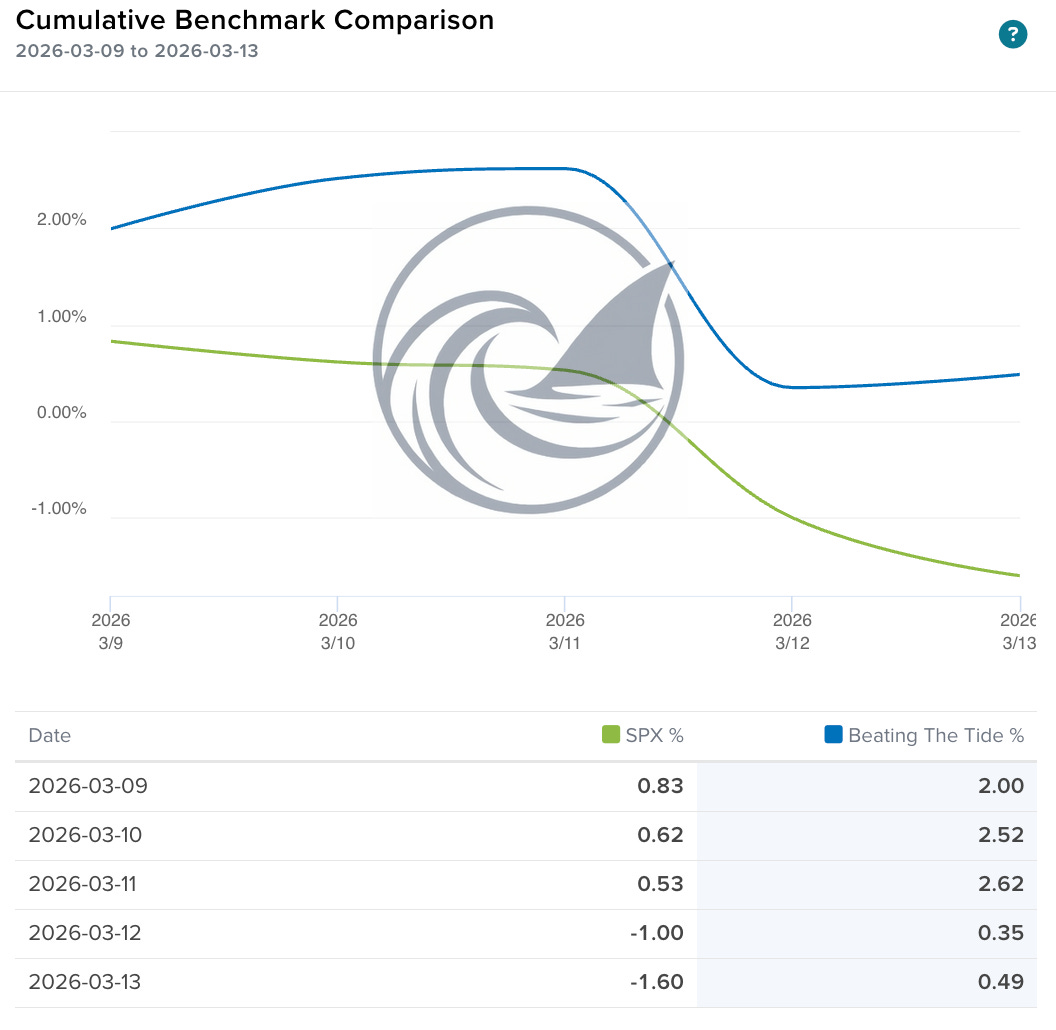
Portfolio Return
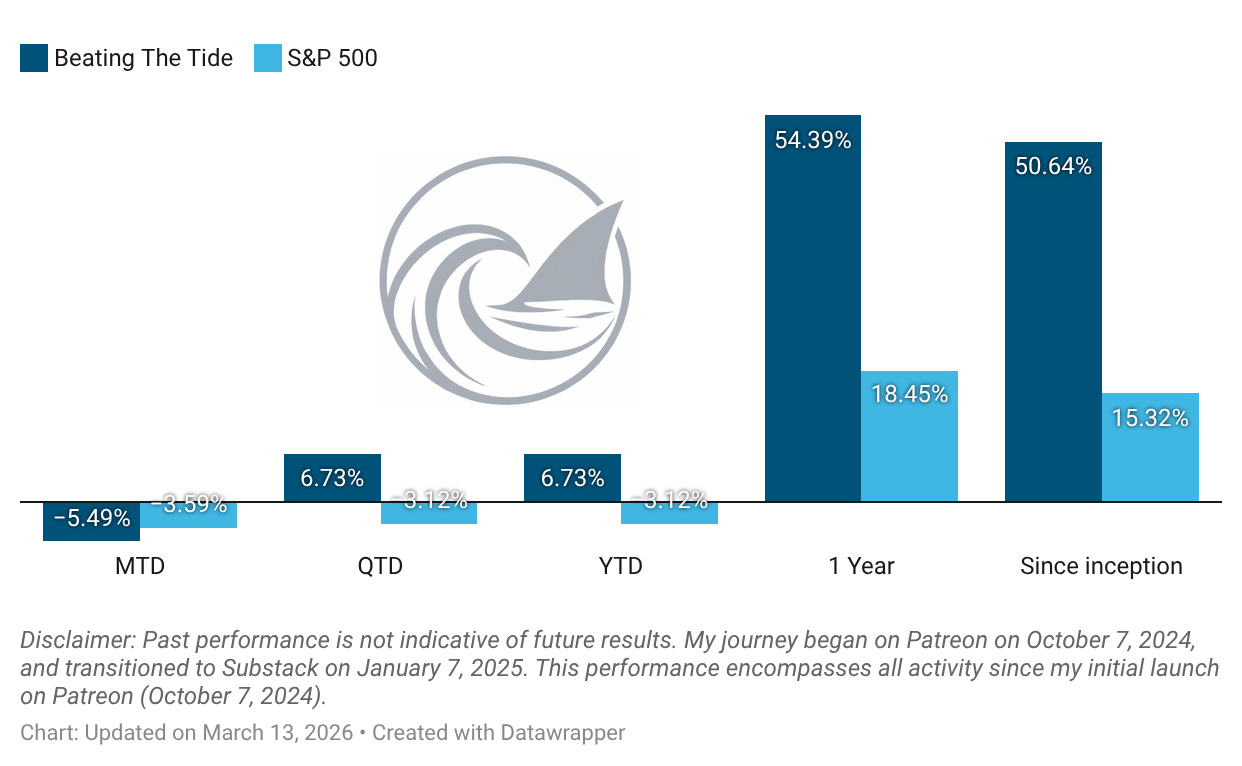
Month-to-date: -5.5% vs. the S&P 500’s -3.6%.
Year-to-date: +6.7% vs. the S&P 500’s -3.1%. That is a gap of 985 points.
Since inception: +50.6% vs. the S&P 500’s +15.3%. That’s 3.3x the market.
Contribution by Sector
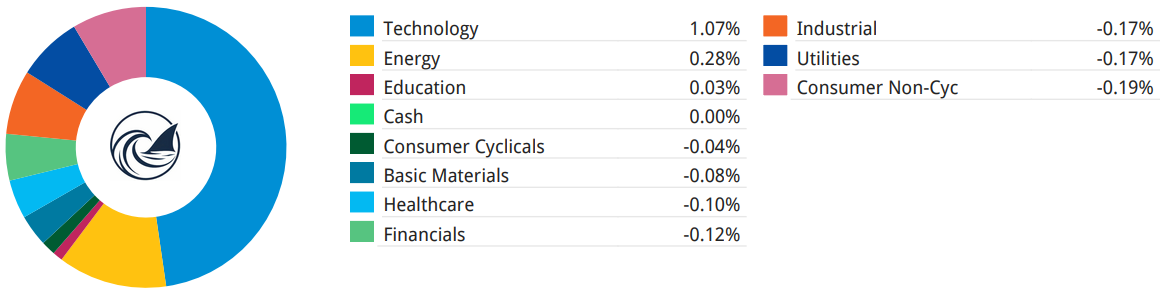
Tech and energy led the gains, partially offset by consumer cyclicals, utilities and industrials.
Contribution by Position
(For the full breakdown plus commentary on earnings results and the big movers, see Weekly Stock Performance Tracker)
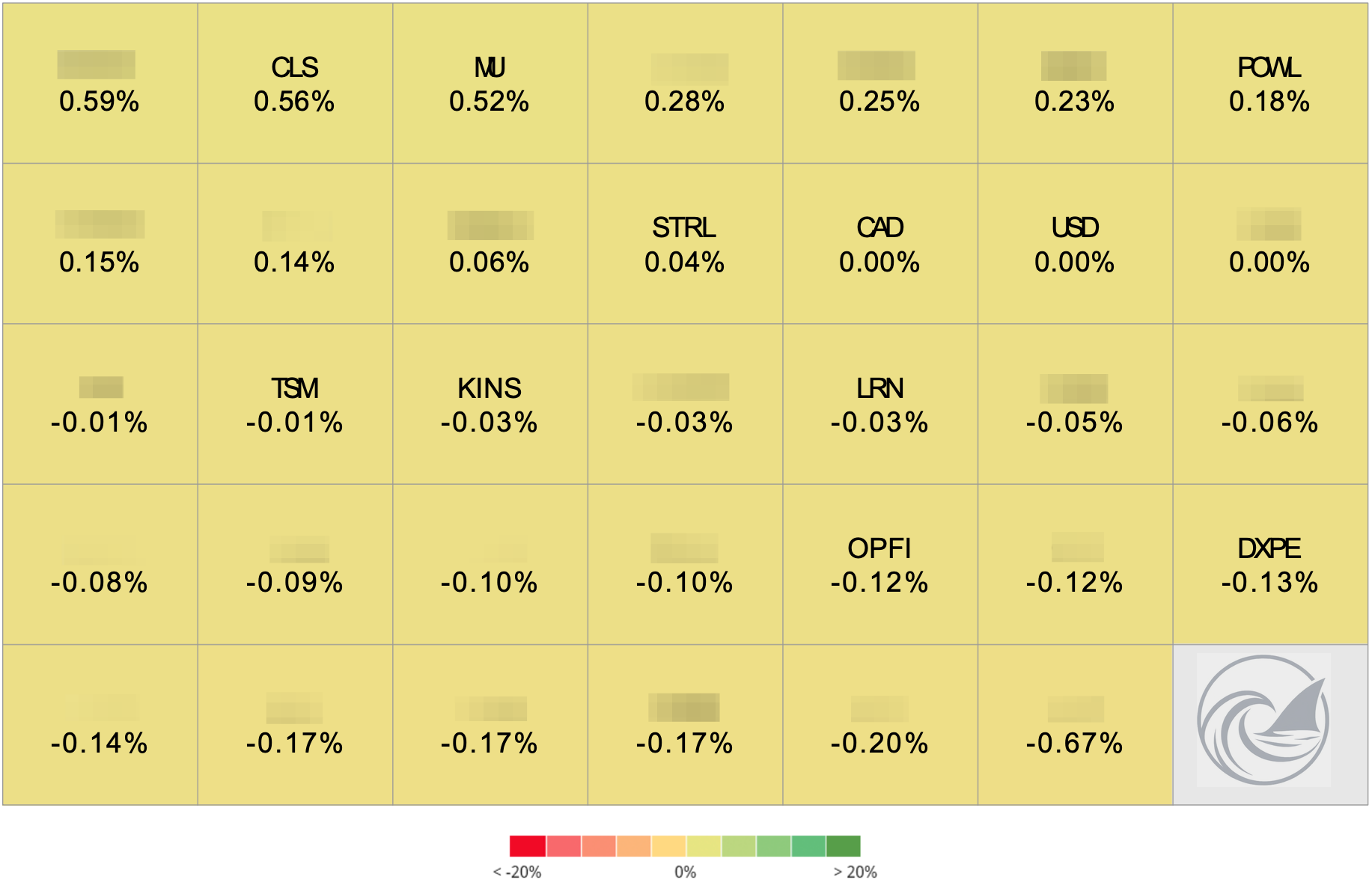
+56 bps CLS 0.00%↑ (TSX: CLS) (Thesis)
+18 bps POWL 0.00%↑ (Thesis)
+4 bps STRL 0.00%↑ (Thesis)
-1 bps TSM 0.00%↑ (Thesis)
-3 bps KINS 0.00%↑ (Thesis)
-3 bps LRN 0.00%↑ (Thesis)
-12 bps OPFI 0.00%↑ (Thesis)
-13 bps DXPE 0.00%↑ (Thesis)
That’s it for this week.
Stay calm. Stay focused. And remember to stay sharp, fellow Sharks!
Further Sunday reading to help your investment process:
Never Stop Asking Why, Using the “5 Whys” to Solve Problems and Pick Stocks
The Rise and Fall of Moats: When Walls Built to Protect Become Traps
How I Earn $3,000-$7,000 a Month While Waiting to Buy Great Stocks Cheaper
www.isectors.com/blog/stock-markets-times-uncertainty
George thank you for the weekly and for addressing a very timely, important and relevant topic. I am sure most of us have been wondering about the direction of the stock market since the war broke out. Having read your article, it seems you're saying that only a war accompanied by or causing an economic recession can cause significant negative long-term impact to the stock market. But isn't that precisely what this war on Iran may lead to? Significantly higher oil prices because of the continued closure of the strait of Hormuz that would cause massive global inflation and eventually a global economic recession. Or do you see the situation differently?