

Weekly #80: Why I Stopped Using Stop-Losses 14 Years Ago
Portfolio +27.5% YTD, 3.1x the market since inception. Plus, the price rule that locks in losses you'd never have realized and the conviction stop I use instead.


Hello fellow Sharks,
Another strong week for the portfolio. Yes, we lagged the market slightly but I think the market is trying to catch up to April’s strong performance. If you want to skip straight to the numbers, jump to the Portfolio Update.
Reading a non-invesment book got me thinking about stop-losses. Many people use them and swear by them, but I think they’re quietly limiting your gains, especially if you are following my volatile stock picks. This week I briefly explain as to why.
On a different note, last week I started refreshing my book “The Most Boring Stock Investment Book You'll Ever Read”. I think I have enough new material to justify a second edition. For example, the first edition focused on non-financials; the second will expand into the valuation of financials. ROIC and WACC aren't the right tools for a bank or insurer, you want ROE and cost of equity instead. I'll also scrap the appendix and refresh the examples. If you have feedback on what you'd like to see in the 2nd edition, let me know!
Enjoy the read, and have a great Sunday.
~George
Table of Contents:
In Case You Missed It
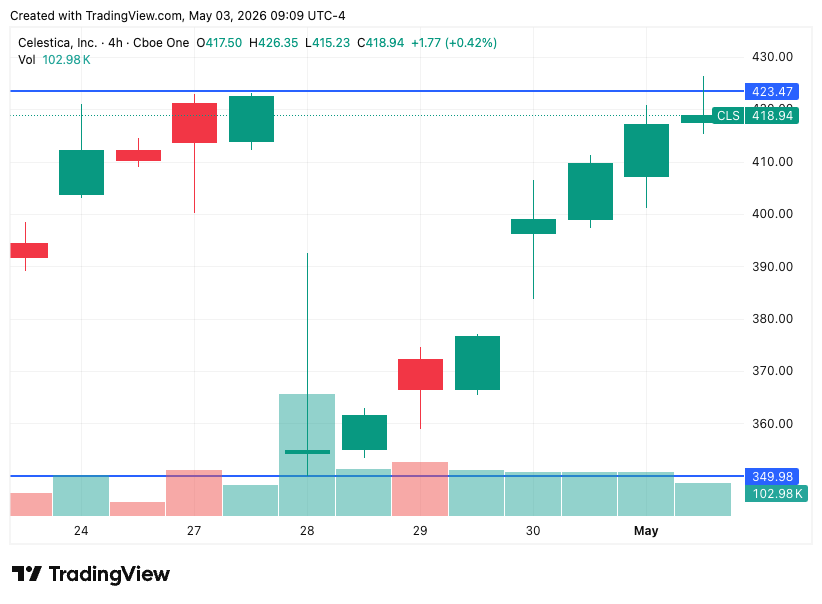
On April 28, I provided my view on CLS Q1 2026 earnings results.

In the review, I explained how Mr Market’s reaction was similar to its reaction to the Q4 2025’s earnings. If you bought the dip, you would have made 21% in just a couple of days.
Earnings Results
This week 5 portfolio companies reported earnings. All beat EPS consensus estimates, but 4 of them missed revenue estimates.
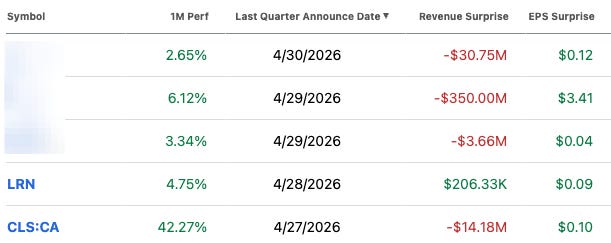
CLS Q1 2026: Read my earnings review here.
LRN Q3 2026: I will be publishing my view on the earnings results tomorrow, so expect an email tomorrow by the afternoon.
Paid subscribers can read my quick take on the rest of the earnings results here.
Thought Of The Week
Why I Don’t Use Stop-Losses (And What I Do Instead)
I’ve been listening to How to Stop Worrying and Start Living by Dale Carnegie on audiobook this week. Carnegie spent decades collecting practical rules for taming anxiety, and one of his sharpest moves is taking the investor's stop-loss and applying it to your worries. Decide in advance how much time, energy, and emotional rent you’re willing to pay any single problem, and when you hit that limit, you cut it off.
Here's the twist: Carnegie actually opens that chapter with the investment stop-loss as his anchor, not with worry. He points to how investors cap their losses with a fixed price rule and pivots from there into life. While stop-losses may work in life, they do not work in stock investing. That is a moment in the book where Carnegie wanders into a domain he didn't audit, and the rule that works for human worry breaks down completely when you apply it to securities prices.
I know this because I tried it. Early in my investing life, in my mid-twenties, someone walked me through stop-loss orders and I dutifully wired them into every position. The result was almost comic. Mr. Market would sneeze, my stop would trip, and three weeks later the stock would close above where I’d been kicked out. The cure was worse than the disease. After two years of bleeding small but consistent permanent losses while watching the recoveries from the sidelines, I deleted every stop-loss I had and never used one again.
Here’s why mechanical stops fail anyone holding a real business.
Stops confuse price action with thesis breakage. A share price tells you what someone, somewhere, agreed to transact at this morning. It does not tell you whether the company’s unit economics changed, whether management is still allocating capital well, or whether the moat narrowed. A stock can fall 25% on a macro tantrum, a fund redemption, an index rebalance, or a clumsy sell-side downgrade, and none of those moves touches the underlying business. A stop-loss treats every one of them as if it were a verdict…it isn’t.
Stops force you to be wrong twice. Once when you bought, because the price fell. Again when the stock bounces, because you’ve already sold and now have to decide whether to crawl back in at a higher price than you abandoned. The behavioural penalty is brutal. Most people don’t re-buy. They watch the recovery and rationalise it as luck. Then they repeat the loop on the next position.
Stops turn temporary losses into permanent ones. The whole point of being a long-term holder of cash-generative businesses is that you never have to convert one into the other unless the thesis actually breaks.
The cleanest way to see this is through a position where the thesis did break, and where the price-and-thesis sequence is the entire point.
I owned Qifu (QFIN) and FinVolution (FINV), two Chinese fintechs that I thought were among the cleanest credit machines I’d ever underwritten.

The stock fell hard six weeks after my trade alert.
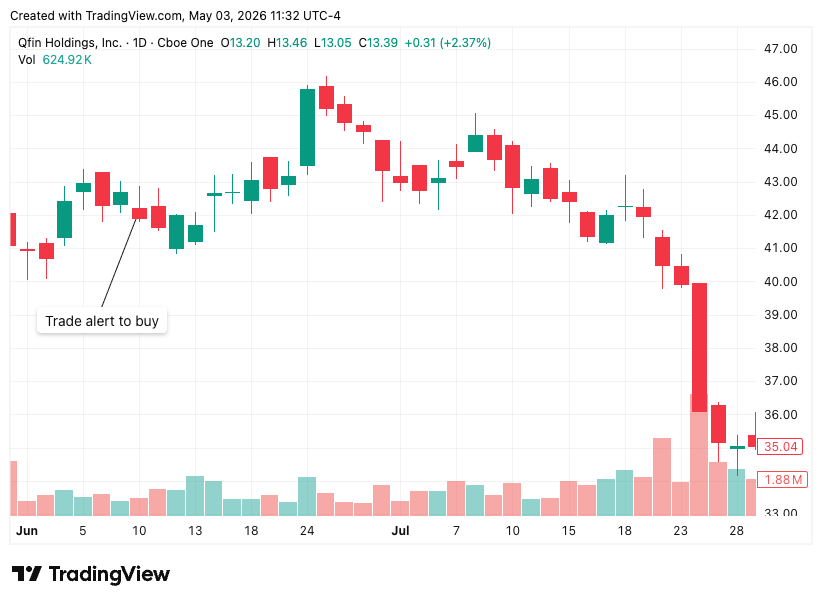
A stop-loss would have evicted me on day one, on price alone. I held, because nothing in the underlying business had changed yet. Then, two quarters later, the cash flow conversion started deteriorating. FCF stopped tracking net income, working capital was telling a story management’s commentary wasn’t, and the off-balance-sheet structure looked stretched.
That was the signal.
I sold then, on the thesis, not on the chart.
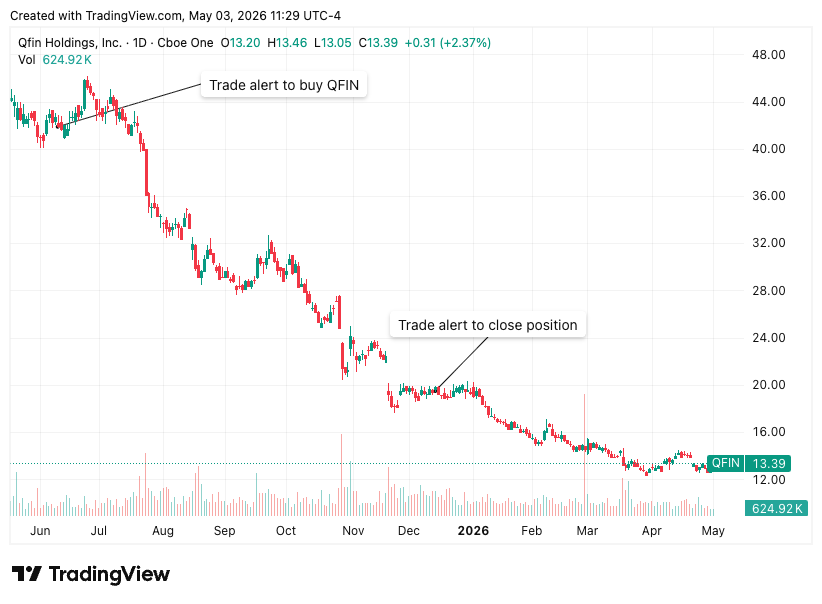
A mechanical stop would have sold me out months earlier on noise that didn’t matter, and I would have learned exactly the wrong lesson, that stops “saved” me, when in reality they would have just exited a position I would have closed anyway, for a different and far better reason.
Now look at the inverse, positions where the price moved but the thesis stayed intact.
Celestica (CLS) drew down hard after Q4 2025 earnings in January, and a 10% trailing stop would have closed me out near the lows.
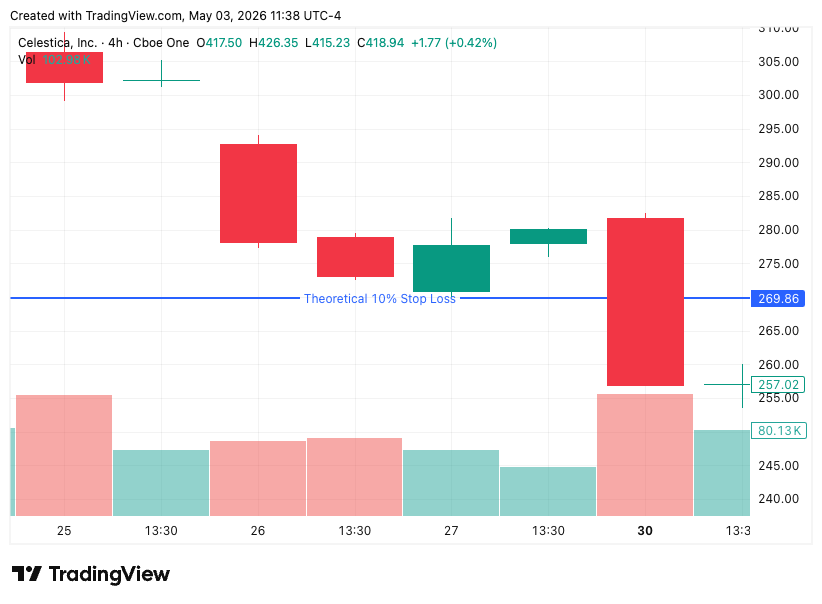
As I explained, the thesis didn’t change.

The stock more than recovered.
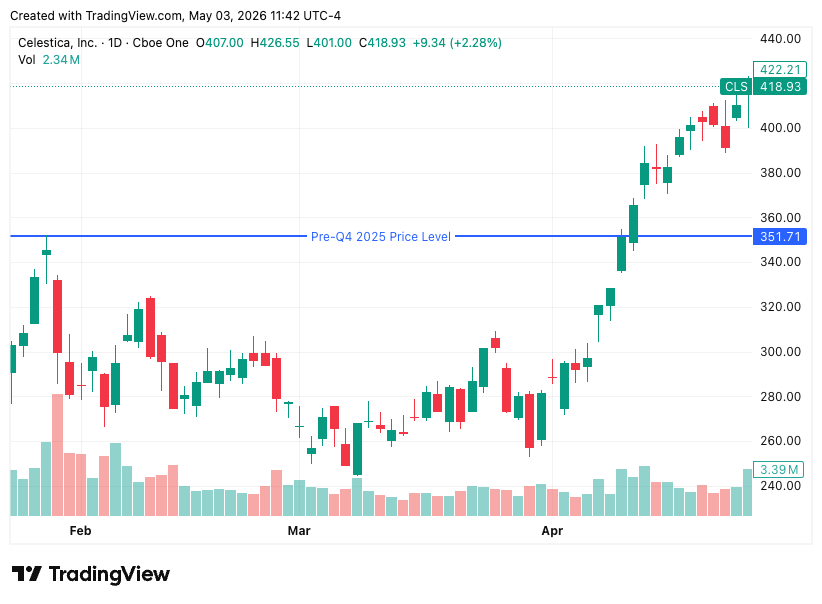
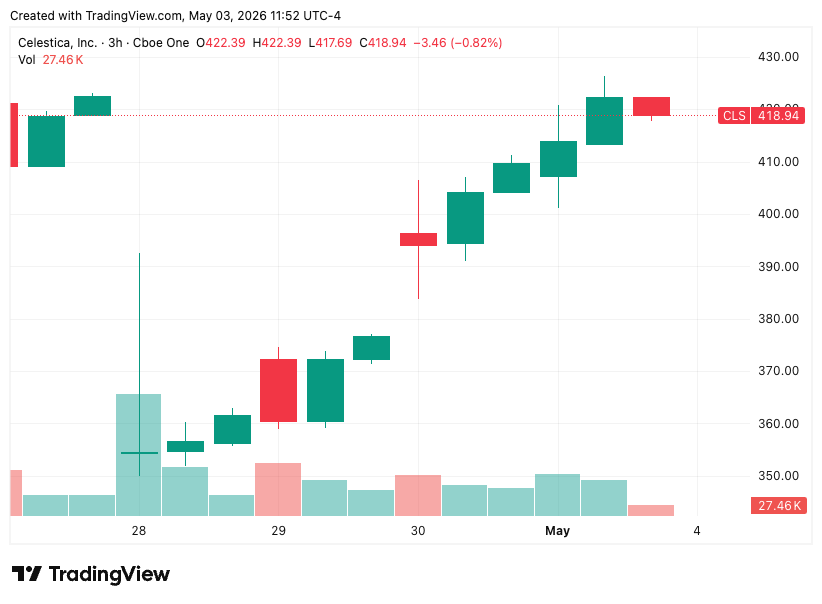
Then it happened again after Q1 2026, same drawdown…
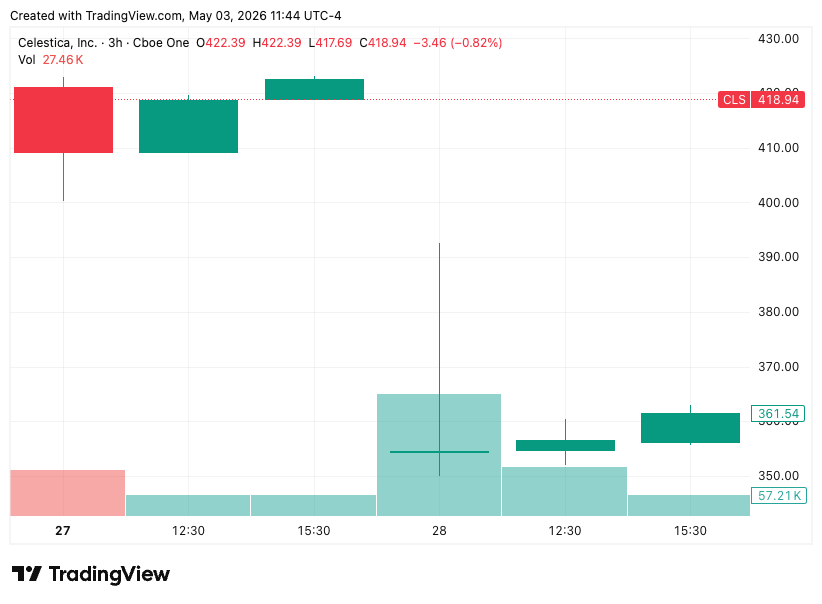
…faster recovery.
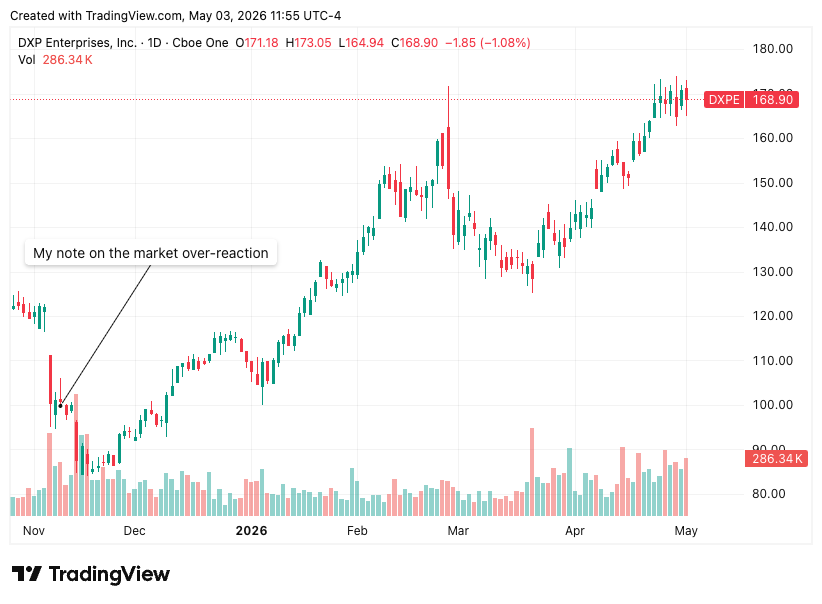
DXP Enterprises (DXPE) sold off 12% on a Q3 2025 print that was, by any honest reading, a beat dressed in bad mood.

It took about a month for the stock to recover and now is up +95% up from the bottom.
Micron drew down on a tariff scare, then printed Q2 2026 with revenue up 196%.

But the stock dropped…
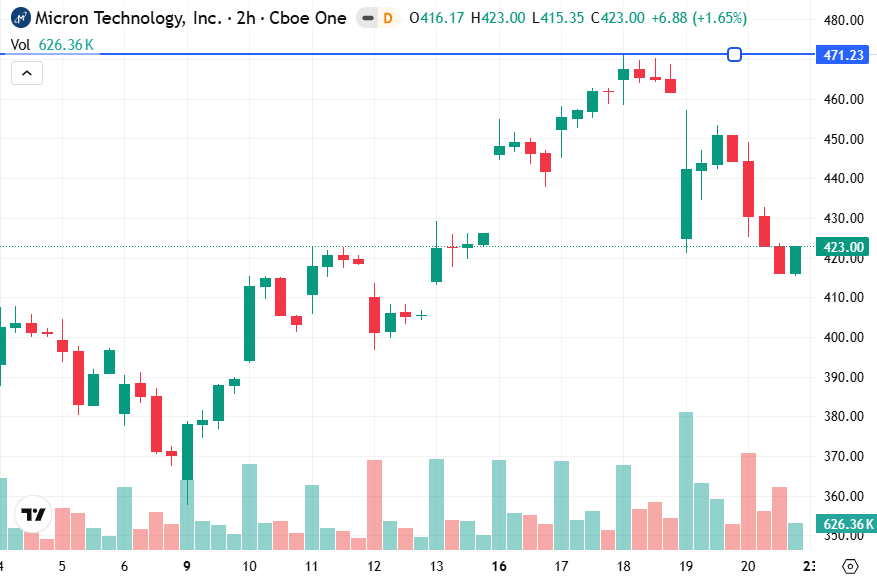
…and then more than recovered.
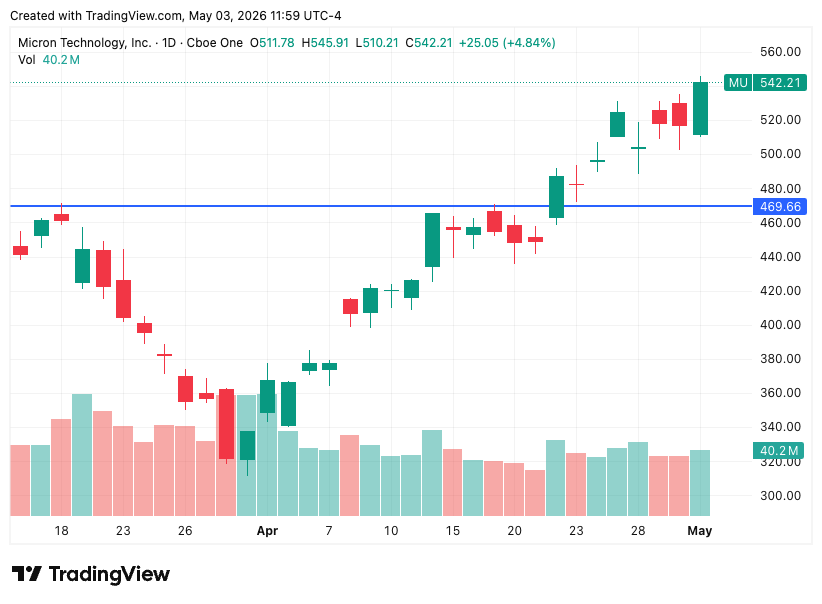
In every one of those cases, a stop-loss would have crystallised a real loss in exchange for protection from a temporary one.
What I use instead is what I’ll call the conviction stop. At least once a year, in writing, I re-underwrite every position from scratch. The question I ask isn’t “is the price down”. It’s “has the thesis broken”. Three checks do most of the work.
Are the unit economics still intact, or are margins, return on capital, and cash conversion deteriorating in ways that aren’t cyclical?
Is management still allocating capital the way they said they would?
Is the competitive position holding, narrowing, or widening?
If all three answers are clean, drawdowns are noise and sometimes a chance to add. If one answer is shaky, the position goes on a watchlist and gets a tighter quarterly check. If two are broken, I fully review the investment case right away. For the longer treatment of how I think about closing positions, see The Art of Knowing When to Sell a Stock.

The honest postscript is personal. I haven’t used a stop-loss on an investment in fourteen years. The only stop-loss I do use is in my relationships, where Carnegie’s original advice is exactly right and I’d recommend it to anyone. In my portfolio, the discipline that has compounded for me isn’t a price rule. It’s the willingness to do the quarterly homework, sit through the noise, and only act when the thesis actually changes.
Mr. Market is not your analyst. He’s your counter-party. Don’t let him decide when you’re wrong.
Portfolio Update
The market hit all time highs this week. The portfolio is up as well but slightly lagged the market.
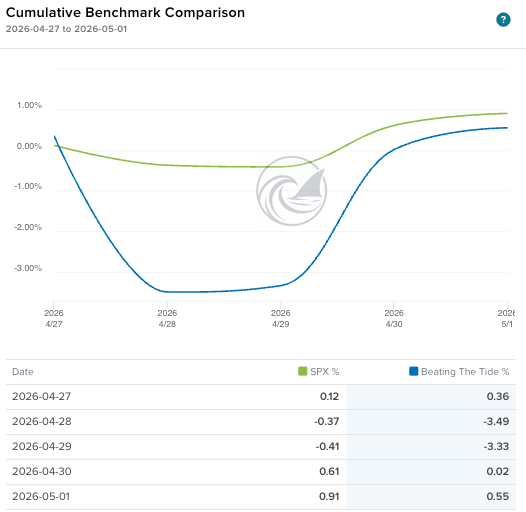
Portfolio Return
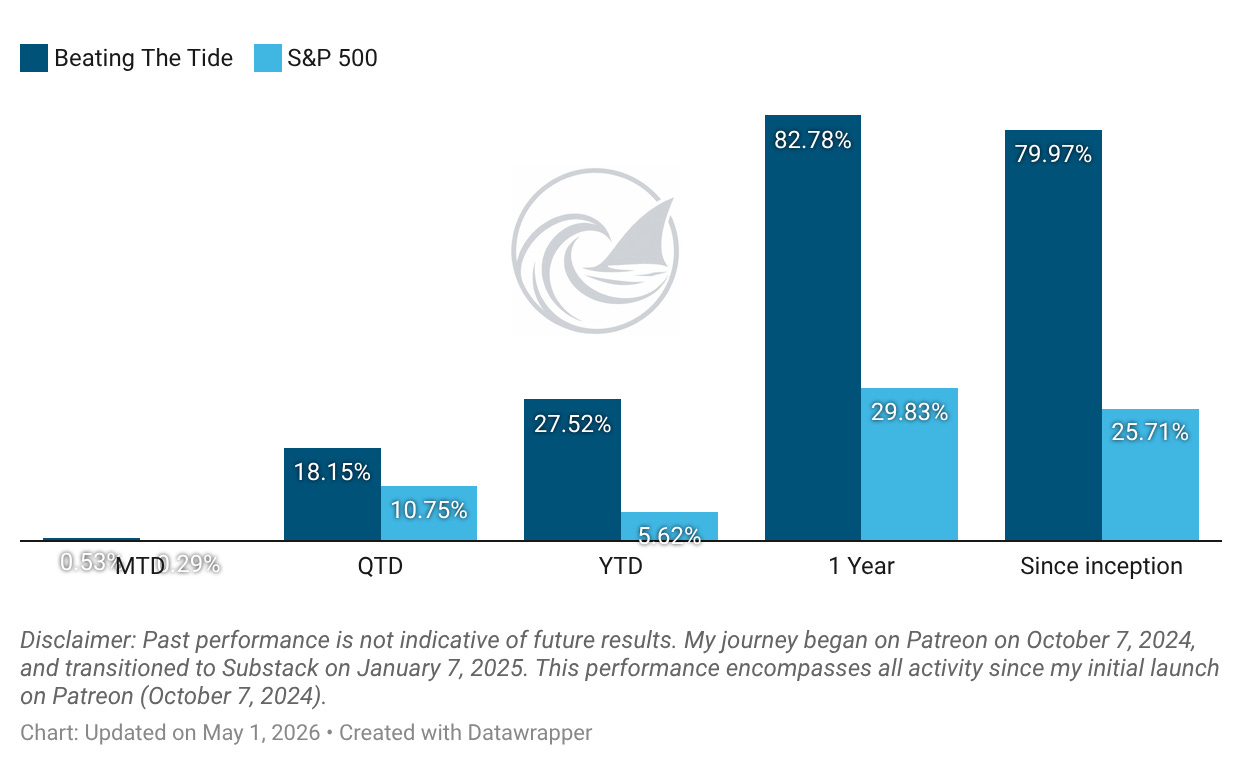
Month-to-date: +0.5% vs. the S&P 500’s +0.3%.
Year-to-date: +27.5% vs. the S&P 500’s +5.6%. That is a gap of 2,190 basis points.
Since inception: +80.0% vs. the S&P 500’s +25.7%. That’s 3.1x the market.
Contribution by Sector

Industrials led the gains partially offset by gold.
Contribution by Position
(For the full breakdown plus commentary on earnings results and the big movers, see Weekly Stock Performance Tracker)
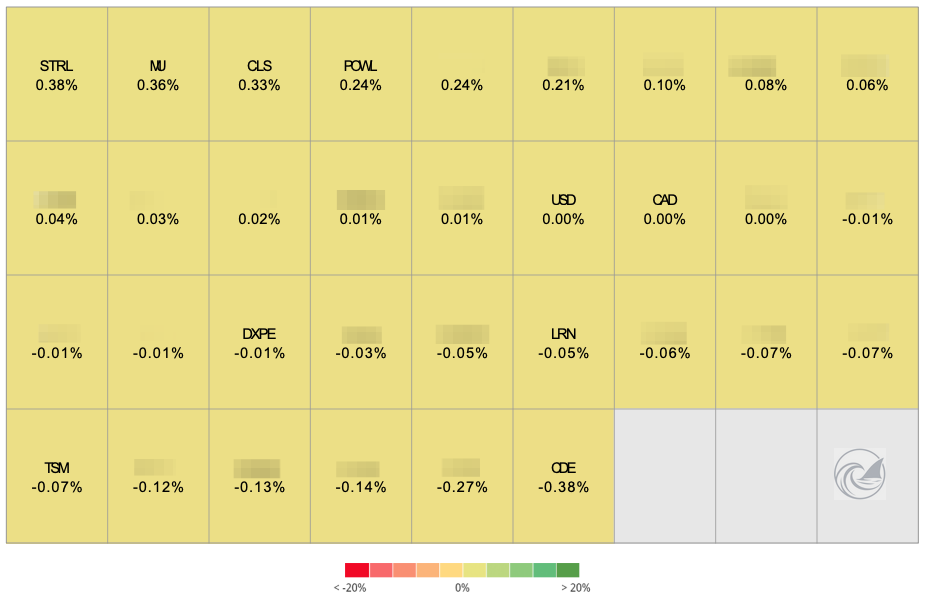
+38 bps STRL 0.00%↑ (Thesis)
+33 bps CLS 0.00%↑ (TSX: CLS) (Thesis)
+24 bps POWL 0.00%↑ (Thesis)
-1 bps DXPE 0.00%↑ (Thesis)
-5 bps LRN 0.00%↑ (Thesis)
-7 bps TSM 0.00%↑ (Thesis)
-38 bps CDE 0.00%↑ (Thesis)
That’s it for this week.
Stay calm. Stay focused. And remember to stay sharp, fellow Sharks!
Further Sunday reading to help your investment process:
You need a plan when you enter a position. And you need to stick to your plan unless something major changes. Ideal setups have low downside (sell if it falls a small amount) and large upsides (what you expect). Some setups require you to enter and just wait and be patient and not worry if it falls a lot.
Figure it out when you start the trade.