


Hello fellow Sharks,
Last week was a volatile one. The portfolio fell more than the S&P 500, but that is nothing next to the drawdowns others took, Situational Awareness above all (this week’s Thought of the Week). If you want to skip straight to the numbers, jump to the Portfolio Update.
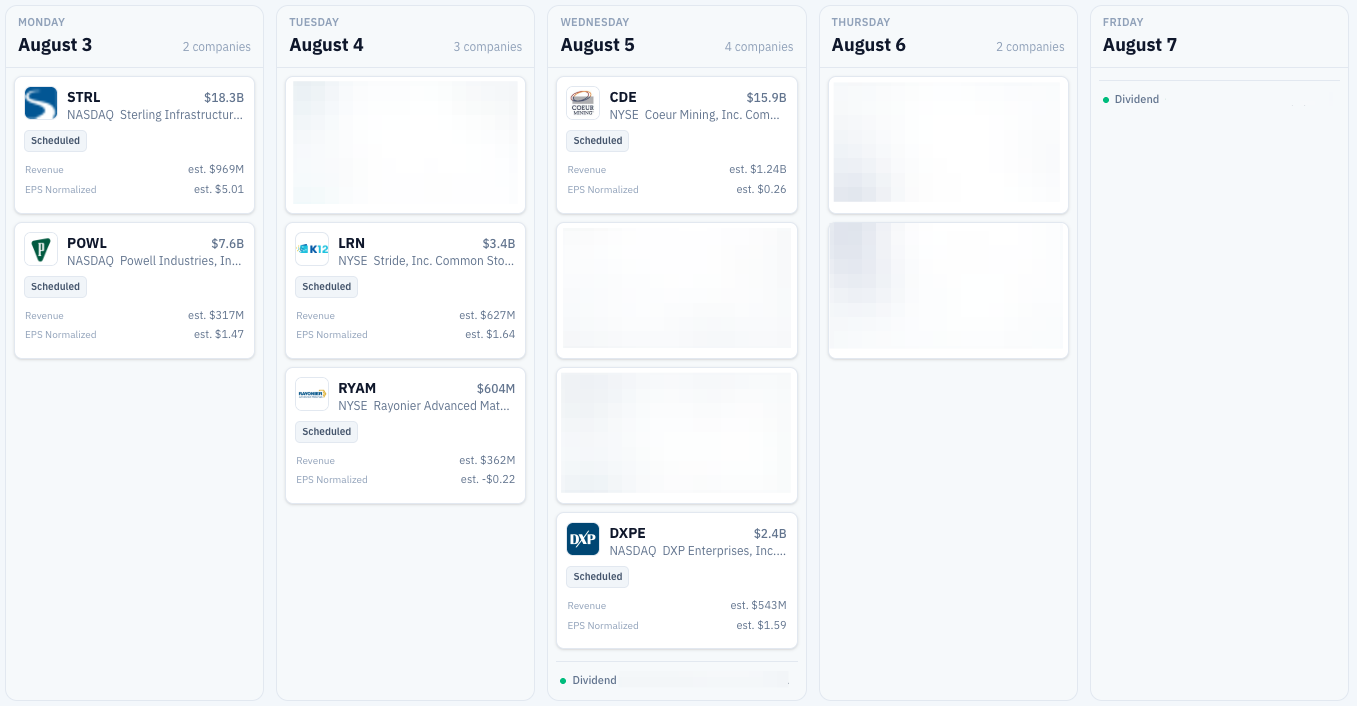
Four portfolio companies reported this week. All met or beat revenue consensus, and only one missed on EPS.

On July 29 I sent my read on the earnings results for CLS.

Next week, I will send my notes on the rest to paid subscribers.
Eleven portfolio companies report next week. Eventually, I will send notes only on the ones that matter.
Looking for the August Stock Pick, I have noticed that the pool of potential investments is shrinking, and I have not been able to diversify away from the US as I have mentioned I would do earlier this year.

So I may start looking for opportunities in local markets instead of using ADRs. But first, I would like to know how many of you have access to international markets.
If you don’t have access to non-US exchanges, you could open an account with Interactive Brokers (if you use my code, I get a referral fee). I have used them for decades and have the cheapest pricing and most transparency of any broker I have tried.
In this week’s Thought of the Week, I finally reveal my secret in investing. Funny enough, for the longest time I thought I had none. It took starting this newsletter to work out what my superpower actually is.
Enjoy the read, and have a great Sunday.
~George
Table of Contents:
Thought Of The Week
Revealing My Superpower
Many times throughout my career, people have asked me a version of the same question: so what is special about your strategy? For years I gave the same answer. Nothing. There is no superpower here. I went through the motions: read the filings, built the valuation models, did the channel checks. I meant it every time I said it.
Through the years, and especially since I started this newsletter, I changed my mind. I do have one. What makes it strange is that it isn’t a rare book I read, a dataset nobody else buys, or a model I built in a locked room. It is free, public, and repeated so often it has turned into wallpaper. Human nature is what stops almost everybody from holding on to it. I am as human as the next person, but my Asperger’s brain makes this particular skill easy to keep.
Before I tell you what it is, a bit of history. This newsletter did not start life as Beating The Tide. The first name was Shark Investing. I changed it later for reasons that were entirely about marketing, and the original name was the more honest one.
I picked the shark because of the way it hunts. A shark spends most of its life moving slowly and doing nothing that would make a good video. It does not chase everything that swims past. Then blood hits the water, and the animal that looked half asleep a second ago becomes the fastest thing in the ocean.
That is the whole job. Stay quiet, stay consistent, and be ready to move when the water changes. Last week handed us a textbook example of a shark doing exactly that, and it was not me. It was Ken Griffin. I will come back to him.
I am not the first person to write that you should let compounding work, let your winners run, cut your losers, buy quality, keep emotion out of the decision, avoid leverage, diversify, and buy when the crowd is scared. I have preached that list myself. Everybody preaches it. Then a week like the last one arrives, the tide goes out, and we find out who was swimming naked.
The week we found out who was swimming naked
Since I started the newsletter, I have followed a handful of publishers on Substack, partly to see what others are doing and partly for fun. Every morning I take a look at what the community is posting.
By Tuesday and Wednesday, my feed had filled up with posts that read like this:
I was wrong.
This time it truly is different.
I was right, but I wasn’t counting on X to happen.
I lost my last two years of returns, +200%, in two days.
I will not be linking to any of them. That isn’t the point of this piece, and I don’t like hitting people when they are down. I hope every one of them walks out of July with a better process than they walked in with. The point is the contrast, so let me tell you what happened on my side of the screen.
I can summarize my week in one word. Nothing.
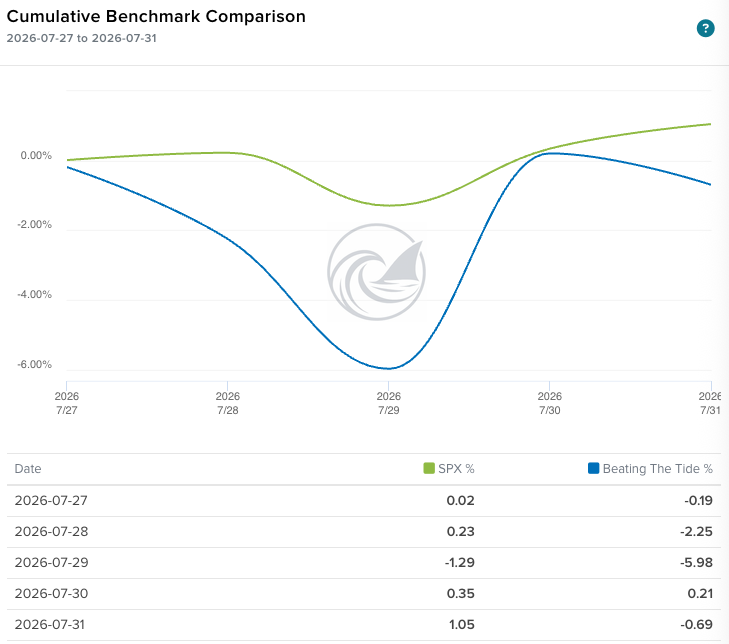
The portfolio fell on Tuesday. It fell again on Wednesday. I made no trades. I sent no panic note to subscribers. I posted no admission that a thesis had broken. On Wednesday, with the stock falling, I published a bullish update on Celestica. Thursday we went up. Friday we went down. That was the whole of my week’s drama.
My superpower is boring, and that is the point
My superpower isn’t that I read filings better than the next analyst, or that I found the holy grail of investing, or that I can travel through time. (But if I could pick a superpower, I would take Hiro Nakamura’s from Heroes. I loved that show. Imagine it: buy bitcoin at one cent, win every WSOP tournament I enter, and warn Trump that the Iran war will backfire. Although I did not need a time machine for that last one.)
My superpower is consistency.
Yes, boring consistency.
Consistency stands on two legs:
The first leg is discipline. For most people, consistency holds right up until something interrupts the plan. A last-minute meeting. A chocolate cake sitting in front of you. A market correction.
For me, it works the other way around. Stepping outside the routine is the difficult part. Staying inside it costs me nothing, so a red Tuesday doesn’t drain me the way it drains someone who has to fight himself to sit still. Some people find that boring about me. I am how I am, and you shouldn’t fight your nature. I wrote a whole Weekly about exactly that.

The second leg is that I don’t care what people think of me. That sounds like a character flaw at a dinner party. In investing, it makes it easier to ignore the herd. I don’t window dress the portfolio before a quarter ends. I don’t defend a call I made two years ago that turned out to be wrong (check out my terrible calls: Seadrill, Tailored Brands and Amira Nature Foods).
I also don’t need the tape to agree with me this week, this month, or this quarter.
All of that frees up the only resource that compounds: attention.
That had a practical consequence last week. I never had to write an I was wrong post on Wednesday, because I had not made the kind of claim that needs defending on a Wednesday.
Then there is Leopold
Everyone is talking about Leopold Aschenbrenner and Situational Awareness. (In hindsight, the fund name was ill-fit 🙂).
A couple of months ago, a friend forwarded me an Instagram post about Leopold. Former OpenAI researcher on the Superalignment team, fired in April 2024 over an alleged information leak he disputes. Author of a 165-page essay called Situational Awareness arguing that scaling AI would demand an enormous build-out in chips, memory, compute and power. Then a hedge fund launched on the back of that essay, by a man who was 22 at the time and had never traded professionally.
My first reaction was that this had to be fake news. I had never heard the name. I googled it, and every part of it was real. Columbia valedictorian at 19, enrolled at 15. The fund launched in 2024 with $225M from Jane Street, Patrick and John Collison, Nat Friedman and Daniel Gross. By mid-2026 it was running north of $20B, with reports putting peak net asset value as high as $45B. I was impressed. Getting that kind of traction that young is not nothing.
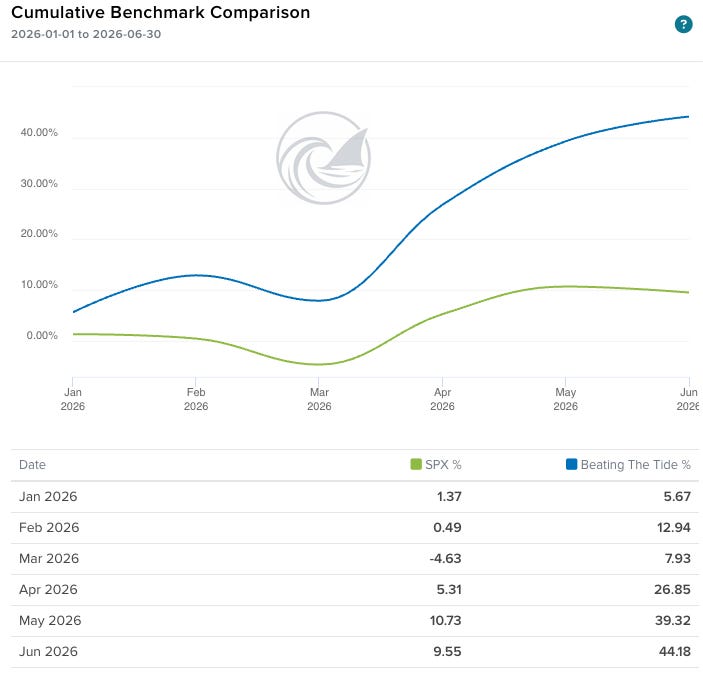
My friend wanted me to follow his strategy: You should double down on your high-conviction bets, concentrate in AI, and stop diluting yourself with financials and the other stuff. Then he sent me the number that was supposed to end the argument. Leopold’s fund was up 439% net through June. Mine was one tenth of that at +44%.
I didn’t care. I was happy with my portfolio then, and I am happy with it now.
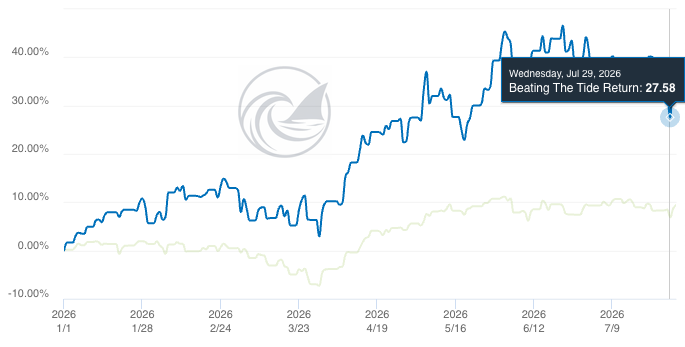
Then July arrived. The AI and semiconductor complex sold off hard. At the worst point in the month, my YTD came down to +27.6%...
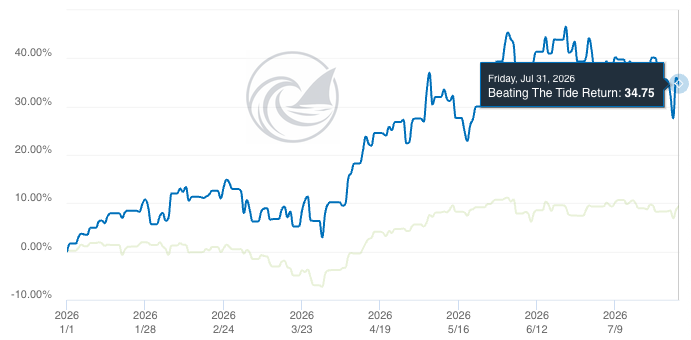
… and we closed July at +34.8%.
Leopold’s?
Down 67% in the month. Yes, that is a negative.
He is not wiped out. The fund is still standing, still holds its private positions including an Anthropic stake valued at $5B, and because the gains before the fall were so large, it is still up 80% for the year. But on the morning of July 30, before the open, Situational Awareness sold its entire public book, longs and shorts together, in a single block trade to Ken Griffin’s Citadel. The Journal put the price at $10B. Fund assets, north of $20B a few weeks earlier, landed at $10B once it was done. The letter that went out to clients opened with the line we let you down this month.
What actually broke
There is no shortage of articles covering the collapse, and I won’t rewrite them here. I want the three things that matter for us, because all three are things you and I control in our own accounts.
Mistake #1. The leverage.
CNBC reported that the fund ran gross exposure as high as four times capital. At 4x, a 30% fall in your longs is a 120% hit to your equity before anything else happens. Core positions dropped between 27% and 54% in July, the Nasdaq 100 lost more than 5%...
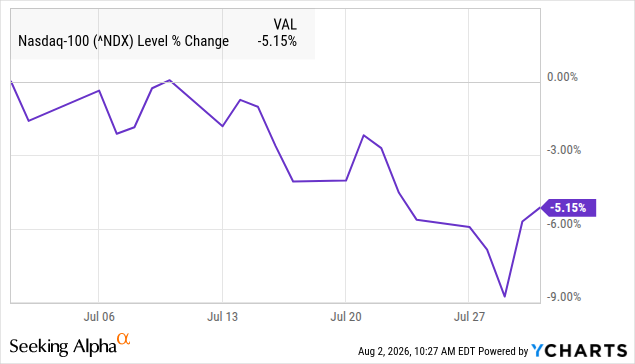
… and Korea’s Kospi, home to his SK Hynix position, fell by 39% at its worst moment, but has since partially recovered.
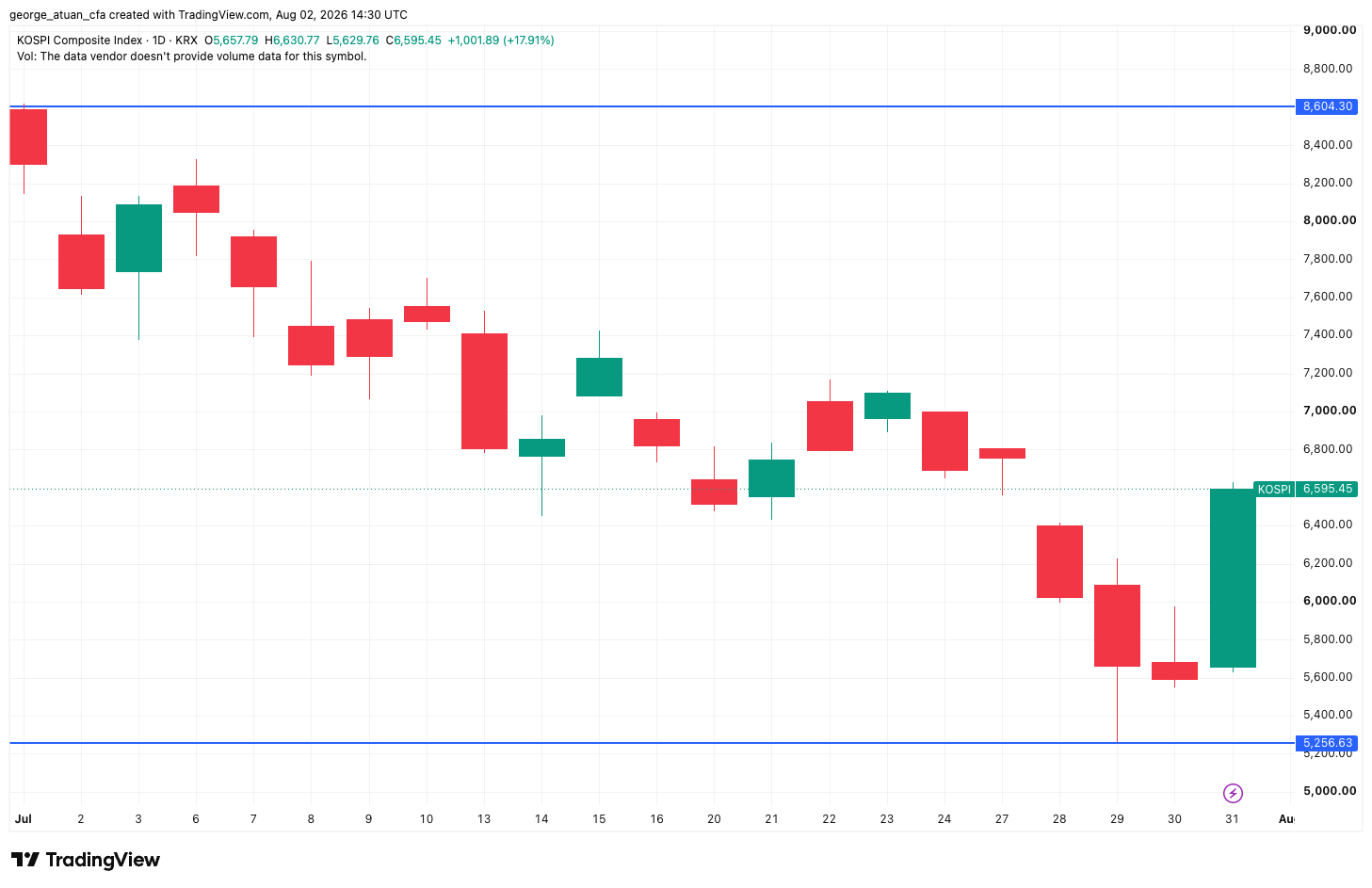
With leverage on, once your equity burns down to the broker’s maintenance threshold, you stop being an investor and become a forced seller. Goldman Sachs, JPMorgan and Bank of America made those calls on his book.
Mistake #2. The concentration.
His Q1 13F showed $3.86B across 26 positions, with the top five at more than 76% of the disclosed long book. Bloom Energy 22.8%, SanDisk 18.8%, CoreWeave 14.4%, IREN 10.4%, Core Scientific 10.1%. He owned 8.2% of Core Scientific’s shares outstanding. For contrast, my top five positions are 35% of the portfolio.
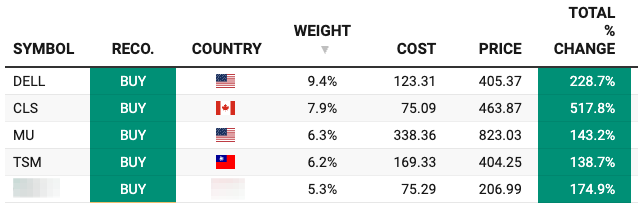
Mistake #3. The hedges that weren’t hedges.
He was long the second derivative of AI (similar to our portfolio), meaning power, memory, GPU capacity and miners turned data centers, and short software names he expected AI to eat, with reported put exposure of $2.0B notional on the SMH semiconductor ETF and $1.6B on Nvidia.
On paper that reads as a balanced book. In practice, every leg leaned on the same factor. When the AI complex broke, the high beta longs fell two to four times harder than the large cap hedges, and the software shorts rallied at the same time. Long book down, short book up, on the same day. Call that what it was: a leveraged directional bet.
The part I want you to sit with: prices can be pushed
On July 27, Citadel Securities published a call that the Fed would deliver a surprise quarter-point hike that week. Their head of macro strategy argued a July hike would end the forward guidance era and warned that the market was underestimating how hawkish the Fed had become.
On July 28, Bloomberg reported record demand for hedges against a surprise hike, and CME FedWatch had the odds at 37.9%. A call that most bank economists rejected had become a live market risk in a day.
On July 29, the Fed held rates. Stocks fell anyway. The Dow gave up more than 840 points, and the 30-year Treasury yield hit its highest level since 2007.
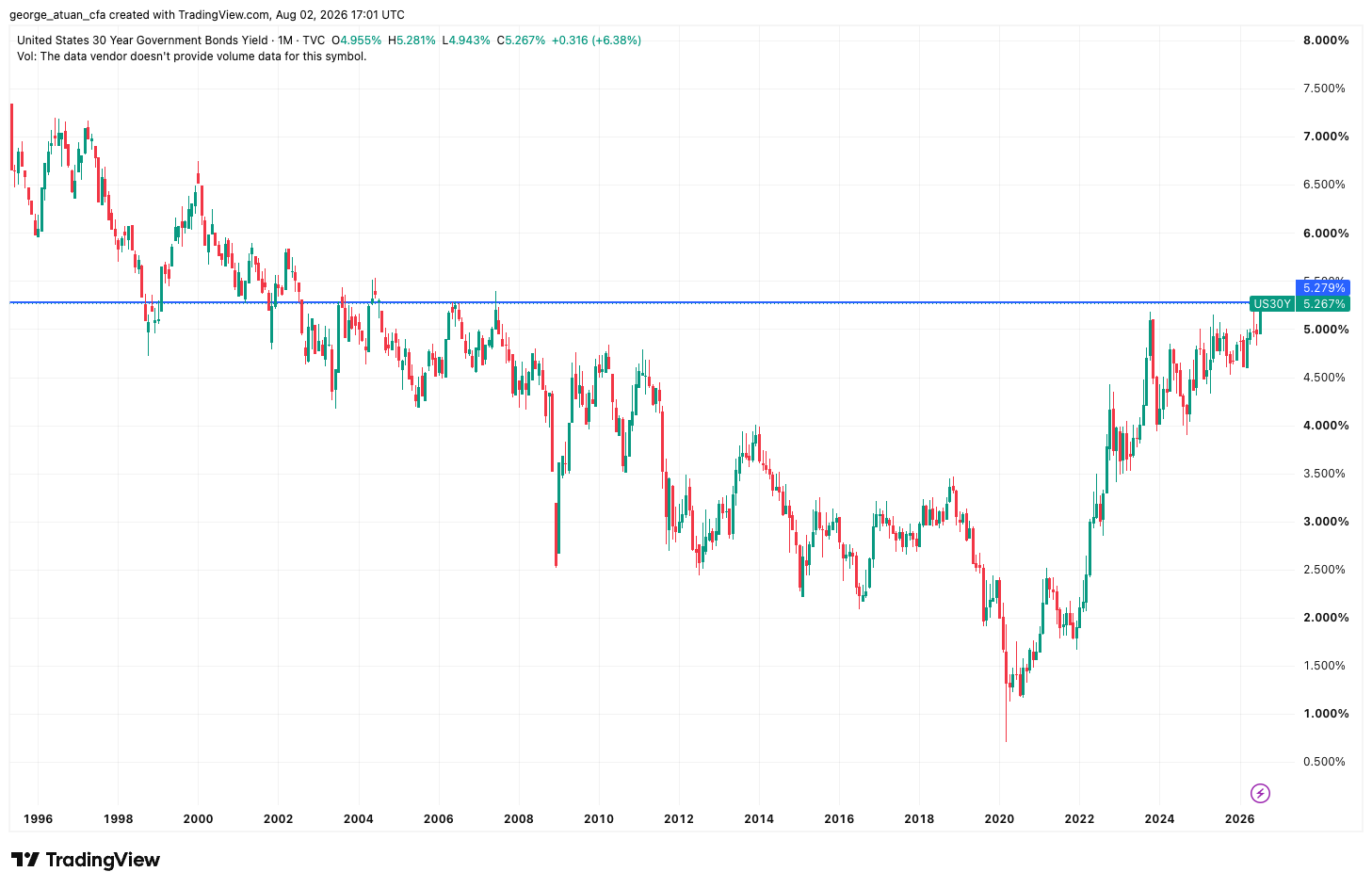
On July 30, before the open, Situational Awareness sold its entire book to Citadel.
By the close that same day, the names in that book were up 20% to 27%. The equal-weight S&P 500 was flat on the day.
For four days, the price of Bloom Energy [BE 0.00%↑] or CoreWeave [CRWV 0.00%↑] had almost nothing to do with Bloom Energy or CoreWeave. It was set by a macro call, a hedging panic, three margin desks and one forced seller. Then it was reset the moment that seller was gone. Bloom Energy reported record Q2 results and rose 25.6%.
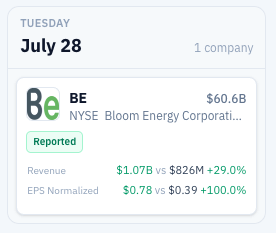
IREN 0.00%↑ had no company news at all and rose 26.5%. When the name with the earnings beat and the name with no news move by the same amount, fundamentals are not driving the tape.
Something else is.
That is the lesson I want you to keep.
In the short term, big money can move prices. In the long term, fundamentals, cash flows and ROIC move them. Every rule I write in this newsletter exists to keep me living on the second timescale, because the first one is a casino (besides, I don’t have that big money to move the market…yet).
And notice who got paid. Citadel bought a $10B book from a seller with no choice, then watched it reprice more than 20% higher within hours.
That gap has a name.
It is the liquidation discount, and it is the price of being the one who has to sell. Leverage is the thing that decides whether you are ever that person.
The six-punch knockout. Everything Leopold got wrong, and where I wrote about it first
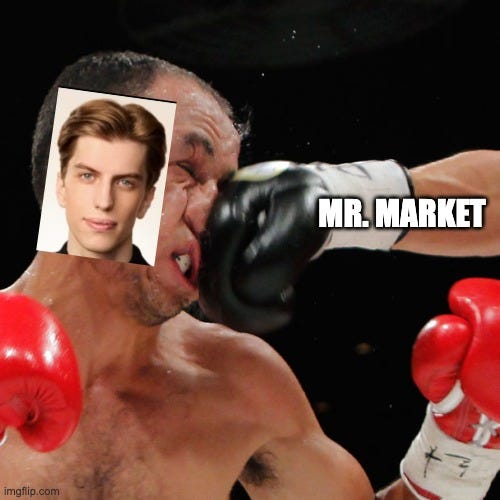
Last week Leopold got in the boxing ring with Mr. Market. Leopold got knocked out after six punches.
None of what follows is hindsight. Every item here has its own Weekly, with a date on it, and most of them are older than his fund.
Punch #1. He used leverage.
In Weekly #21 I set out the rule, and I used the exact number that ended up killing him.

At 4-to-1 margin, one tornado through your company’s plant takes your portfolio to -100%. Game over. In the same piece I published the arithmetic behind the rule.
Since 2012, I have had four losing years out of fourteen. Unlevered, that compounds beautifully.
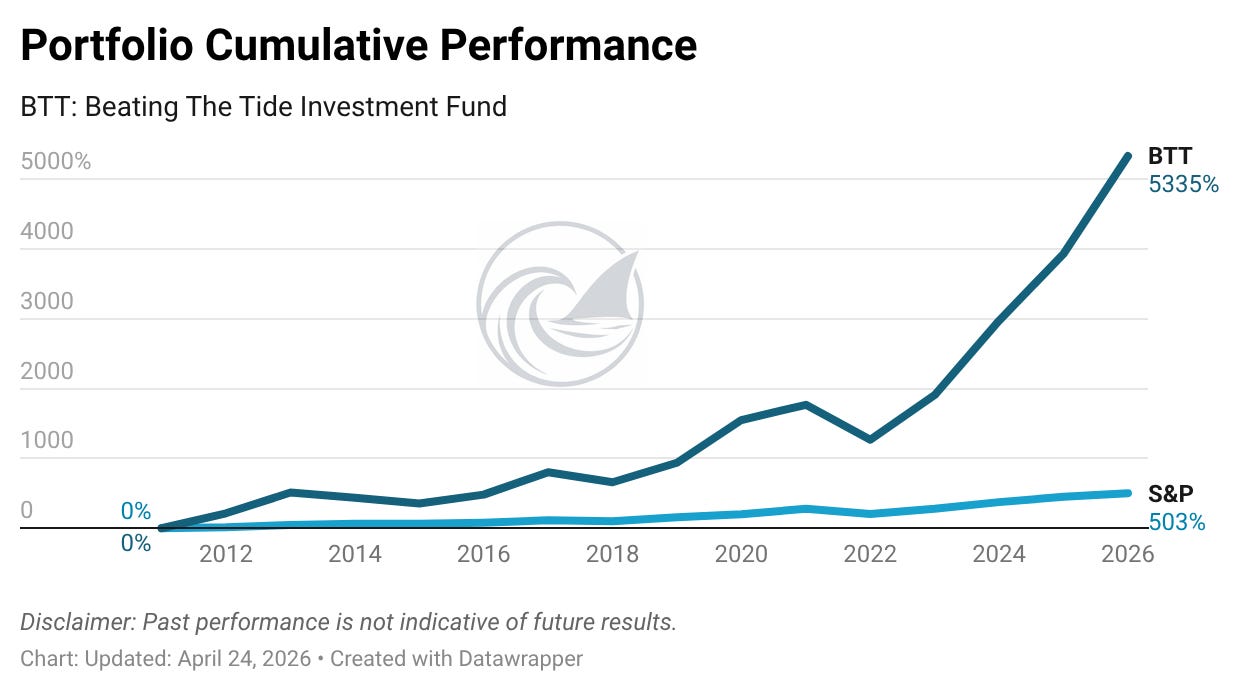
Levered, it wipes you out, because leverage demands an impeccable record for thirty years with no margin of safety. My own margin has never gone above 20% of portfolio value, and I use it as a bridge between two trades rather than as a position.
Punch #2. He concentrated past the point of survival.
In Weekly #79 I explained why I cap even my highest conviction call at 5% of NAV, and why a 70% drawdown needs +233% just to get back to flat.

His top five positions were more than 76% of the disclosed book. In Weekly #46 I wrote that 20% of your stocks generate 80% of your returns.

And people sometimes read that as a case for concentration. It is the opposite. You need to own enough names to be holding the 20% when it finally runs.
Punch #3. He mistook correlation for diversification.
Six tickers driven by one factor is one position wearing six names. In Weekly #87 I laid out why I don’t think AI is a bubble.

And in the same piece, I published my own exposure to the theme: 7 companies out of 31 on a count basis, but 41.8% of portfolio market value. I think that is high, and that is why my last five monthly picks have been outside the AI space.
Punch #4. He had never been punched in the mouth.
Weekly #76 borrows its title from Tyson for a reason.

Leopold is 25 and had no trading experience before he launched the fund. He has read about 1998, 2008 and 2020. Reading about a drawdown and standing inside one are different skills, and only one of them is available in a book. There is nothing wrong with never having lived through a crisis (I was too young for the 2000 crisis and my portfolio was very small in 2008). What matters is being humble enough to admit it, and then building the portfolio around that gap instead of pretending it isn’t there.
Punch #5. He let the tape write his research.
Weekly #23 was about ignoring market noise…

… and Weekly #90 was about the voice in your head being Mr. Market rather than an analyst.

A 439% run through June is the loudest possible version of that voice, and it was telling him he was right. On July 24, with the book already bleeding, he wrote to his clients that the selloff was one of the best buying opportunities since early last year and invited fresh capital starting August 1. I think that he will turn out to be right about the AI build-out. That is the cruel part of the story. Being right about 2030 does nothing for you when your prime broker calls in July 2026.
Punch #6. He sized for the good case.
Weekly #13 made the case for investing like a professional poker player, and the core of that piece is that a good player with a winning hand still sizes the bet so that a bad river does not end the night.

Leopold had the best hand at the table for eighteen months. He sized as though the river could not come. I wrote the counterpart to that in Weekly #79, precisely so that being wrong stays survivable.
None of this is new
Smart people doing reckless things because success made them certain is one of the oldest stories in this market.
Long-Term Capital Management (another ill-fit fund name 🤔) had Myron Scholes and Robert Merton, who shared the 1997 Nobel in economics, among its principals. It had $4.8B of equity, more than $125B borrowed from banks and dealers, and over $1 trillion of notional derivatives exposure. In 1998 it lost $4.6B in under four months. The New York Fed had to put 14 banks in a room to fund a $3.6B rescue so the unwind would not take the global financial system with it.
Look at the shape of it next to July 2026. Brilliant people. A thesis that was defensible on its own terms. A model that worked until every correlation in it went to one at the same moment. And leverage sitting underneath, quietly converting a bad month into an existential one. The names change, the instruments change, the mechanism does not.
What was missing in both pictures had nothing to do with intelligence. It was an honest read of your own strengths and weaknesses. Leopold’s edge was real. He understood the physical layer of the AI build-out earlier and more deeply than the market did, and he was paid enormously for it. His weakness was that he had never been tested. Treating the first as permission to ignore the second is how the fall happens, and it is why LTCM’s PhDs and a 25-year-old with a Substack essay end up in the same paragraph.
The unglamorous conclusion
So that is my superpower, and it looks unimpressive written down. I did not out-analyze anybody last week. I did not call the top. I had no hedge on. I did nothing at all. The portfolio fell, I sat there, and by Friday we were at +34.8% for the year and 3x the market since inception.
Consistency doesn’t photograph well. Nobody makes an Instagram post out of a man not trading. My friend was never going to forward me a screenshot of someone sitting still.
That is exactly why it keeps working.
Which brings me back to the shark.
Griffin did the other half of the job last week. Blood hit the water on Thursday morning, and Citadel was standing there with a $10B bid and no need to negotiate. That is the strike, and it paid inside a single session.
The strike is the easy half. Anyone will bid for a dollar at eighty cents. The hard half is everything that comes before it: the months of moving slowly, staying liquid, staying unlevered, and letting the water come to you. Leopold skipped that half. He swam hard in one direction for eighteen months carrying four times his own weight, and when the water changed he was the blood rather than the shark.
Most of this job is waiting. Make sure that when the water finally does change, you are the shark.
Portfolio Update
Last week, the AI space melted down on Tuesday and Wednesday, recovered on Thursday and slipped on Friday.
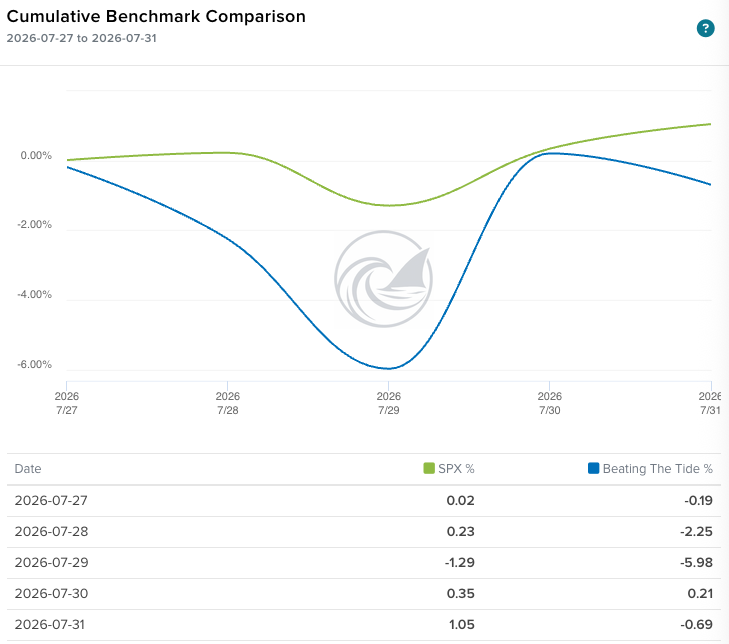
Portfolio Return
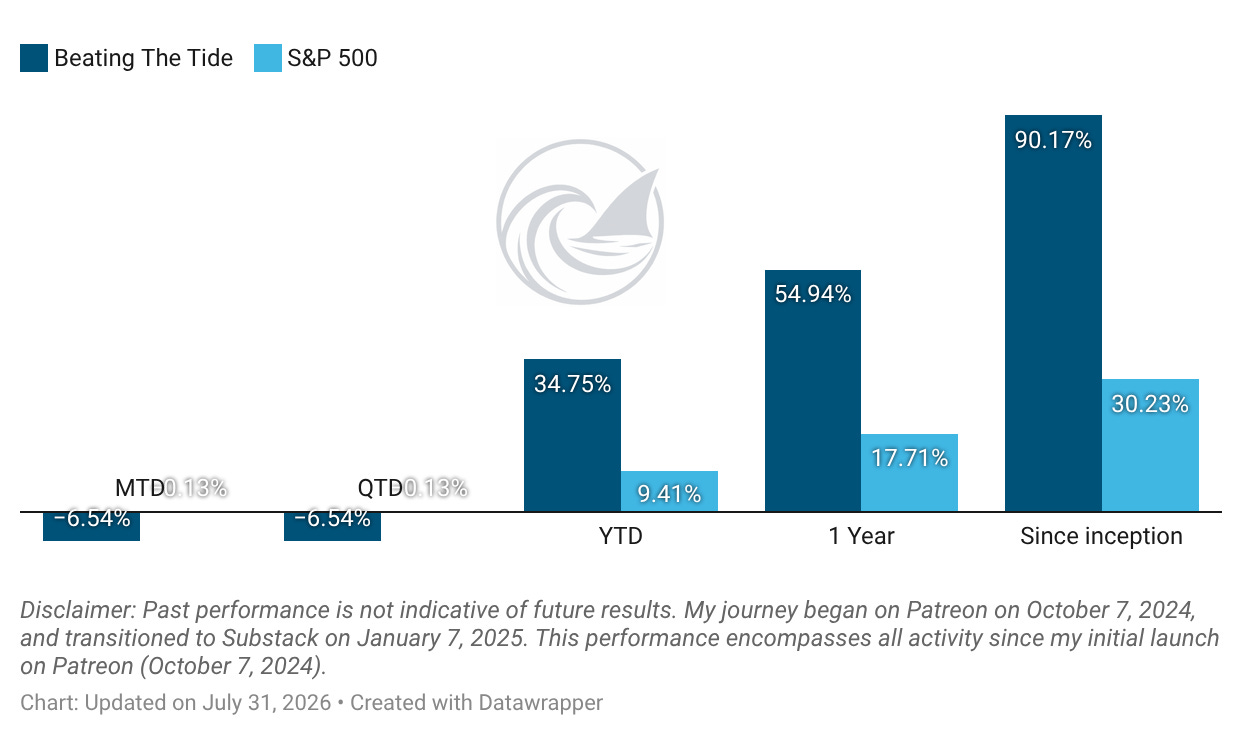
Month-to-date: -6.5% vs. the S&P 500’s -0.1%.
Year-to-date: +34.8% vs. the S&P 500’s +9.4%. That is a gap of 2,534 basis points.
Since inception: +90.2% vs. the S&P 500’s +30.2%. That’s 3.0x the market.
Contribution by Sector
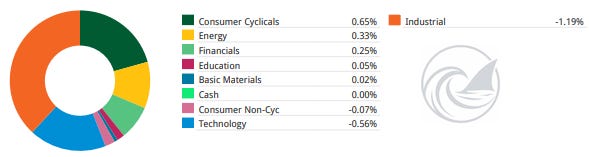
Industrials and tech led the losses, partially offset by consumer cyclicals and energy.
Contribution by Position
How to read the heat map? Click here.
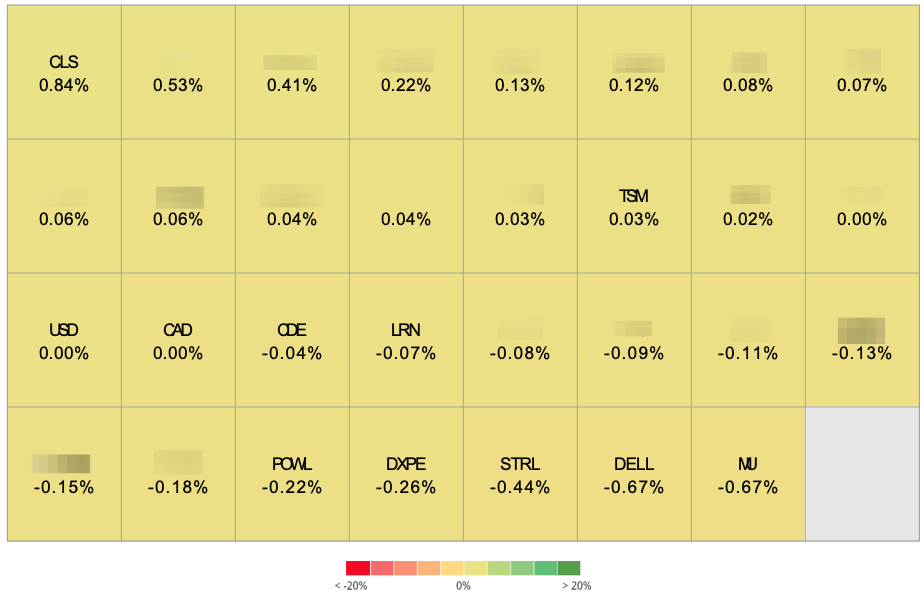
+84 bps CLS 3.09%↑ (TSX: CLS) (Thesis)
+22 bps RYAM 0.00%↑ (Thesis)
+3 bps TSM 1.99%↑ (Thesis)
-4 bps CDE 0.74%↑ (Thesis)
-7 bps LRN 0.14%↑ (Thesis)
-22 bps POWL 1.10%↑ (Thesis)
-26 bps DXPE 2.42%↑ (Thesis)
-44 bps STRL 4.60%↑ (Thesis)
-67 bps DELL 3.90%↑ (Thesis)
That’s it for this week.
Stay calm. Stay focused. And remember to stay sharp, fellow Sharks!