


Hello fellow Sharks,
Another strong week. The portfolio gained +4.9% while the S&P 500 added +0.7%, so the lead just got wider. If you want to skip straight to the numbers, jump to the Portfolio Update.
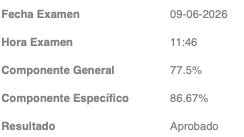
A quick personal win first. As I mentioned last week, I had to sit a test to renew my Chilean license. Rather than wade through 500-plus pages of material, I built a simulator from it and drilled only my weak points. Ten hours of prep, tops, and I passed. 🥳
On another note, I got this note from a subscriber.
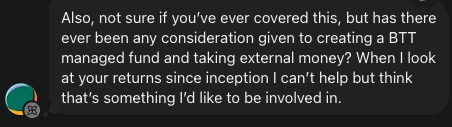
I DO have a fund, and I think I've mentioned it here before. If being part of it is something you'd want, let me know and I'll send you the details.
I also almost scrapped the Thought of the Week to write about SpaceX's IPO, but I'm saving that for next week. I think SpaceX will be the single biggest source of volatility in 2027, and I'm still working out how to play it without blowing up the AI-theme positions we already hold. More on that soon.
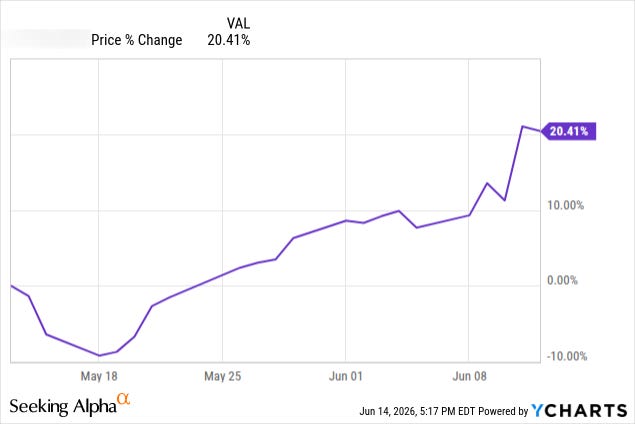
For the record, I didn't buy the SpaceX IPO. I never do IPOs, only spin-offs, split-offs and carve-outs (you can read here why I invest in those). We still caught the updraft through a name we already owned: the April Stock Pick, a defense company, is up +20% this month, with a clear pop the week SpaceX listed as the hype spilled into the defense space.
A couple of weeks ago, a subscriber sent me a short one: is Nike a buy?
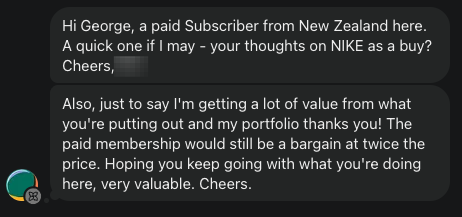
Here’s what I sent back.
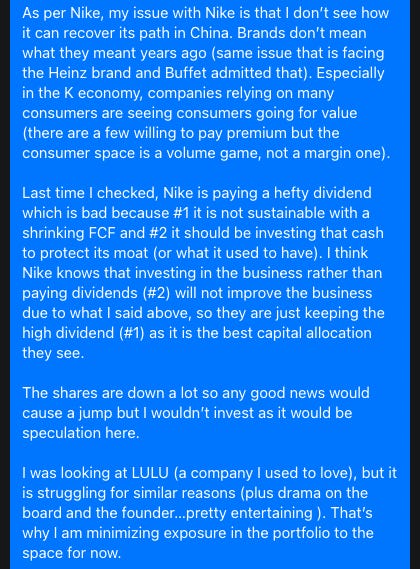
The short version: I don't see how Nike fixes its China problem, and brands no longer mean what they once did. The dividend survives because management knows reinvesting the cash won't repair the business, so paying it out is the least bad option. Yes, the stock is beaten down enough that any good news pops it, but that's speculation, not a thesis.
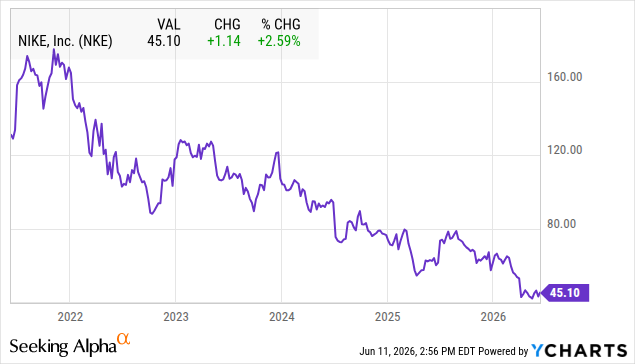
That one question pulled a much bigger thread, and that thread is this week's piece.
Enjoy the read, and have a great Sunday.
~George
Table of Contents:
In Case You Missed It
This week I closed the AXIA position almost flat, down 0.6% on my cost basis but up +2.6% from where I recommended it on January 8, 2026.
The exit has nothing to do with the thesis. In April the board approved delisting the US ADRs to consolidate trading into the ordinary shares on Brazil's B3 exchange, part of its move to the Novo Mercado governance tier. The ADRs are only about 2.5% of the shareholder base, so management is pulling them to concentrate liquidity at home. Holders with Interactive Brokers or a Brazilian broker can convert the ADRs into ordinary shares and stay in, but most subscribers can't trade in São Paulo, so I closed the position to keep the model portfolio clean and trackable. A disappointing way to leave a name that hit my target inside three months, but it's a governance call, not a business one.
Also, a day before the start of the World Cup, I shared the June Stock Pick.
![[June Stock Pick] Trade Alert: I Just Added a New Position](https://substackcdn.com/image/fetch/$s_!7Tix!,w_140,h_140,c_fill,f_webp,q_auto:good,fl_progressive:steep,g_auto/https%3A%2F%2Fsubstack-post-media.s3.amazonaws.com%2Fpublic%2Fimages%2F8d9366fa-be76-490c-bf08-d4ebffd5d132_1920x1080.png)
I will be sharing the deep dive with paid subscribers next week.
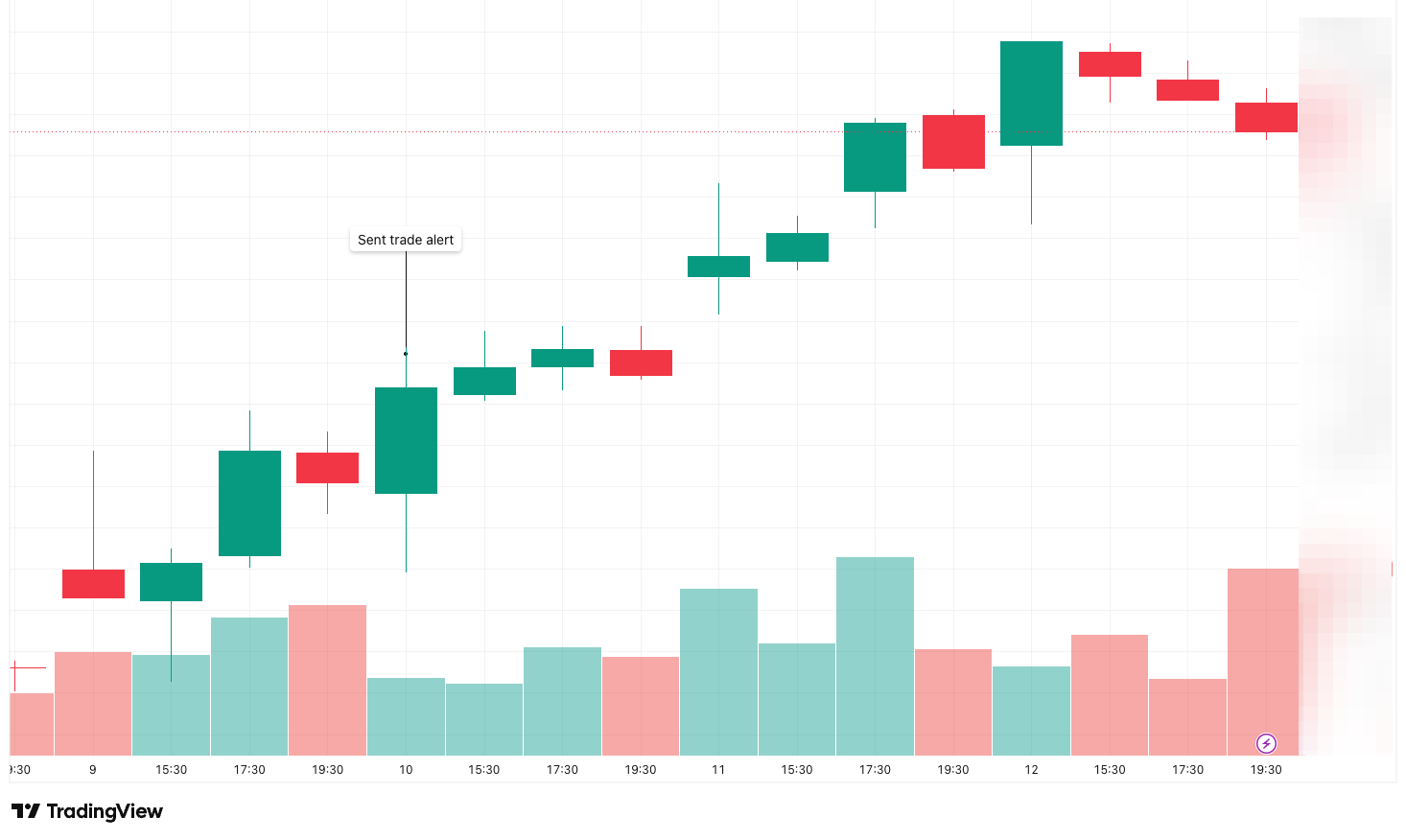
The scorecard below is every call I've published, open and closed, scored in real time. I don't hide the losers.
Thought Of The Week
The Slow Death of Brand Investing
Investing in brands used to be one of the great strategies in markets. Buffett built part of his record on it: See’s Candies in 1972, Coca-Cola in 1988, American Express, Heinz in 2013. The logic was almost mechanical. Find a name people trust, confirm they’ll pay extra for it, and let pricing power compound for decades.
That machine is breaking, at least for brands that sell to the masses. Below is why I think it broke, what the K economy has to do with it, and the test I now run before paying a single dollar for a brand.
What a brand is actually worth
Strip away the marketing language and a brand is worth exactly one thing: the incremental price people willingly pay over a comparable product without the name.
That’s the entire asset. Take the swoosh off a $130 Nike running shoe and ask what the identical shoe sells for as a no-name product. Maybe $70. The swoosh is worth the $60 gap, multiplied by every pair sold, for as long as buyers keep paying it. Marketing academics formalized this years ago: Ailawadi, Lehmann and Neslin measured brand equity as the revenue premium a branded product earns over an equivalent private-label product.
This definition explains why brands made such good investments for so long. The premium is close to pure profit. It costs Coca-Cola nothing extra to sell a bottle of Coke at twice the price of store-brand cola; the syrup costs the same. A strong brand lets a company raise prices a little every year without losing customers, and that pricing power required no new factories and no new capital, nothing but the name. Buffett’s See’s Candies is the cleanest example: he bought it for $25M in 1972 and raised prices nearly every year after.
But notice what the definition implies. The brand isn’t the logo, the history, or how many people recognize the name. It’s the premium. And the premium exists only inside the customer’s willingness to pay it. When that willingness fades, the asset evaporates.
Why mass brands are losing the premium
Four forces are squeezing the premium out of mass-market brands, and none of them look temporary.
Force #1. The information gap closed. A brand’s original job was to be a shortcut for trust. Fifty years ago you couldn’t test a shoe’s quality before buying, so you paid extra for the name that had never burned you. Today every product carries thousands of reviews, comparison videos, and teardown threads. Quality became observable. When you can verify, you don’t need to trust. And when you don’t need to trust, the trust premium shrinks.
Force #2. The dupe flipped from shame to status. My generation hid its knockoffs. The current one posts them. On TikTok, finding a $30 copy of a $128 Lululemon legging isn’t embarrassing, it’s content, and the word dupe has billions of views behind it.
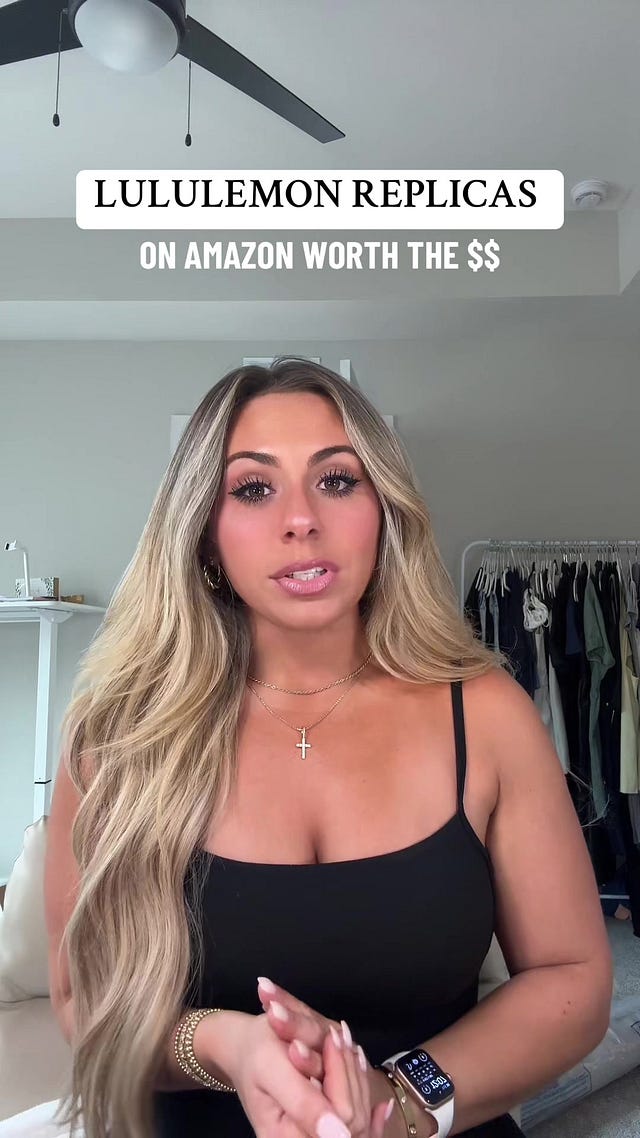
 Tiktok failed to load.
Enable 3rd party cookies or use another browser
Paying full price for the logo is what gets mocked now. That’s a cultural reversal of the exact mechanism that made brands valuable: the logo used to signal status, and today overpaying for the logo signals you got played.
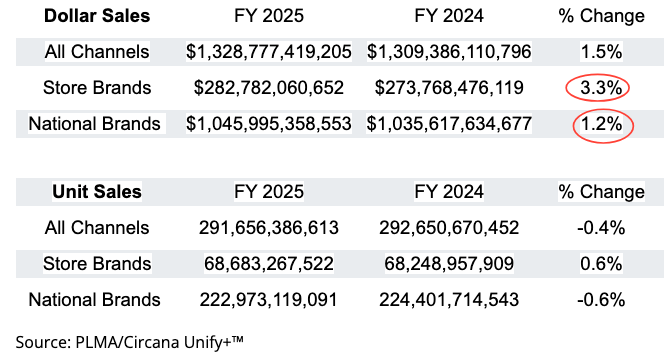
Force #3. Private label got good. Store brands used to be the sad row at the bottom of the shelf. In 2025, US private-label sales hit a record $282.8B, growing 3.3% against 1.2% for national brands, and store brands now move a record 23.5% of all units sold.
Costco’s Kirkland Signature alone does about $90B a year in sales, roughly double Nike’s entire revenue.
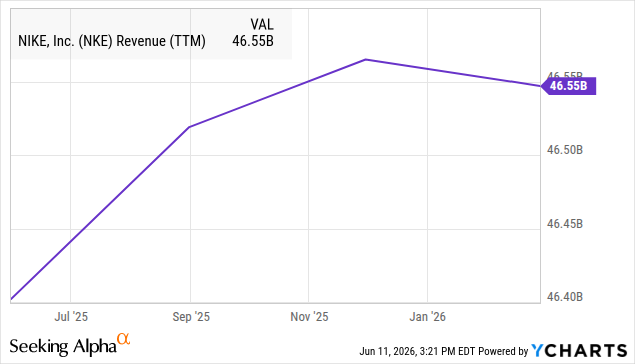
Read that again. The single biggest beneficiary of brand erosion is itself a brand, except its promise is the opposite one: Kirkland’s pitch is that you’re smart for not paying the premium. The premium didn’t just shrink, it changed owners. Retailers captured it.
And some national brands handed it over themselves: to fill idle factory capacity, they took on contracts to manufacture the very store brands now eating their share, a short-term margin fix that trained their own replacement and traded away long-term pricing power.
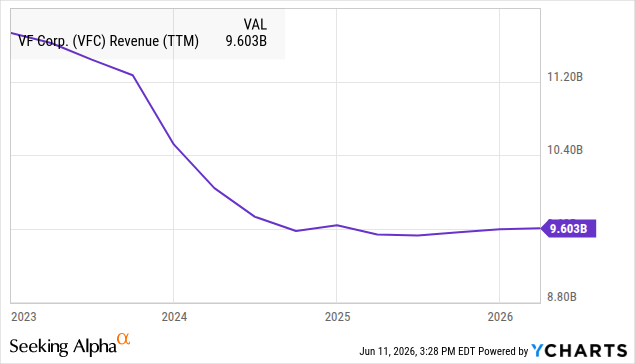
Force #4. Brand heat became a fashion cycle, not an asset. VF Corp’s Vans was one of the hottest names in footwear in 2018.
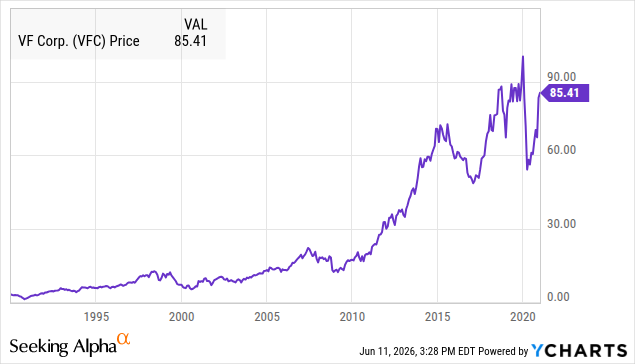
Sales have now declined three years in a row.
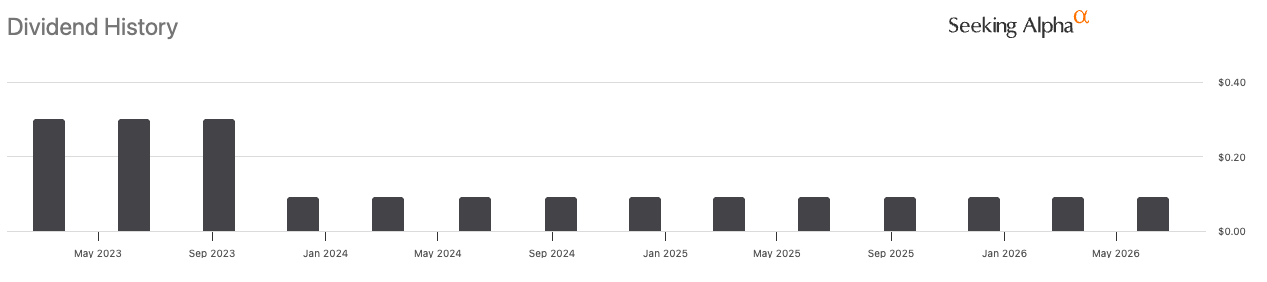
The dividend was cut from 21 cents a quarter to 9 cents…
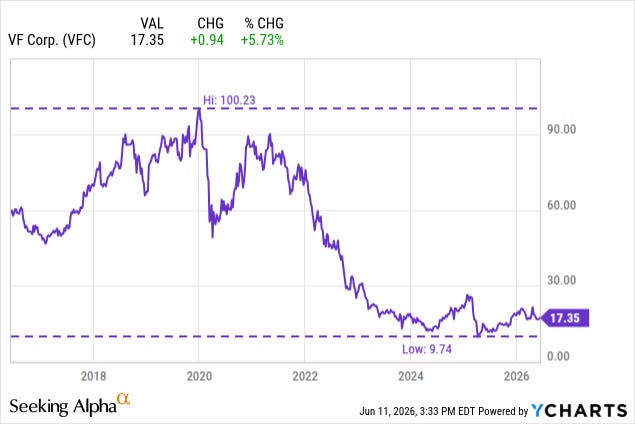
…and the stock trades more than 80% below its high.
Nothing structural protected Vans on the way down because nothing structural put it on top.
The dividend tell
Which brings me back to Nike, because Nike shows you how management teams behave when they know the premium is fading.
In FY2025, Nike’s revenue fell 10% and net income fell 44%.
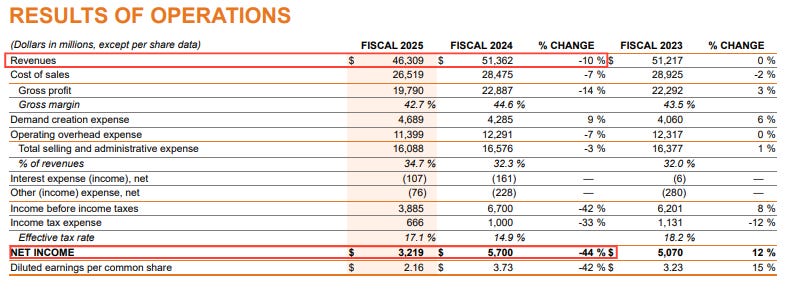
The same year, Nike raised its dividend 6% to $2.3B, the 23rd consecutive annual increase, and cash on the balance sheet dropped $1.4B because operations no longer cover dividends plus buybacks. A company with a defensible brand and a broken stock price would pour that cash into product and the comeback.
Nike is choosing not to.
That’s the most honest signal Nike gives us: management is telling you, with $2.3B a year, that reinvesting in the brand won’t earn an acceptable return.
When a management team tells you that, believe them!
The K economy, explained
None of this happens in a vacuum. The reason the premium is collapsing for mass brands while Hermès runs a 47% EBITDA margin is the shape of who has money in 2026.
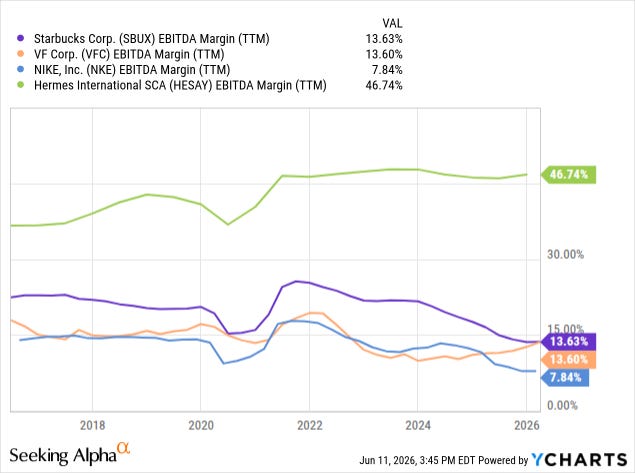
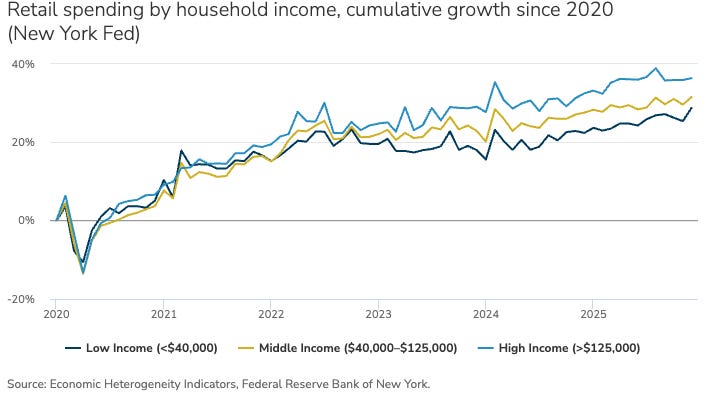
The K economy describes an economy splitting into two arms moving in opposite directions. The upper arm owns assets: stocks, homes, and businesses. Their net worth inflated through the 2020s, and their spending followed.
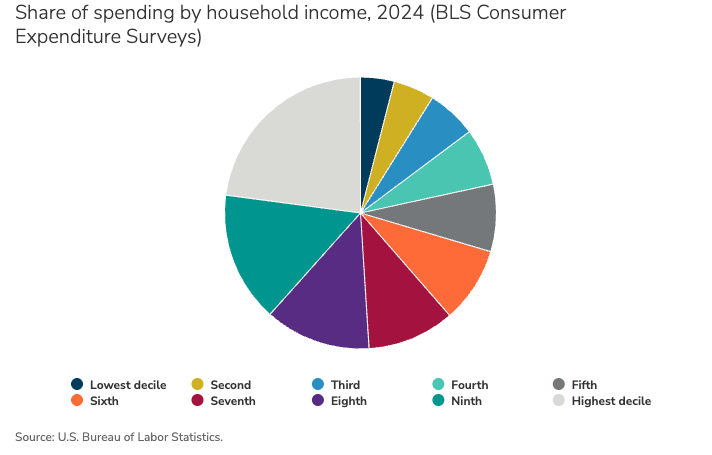
The lower arm lives on wages. Cumulative inflation since 2021 ate into their paychecks, and their spending shifted from wants to needs. Moody’s Analytics estimates the top 10% of earners now account for about 46% of all US consumer spending…
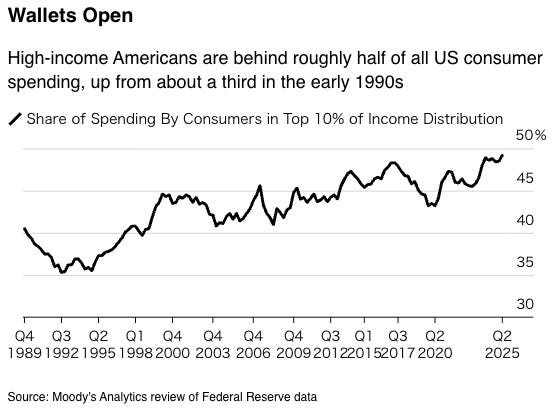
… and that spending by this group grew 62% between late 2020 and late 2025, more than any other income group. Fair warning: some Fed researchers argue official surveys put the top-10% share much lower. The level is debated. The direction isn’t.
Here’s the part most commentary misses: the K didn’t start in 2020. Median real wages stagnated for decades while asset prices climbed. The pandemic stimulus, the 2021-2023 inflation wave, and the asset boom that followed pulled the two arms apart fast enough that everyone finally noticed and gave the thing a name. Mass-brand erosion and the K are the same story told from two directions. Kraft’s write-down came in 2019, before anyone said K economy. The customers were already leaving.
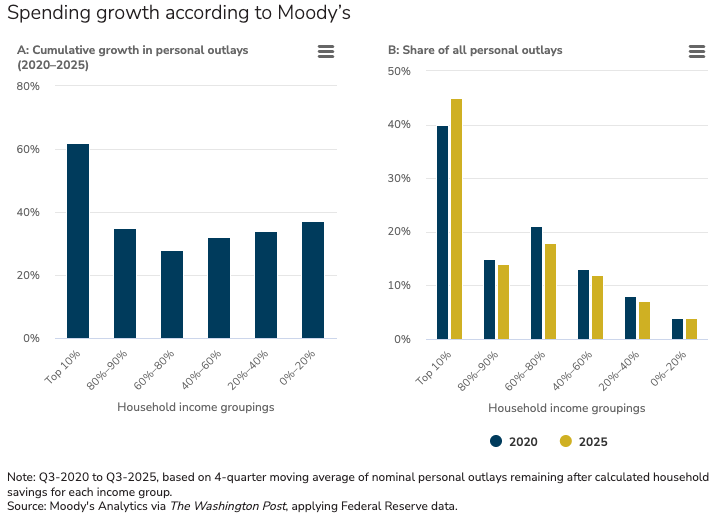
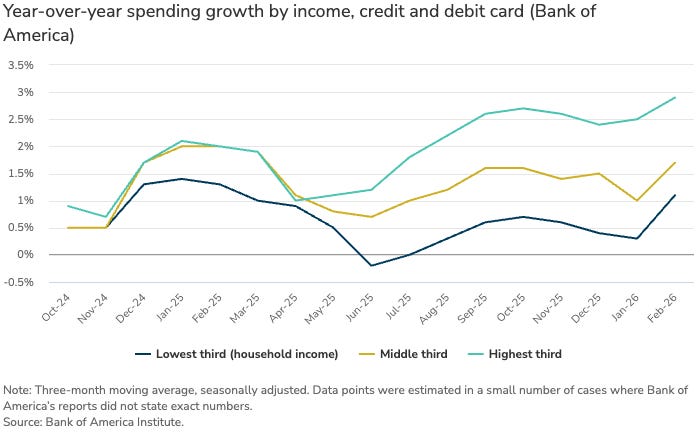
The spending data tells the same story from four different angles.
Moody’s shows the top 10% drove the bulk of spending growth since 2020 and now command a rising share of every dollar spent:
Bank of America’s card data shows the same divide in real time, the top tier accelerating while the bottom stalls:
The New York Fed’s cumulative read since 2020 has high earners steadily pulling away:
And the BLS survey shows how lopsided the base already is, the top deciles taking the biggest slices:
So what does the K mean for brands?
A mass-market premium brand is, by construction, a bet on the middle: customers with enough money to pay extra but not enough to ignore prices. That middle is exactly what the K hollows out. The lower arm trades down to Kirkland and private label. The upper arm trades up to brands the lower arm can’t follow them into. The mass-premium brand loses customers in both directions at once. And because the consumer space at that level is a volume game, not a margin one, losing volume breaks the whole model. Nike can’t take Hermès pricing, and it can no longer beat Kirkland economics. That’s the kill zone.
The K cuts through luxury too
The upper arm explains the winners. Hermès grew revenue 9% in 2025, with double-digit growth in leather goods and that 47% EBITDA margin. Ferrari grew revenue 7% and hit its 2026 targets a year early; the stock has multiplied by 8x over the last ten years.
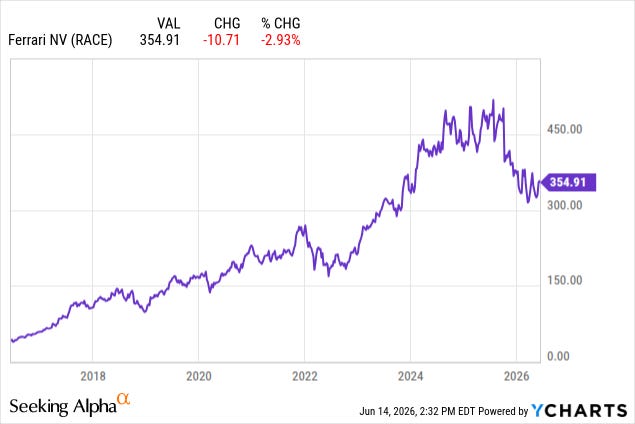
Neither customer base noticed grocery inflation. A Birkin waitlist doesn’t shorten because eggs got expensive.
But before you buy a luxury basket and call it a day, look closer, because the K cuts through luxury itself. Bain estimated that around 50M customers left the luxury market between 2022 and 2024, with more following in 2025.
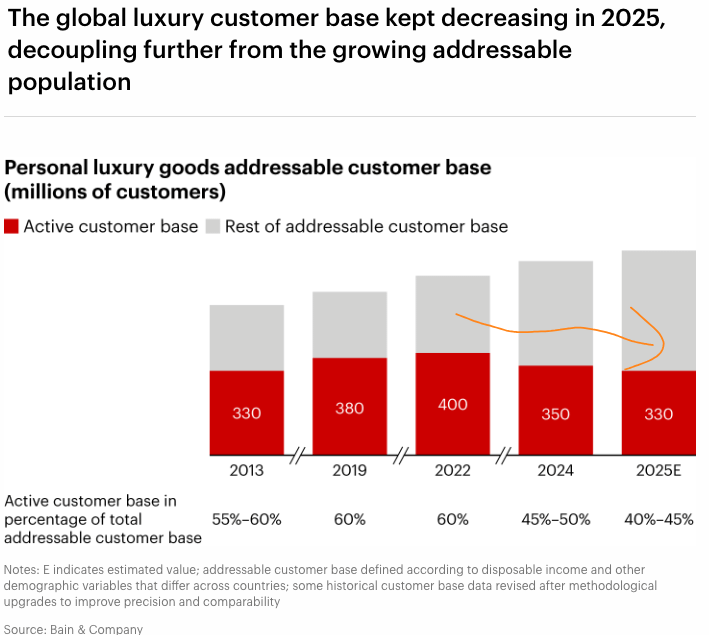
The ones who left weren’t the rich. They were the aspirational buyers, the middle-class customer stretching for an entry-level logo bag or a 500-euro sneaker. Brands that depend on that stretch are mass brands in disguise, and the market is repricing them accordingly. Shares of Burberry, Kering and LVMH have lost 27% to 66% in the past 5 years.
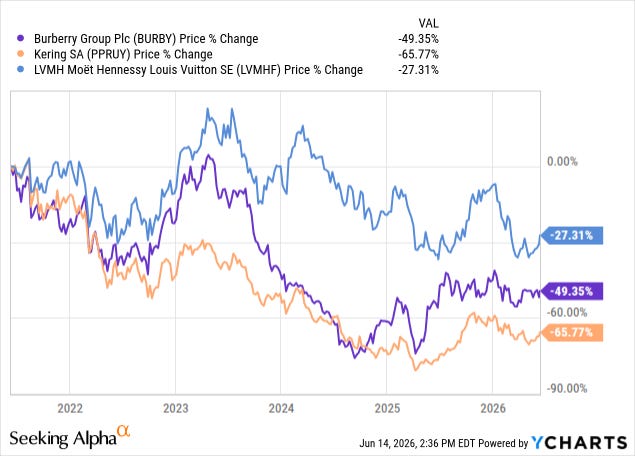
Burberry’s own CEO called the market “very bifurcated” on the Q2 2026 call. His word for the K.
The dividing line isn’t luxury versus mass. It’s simpler and harsher: which arm of the K writes the checks. Hermès sells to the arm going up. Burberry’s growth depended on the arm going down.
The three questions I ask before paying for a brand
Now the steel-man, because brands aren’t uninvestable, and famous names that crash can produce violent rebounds. Nike will jump on any real good news, exactly because expectations sit this low. New management could land the turnaround. If that happens, holders get paid. My objection is the label. Buying Nike today isn’t brand investing. It’s turnaround speculation on a company whose core asset is eroding, and speculation should be sized and priced as what it is.
When I evaluate a company whose value rests on a brand, I ask three questions, in this order.
Question #1. Where is the premium, and which way is it moving? Find the closest comparable non-brand product and measure the price gap. Then watch how the gap gets defended. A company raising prices while holding volume has a live brand. A company hitting volume targets through promotions, outlet channels, and discounts is liquidating its premium one markdown at a time. Hermès raises prices and keeps the waitlist. Nike funds sneaker discounts.
Question #2. Which arm of the K is the customer on? If the median buyer owns assets, pricing power is structural, and the brand can compound through whatever the wage economy does. If the median buyer lives paycheck to paycheck, the brand is fighting gravity, and every grocery bill is a competitor. The uncomfortable version of this question: is this brand’s premium the first thing its customer cuts in a hard month?
Question #3. Is management defending the moat or harvesting it? Follow the cash. Reinvestment in product, experience, and distribution says management believes the premium can grow. A fat dividend held steady while free cash flow shrinks says management is monetizing decline. 3G ran Kraft Heinz that way, and the write-down followed. Nike’s 23-year dividend streak, paid out of a shrinking pool, reads the same to me.
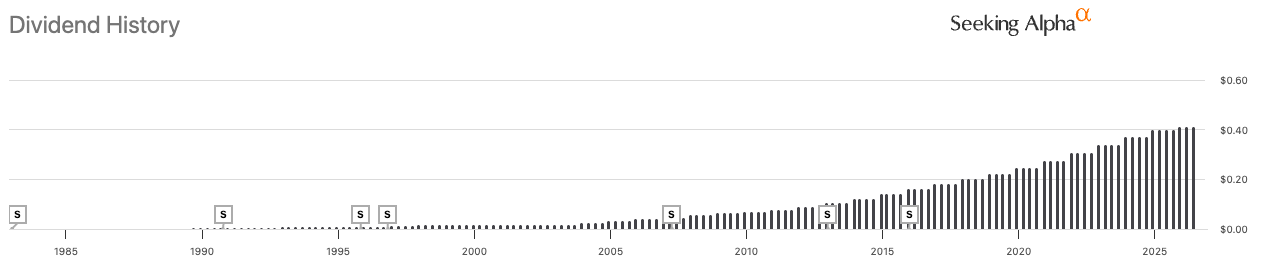
Kraft Heinz failed all three questions by 2019. Nike fails all three today. Hermès passes all three. This test won’t hand you cheap stocks. It will keep you out of expensive mistakes dressed up as blue chips.
Portfolio Update
While the market gained +0.7% in the week, the portfolio gained +4.9% in the week, expanding the outperformance.
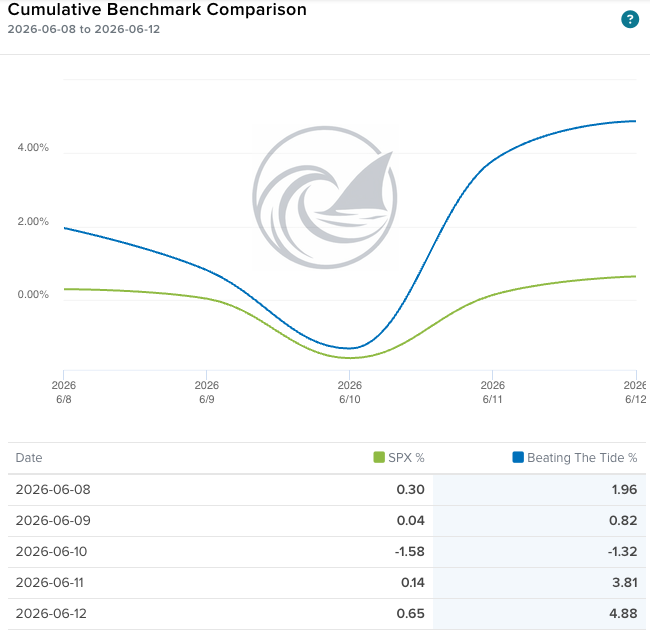
Portfolio Return
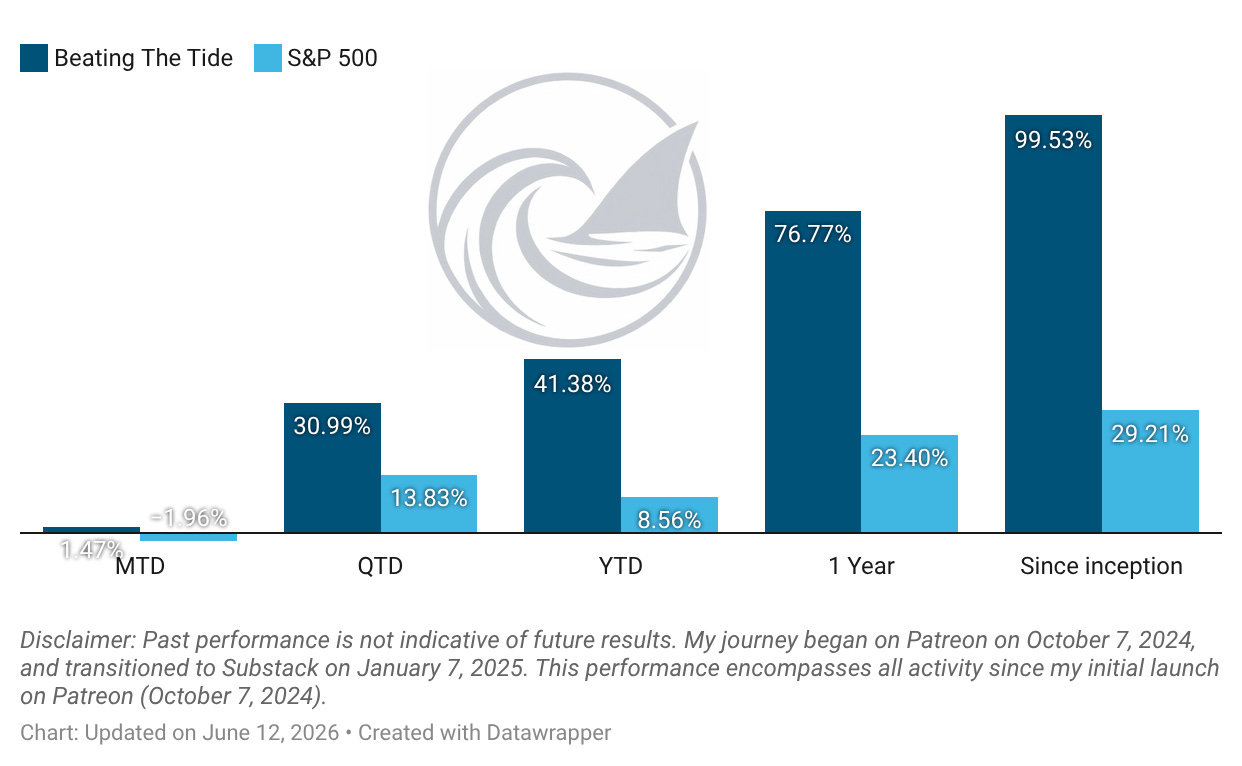
Month-to-date: +1.5% vs. the S&P 500’s -2.0%.
Year-to-date: +41.4% vs. the S&P 500’s +8.6%. That is a gap of 3,282 basis points.
Since inception: +99.5% vs. the S&P 500’s +29.2%. That’s 3.4x the market.
Contribution by Sector
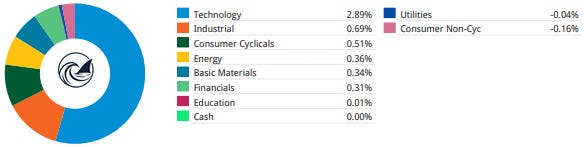
Tech led the gains, followed by industrials.
Contribution by Position
(For the full breakdown plus commentary on earnings results and the big movers, see Weekly Stock Performance Tracker)
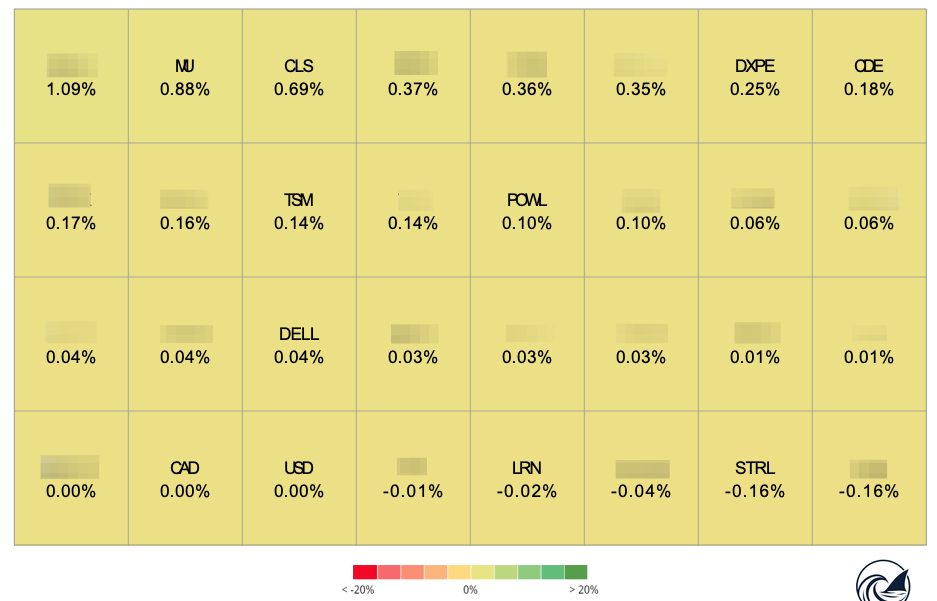
+69 bps CLS 0.00%↑ (TSX: CLS) (Thesis)
+25 bps DXPE 0.00%↑ (Thesis)
+18 bps CDE 0.00%↑ (Thesis)
+14 bps TSM 0.00%↑ (Thesis)
+10 bps POWL 0.00%↑ (Thesis)
+4 bps DELL 0.00%↑ (Thesis)
-2 bps LRN 0.00%↑ (Thesis)
-16 bps STRL 0.00%↑ (Thesis)
That’s it for this week.
Stay calm. Stay focused. And remember to stay sharp, fellow Sharks!
Further Sunday reading to help your investment process: