


Hello fellow Sharks,
The portfolio fell 1.9% this week while the S&P 500 rose 1.2%, with Wednesday and Thursday doing most of the damage. If you want to skip straight to the numbers, jump to the Portfolio Update.
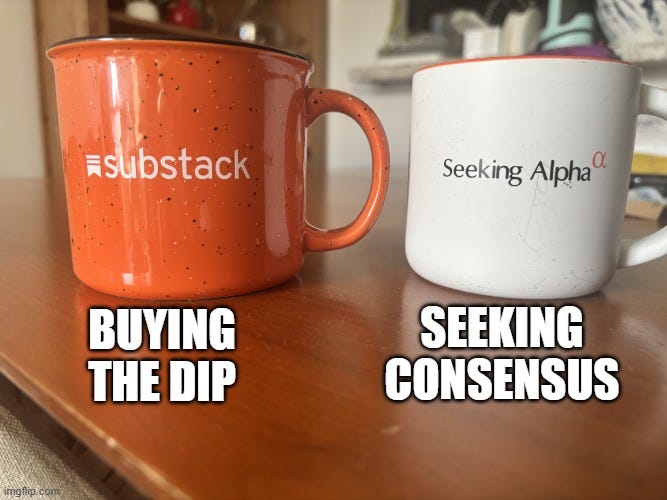
To be honest, when I received my Seeking Alpha mug I felt a spark of joy, a reminder that my thoughts were appreciated by the community. But many things changed since I received that mug and Seeking Alpha isn’t what it was years ago (maybe I will elaborate on this in a future Weekly). Below is the story how I got my Substack mug.
Last week, I was invited to the Substack GTA Bestseller Social. To be honest, at first I didn’t want to go because I have so much going on at home with the newborn, but my wife convinced me.
I am glad I did.
I got not only a $50 gift certificate to buy a book, but also a notebook and other swag, including a mug to replace my Seeking Alpha mug.
But I am more glad I went because I met some interesting people, and one of them helped me reframe how I looked at the role of my publication in my investment process.
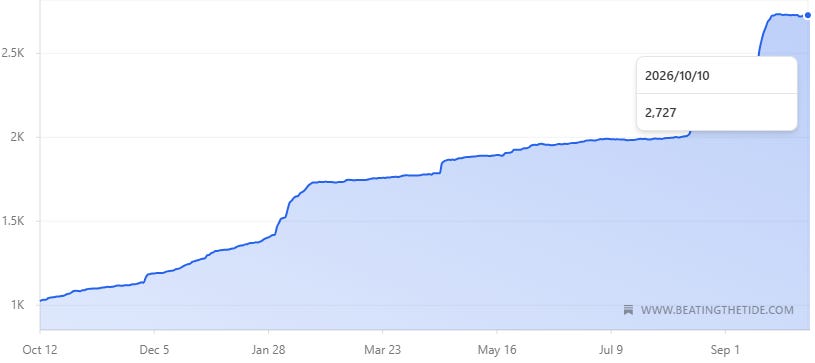
What I realized from the get-go was that not everyone monetizes their content the same way. As you know, I am more than happy with our ‘exclusive’, 2.7k-member corner of the internet.
The chat group we have is insightful and, as some of you have done by now, I have been glad to jump on a video call to exchange ideas and go deep into some of the names.
As I consider the publication more of a way to make my ideas public and keep myself grounded and disciplined, I have kept the marketing part to a minimum to focus more on value-added activities such as research into companies (the most marketing effort I have made was creating an automated system to post insights from my previous Weeklies).
I approached this as writing about my current research on Substack and maybe monetizing it more, but that conversation showed me that I could use Substack to take my research to the next level.
By increasing my monetization, I could pay for more paid calls on GLG to get more insights into the industries I am researching (currently I do ~5 paid calls per company/indutry, which costs ~$1,500 USD). Also, this is a one-man show (I have a developer helping me with RankedStocks.com, but no help with this publication). While I do not envision recommending more than one pick per month, I think the turnover could be faster and the updates could be more timely if I had some help. With that extra revenue, I could hire a junior analyst (even someone from here, as some of you have shown the right skillset) to take work off my plate.
So I am thinking of the best way to promote this Substack more actively while keeping true to what I have been doing and what you are used to. If you have any ideas, or if this is your field of expertise, I would appreciate it if you DM me or leave a comment on this article.
The second action, which I already take and will continue, is to keep my annual price increases on January 1 of each year for NEW PAID subscribers. That is, the price you paid when you signed up will be honored as long as you don’t cancel.
In a nutshell, don’t expect changes to my content, but I will start marketing the publication more to get it to the next level of its evolution.
In the Thought of the Week, I answer a question several of you asked: what do I do if my portfolio is down 30%?
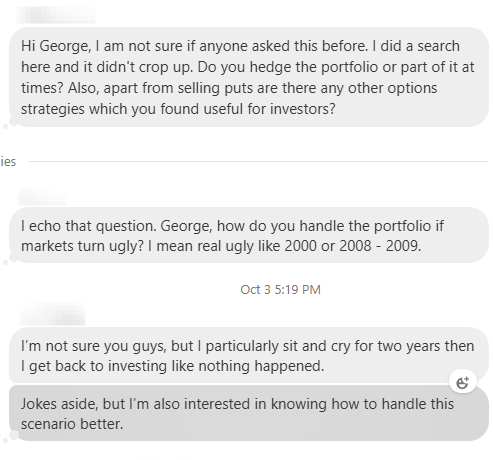
I cover why I rarely hedge, how I use margin and options, how I size positions and when I sell.
Enjoy the read, and have a great Sunday.
~George
Table of Contents:
In Case You Missed It
Since last Sunday’s Weekly, I published a paid update on our December pick, which is up 126% since December.

It passed my old price target, and the piece explains why that target isn’t my sell signal.
Thought Of The Week
Your Portfolio Is Down 30%. What Do You Do?
Why I rarely hedge, how I use margin, and what I change when markets turn ugly.
A few subscribers asked whether I hedge the portfolio, which options strategies I find useful, and what I would do in a crash like 2000 or 2008.
One asked whether my approach means accepting a drawdown of more than 30% and sitting through it.
A drawdown of that size is possible, and the portfolio could fall further. I would keep reviewing the holdings and make changes as needed.
I rarely buy protection against market declines. I manage the businesses I own, the size of each investment, and my ability to hold them through a bad period.
I can be right about a business and still watch its share price fall substantially. If I cannot afford that financially or tolerate it emotionally, I need a different allocation before the crash arrives.
What I’ve lived through
I wasn’t investing during the dot-com crash. I was in the market in 2008, but I hadn’t developed the strategy I use today.
In February 2020, after hearing the early COVID news from China, I bought puts on the market. I still lost money on the hedge because I didn’t maintain it with the discipline the situation required.
I discussed that experience and the uses of options in the piece below.

Hedging requires decisions about cost, duration, size, and when to renew or close the position.
Give yourself the ability to stay invested
My first rule is that I do not invest money I expect to need within the next 12 months.
Could I meet my obligations if the portfolio fell sharply and stayed down much longer than I wanted?
I do use margin in limited situations, as I described in Weekly #21: temporarily bridging a purchase while I wait for another holding to sell, and occasionally borrowing against the account for a personal expense with a repayment plan.
I avoid borrowing heavily to increase my stock exposure or doubling down because I think a rebound is overdue. Even limited borrowing exposes me to collateral risk, including when I spend the money outside the portfolio.
Calling 20% “very safe” understated that risk. Prices can fall, I have to pay interest, and the broker can tighten its requirements. Firms can raise requirements and liquidate assets without first contacting the customer.
I want to avoid having debt dictate when I sell.
How I size positions
A good thesis can be wrong, and I have had plenty of those. That is why I generally size positions at 2% to 5% of the portfolio.
A 5% position that loses half its value costs the portfolio 2.5%, assuming everything else stays unchanged. Make it a 25% position and the same mistake costs 12.5%.
A 30% portfolio loss needs a 42.9% gain to recover. A 50% loss needs 100%. I went through this problem here.

Winners can grow beyond that 2% to 5% starting range. I keep reviewing how much each position could cost me if I am wrong.
I also look beyond the number of tickers. Ten companies dependent on the same spending cycle can behave like one large bet. I look at exposure to different businesses, customers, countries, and sources of cash flow.
During a panic, sound companies in different sectors can fall together as I discussed here.

Diversification can reduce the damage from a particular mistake, but the portfolio can still fall sharply.
What I did during the 2025 tariff sell-off
We started 2025 on a roll. By Feb 7, the portfolio was up 8.4% for the year…
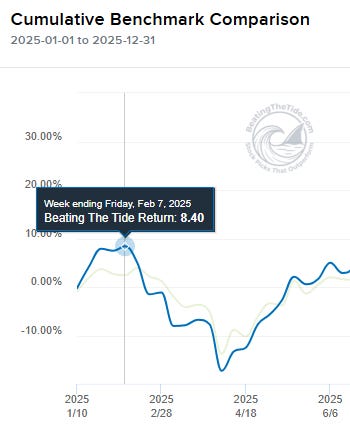
… then Trump opened his mouth with threats of tariffs, and the portfolio reached its lowest point in the week of “Liberation Day”.
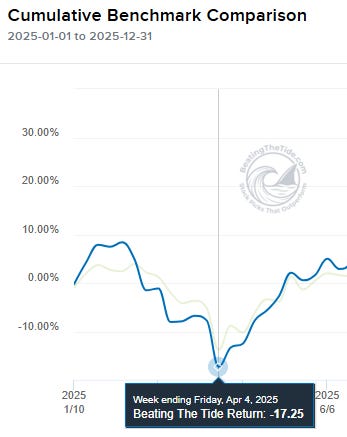
I reviewed the holdings and moved capital toward opportunities where I thought the revised risk/reward was better. In Weekly #25, I documented increasing TSM from 1.0% to 5.1% of Portfolio USA since March, while reducing its cost basis from $196 to $169.
The portfolio still ended with a +31% gain.
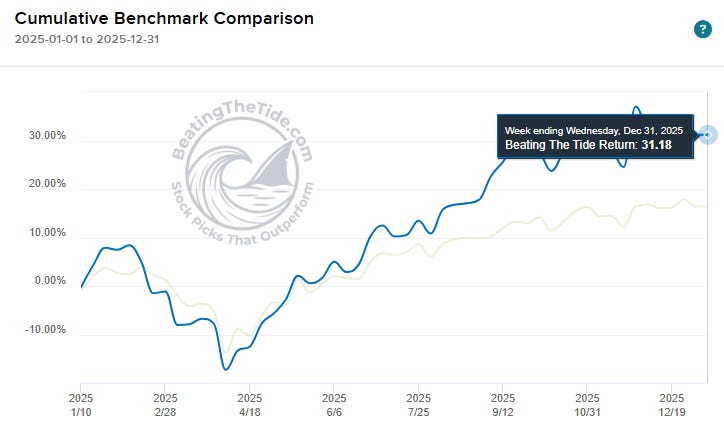
I kept the investment framework and changed the holdings as the opportunities changed.
A falling price is a reason to investigate
I try to think of a share as ownership of part of a business.
If I owned a private company, I would not automatically sell because it had a weak year. I would ask whether the business plan still made sense, whether it could fund itself, and whether its long-term economics had changed.
I ask the same questions about listed companies:
Are customers delaying purchases, or leaving permanently?
Is profitability under temporary pressure, or is the competitive advantage eroding?
Can the company meet its obligations without depending on an accommodating lender?
Does the valuation still compensate me for the risks?
Cash, debt maturities, refinancing needs, and the ability to generate cash can determine whether a company gets time to recover. I covered these in The Balance Sheet Primer.

Tariffs, recessions, or financing stress can reduce a company’s cash flows and the price a buyer should pay for them. In Anatomy of a Crisis, Aswath Damodaran explains how a crisis can change both the operating outlook and the required return. I need to update the valuation to reflect those changes.
“Nothing changed” has to be a conclusion supported by fresh work. It cannot be an excuse to reuse an old price target.
When I sell
I may sell because the thesis broke, because the price no longer offers enough upside relative to risk, or because another investment offers a better use for the capital. I laid out that framework below:

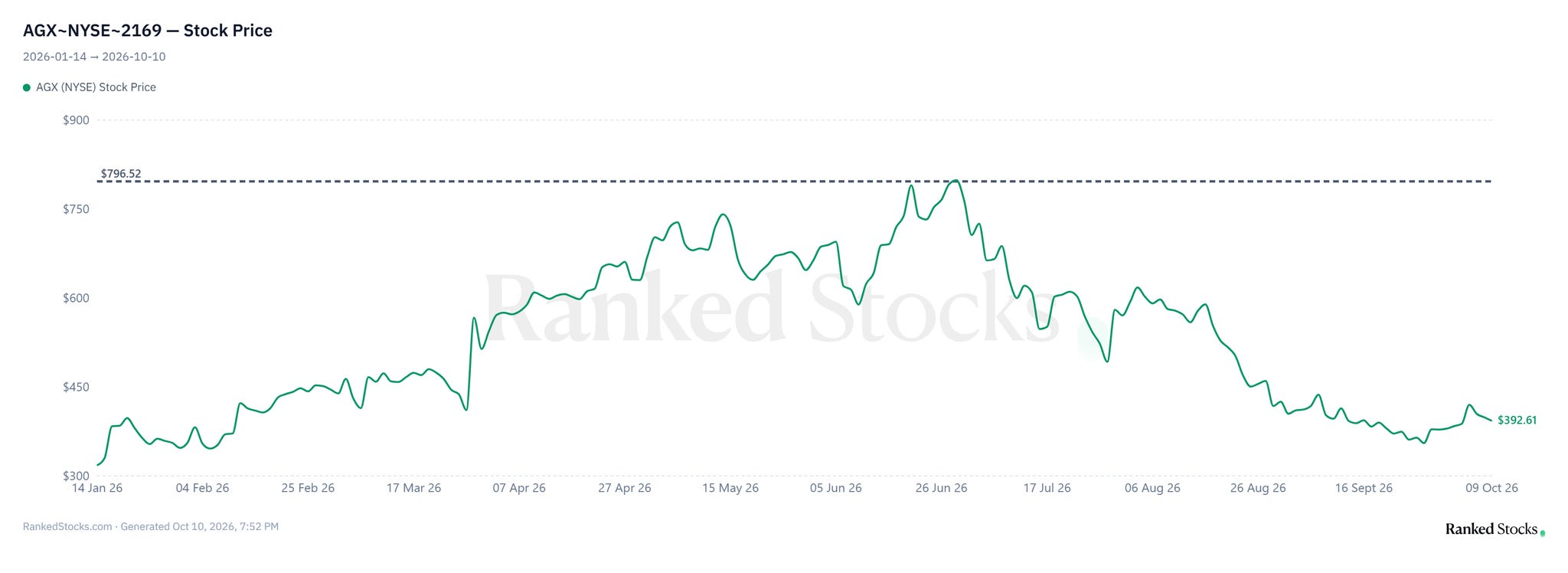
A recent example was AGX.

I still liked the business. The remaining opportunity had become less attractive than my alternatives. I exited my position at $314. In the following months the stock increased a further 153% to $796 before correcting to $392, still 25% above my closing price. I am still satisfied with my exit because it was based on a rational decision rather than emotions.
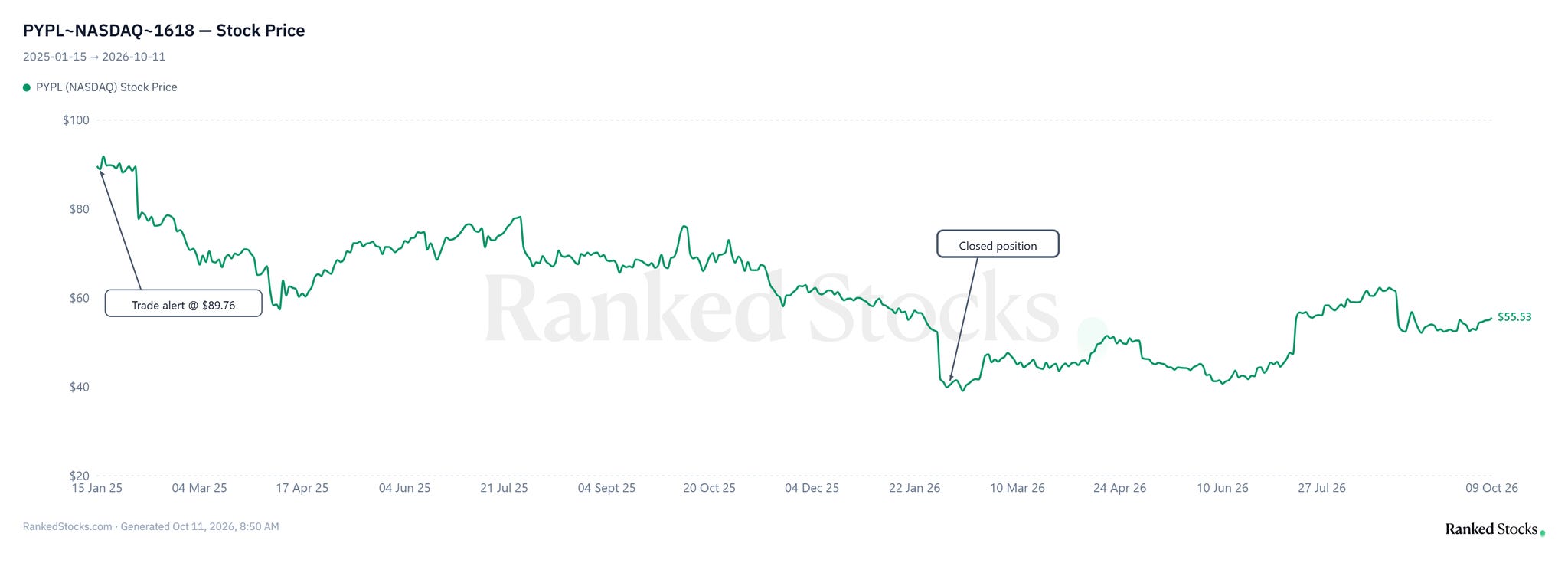
My PayPal post-mortem explains why I sold after the evidence undermined the original thesis.

Waiting for the share price to get back to my purchase price would not have repaired the business. Since I closed the position, it has recovered to $55.53, but that is still 38% below my $89.76 trade alert price.
I do not use mechanical stop-losses in this strategy.

I explained why I distinguish a price move from a broken investment case. That approach suits how I invest. I have to keep reassessing the thesis.
Why I do not hedge every market scare
Before buying protection, I need to know which exposure I am protecting, for how long, what it costs, and how it interacts with the rest of the portfolio.
An index hedge may not move enough to offset losses in a collection of smaller or more volatile stocks. A hedge can also expire before the event I feared happens. I discussed apparent protection and concentrated exposures.

Believing that a market is expensive does not tell me when it will fall. In A Fairly Highly Valued Market, Damodaran examines the costs and risks of holding, changing allocations, and hedging. A valuation concern alone does not give me a workable timing strategy.
I can hold cash while researching an investment or waiting for an acceptable price. Selling everything to time the market would require me to get both the exit and the re-entry right. Interestingly, as I am writing this, Damodaran published a video explaining how he is keeping his current investments in the market but holding all new cash entering the account as cash. I guess Damodaran is unintentionally trying to time the market!
Selling puts is not crash protection
My most common options strategy is selling cash-secured puts on businesses I want to own at an acceptable price.

The premium pays me for agreeing to buy the shares. Selling puts does not protect my existing holdings against a crash. It is the opposite: a bullish trade. I treat the reserved cash as committed. I need to be able to fund all assignments, including several arriving together, without creating an oversized position or spending my emergency reserve.
Other options strategies worth understanding
I do not routinely use these strategies, but sometimes I do:
Protective puts: buying a put against shares you own establishes a minimum sale price for those shares during the option’s life. The premium is a cost, and the strike and expiry determine the protection. While I like this strategy (it is like buying insurance), it eats into your returns. Although I do not routinely use it, I have known many people who use LEAP options (options with long-dated expiries) successfully, but they expect a lower return than my portfolio.
Covered calls: selling a call against shares you own generates premium but can require selling the shares at the strike. The premium provides a small cushion; you still bear most of the stock’s downside and give up gains above the agreed price. Sometimes I have used this strategy when I decided to close a position. Instead of closing it outright, I sell a call, collect the premium and hope to get assigned. When I don’t get assigned, I either close the position then or sell another call.
What I would do if the next decline were worse
I would review liquidity and any borrowing first, reassess the businesses, update valuations, and then decide which positions to keep, add to, trim, or exit.
I would not automatically buy everything that had fallen. In Buy the Dip: The Appeal and Dangers, Damodaran warns that a lower price alone does not establish value. Confidence drawn from past US market recoveries can overlook failures elsewhere or in individual companies. Buying through a crisis requires both the financial ability to wait and a credible valuation.
If a 30% decline would force you to sell, you may need less equity exposure before the crash.
When I say “remove emotions,” I mean keep them from making the decision.

I separated the price move from the story we attach to it. I can observe that the stock fell. Predictions that “it will never recover” or “it must bounce tomorrow” need evidence before I act on them.
Portfolio Update
The portfolio lost 1.9% last week while the S&P 500 gained 1.2%. We were up 0.6% at Tuesday’s close, then slid to a 2.3% loss at Thursday’s close before Friday’s partial recovery.
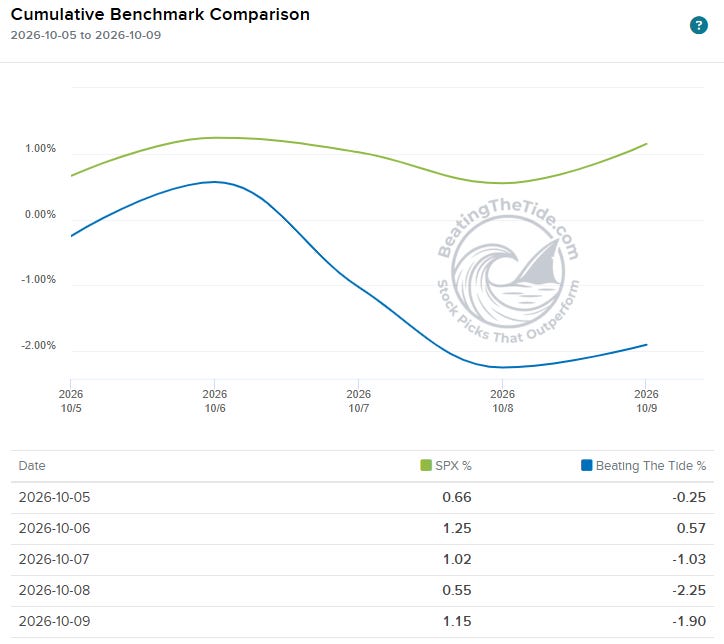
Portfolio Return
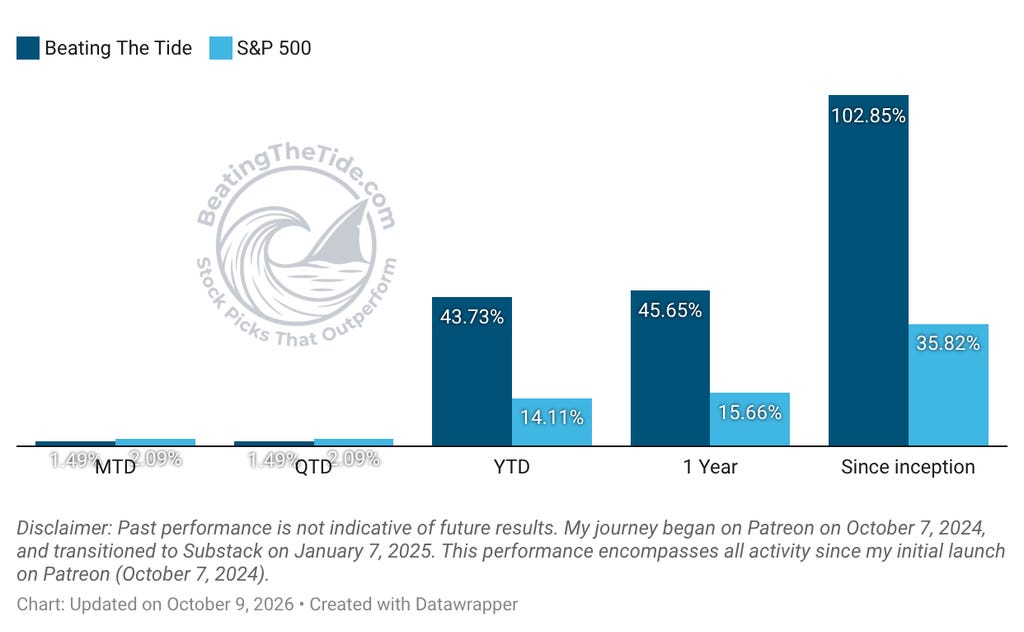
Month-to-date: +1.5% vs. the S&P 500’s +2.1%.
Year-to-date: +43.7% vs. the S&P 500’s +14.1%. That is a gap of 2,962 basis points.
Since inception: +102.9% vs. the S&P 500’s +35.8%. That’s 2.9x the market.
Contribution by Sector

Technology cost 93 bps, industrials 55 bps and energy 33 bps, while no sector added more than 7 bps. The Thursday pullback was led by technology stocks, with the Nasdaq down 1.3% that day. Industrials gave back 55 bps in a week when bond yields rose worldwide and the Russell 2000 fell 0.9%. Energy followed oil, with Brent topping $104 a barrel on Thursday after trading between $100 and $103 on Monday amid uncertainty over the war with Iran.
Contribution by Position
How to read the heat map? Click here.
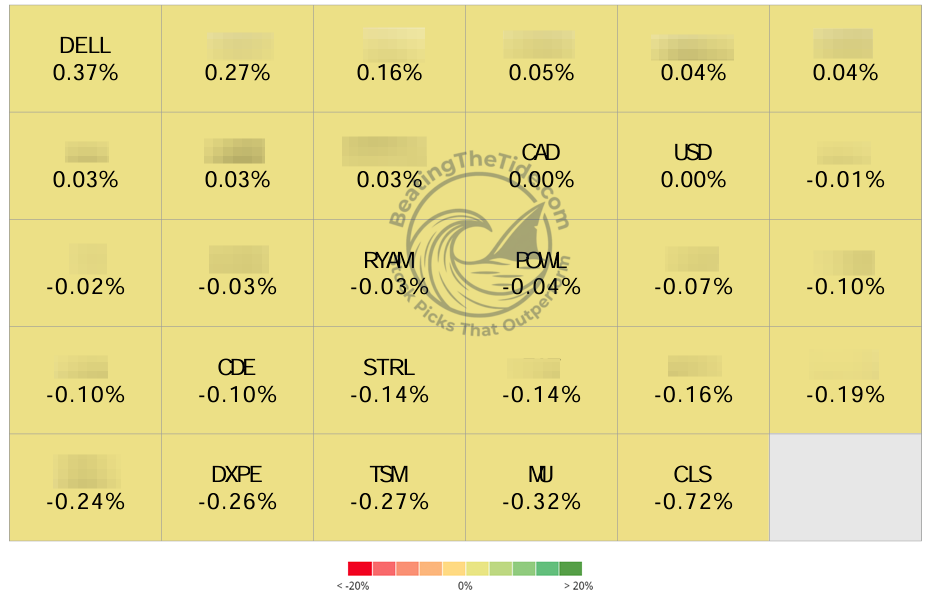
+37 bps DELL 3.90%↑ (Thesis)
-3 bps RYAM -3.71%↓ (Thesis)
-4 bps POWL 1.10%↑ (Thesis)
-10 bps CDE 0.74%↑ (Thesis)
-14 bps STRL 4.60%↑ (Thesis)
-26 bps DXPE 2.42%↑ (Thesis)
-27 bps TSM 1.99%↑ (Thesis)
-72 bps CLS 3.09%↑ (TSX: CLS) (Thesis)
That’s it for this week.
Stay calm. Stay focused. And remember to stay sharp, fellow Sharks!