



Hello fellow Sharks,
Last week the portfolio gained 8.5% against 5.6% for the S&P 500, and we’re back to +8.8% YTD. If you want to skip straight to the numbers, jump to the Portfolio Update.
What a week for Jensen Huang and NVIDIA. In Weekly #108, I said “I don’t invest in NVDA -1.38%↓ but the 30% drop seems interesting”…

… and it turned out to be interesting: whoever bought in the valley made a quick 30%.
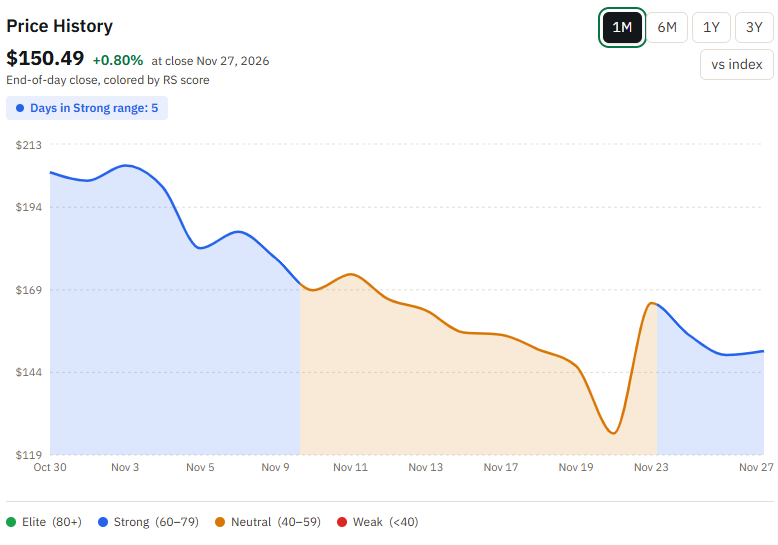
On Monday the board reinstated Jensen as CEO, 11 days after he resigned, and the stock jumped 31%. It has declined a bit since then. On Friday Bloomberg found Chinese bank filings showing that two companies had installed NVIDIA’s Blackwell systems, chips the US bars from China, in a Shanghai data centre linked to Alice Huang. One of the companies had pledged the hardware as collateral for a $14M loan. Nobody has shown how the chips got there, and Jensen goes before Congress next week, so I don’t think the story is over.
It reaches our portfolio too. On Thursday NVIDIA told Dell and Super Micro to pause server shipments to Malaysia, Singapore, Thailand and Indonesia while it checks export compliance. DELL said on its call that half of its AI sites are outside the US, so the number I want is how much of the $132B backlog sits in those four countries.
As I mentioned in the Black Friday email, two things are about to happen to the price of Beating The Tide. On January 1 it goes from $299 to $349 a year for everyone who joins from that day on. Before that, and only until midnight tonight, 20 of the 50 Black Friday spots are still open at $224 a year. You keep that price for as long as you stay subscribed: $224 in 2027, in 2028 and every year after, while new readers pay $349 or more. That’s $125 less than next year’s price, every year. Stay three years and you’ve saved $375, more than a full year of the subscription. I won’t extend the offer and I won’t add spots. Miss it, and you can still lock in $299 before January 1.
👉 Claim one of the 20 spots left at $224/year
For Black Friday I was looking for a laptop as a gift, I found some pretty good deals (they have some for Cyber Monday as well with 12-month financing apparently at 0% ARR). I ended up buying a different gift. But I realized that Dell’s BEST Black Friday (and now Cyber Monday) deal not its laptops.
The Thought of the Week is my update on DELL after Q3 FY2027. The company doubled its revenue and raised guidance for the third time, and the stock is 43% below where I moved it to HOLD in September. An election did that, so I spend the first part of the piece on the data centre moratoriums and why I read them as an opening bid. Then come the quarter, the refreshed model, a $209 bear case, and why I’m back to BUY with a $566 target.
Enjoy the read, and have a great Sunday.
~George
Table of Contents:
Earnings Results
Last week DELL reported and beat on both the top and bottom line. In the Thought of the Week I go through the quarter, refresh my valuation and explain why I’m moving from HOLD back to BUY.

Next week another portfolio company reports on Tuesday, December 1. I think it beats on both the top and bottom line as management has a habit of guiding low on revenue. The beat matters less to me than the outlook as it will provide a better picture on the AI built out.

In Case You Missed It
Since last Sunday’s Weekly I published one piece.
A Record Year, One Missed Quarter, And A Model I Tried To Break. A company I own reported its best year on record, then missed estimates in the final quarter after four straight beats, and Mr. Market repriced the whole business. The price fell below the downside case I published in August, so I rebuilt the model with a higher discount rate and lower margins and tried to break it.

Thought Of The Week
DELL Is Up 141% Since My Pick. After Q3 FY2027 I’m Back to BUY
My February pick is up 141%, and Mr. Market has spent three months telling me I’m wrong about it.
Dell Technologies [DELL 0.00%↑] closed at $297 on Wednesday and at $317 on Friday. Every number below uses Wednesday’s $297. In September I moved it from BUY to HOLD at $524, because the price had caught up with my $601 target and the risk/reward had shrunk to 1 to 1.

Since then DELL reported the best quarter in its history, raised FY2027 guidance for the third time, and lost 43% of its market value.
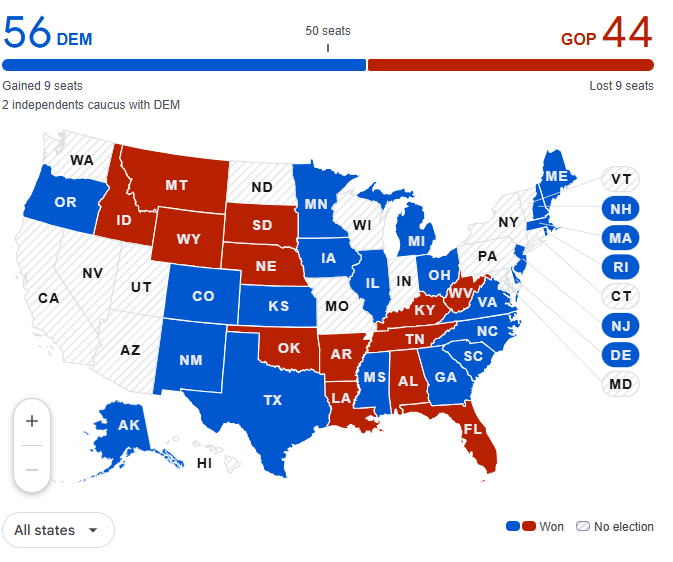
An election did that, with help from the bond market. Democrats won the midterms promising to keep data centres out of people’s backyards…
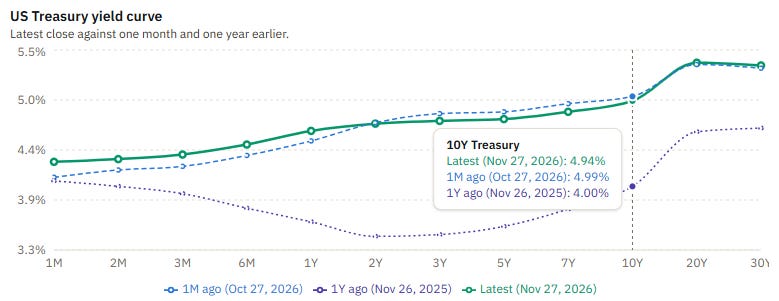
… the 10-year Treasury yield climbed to 4.88%…
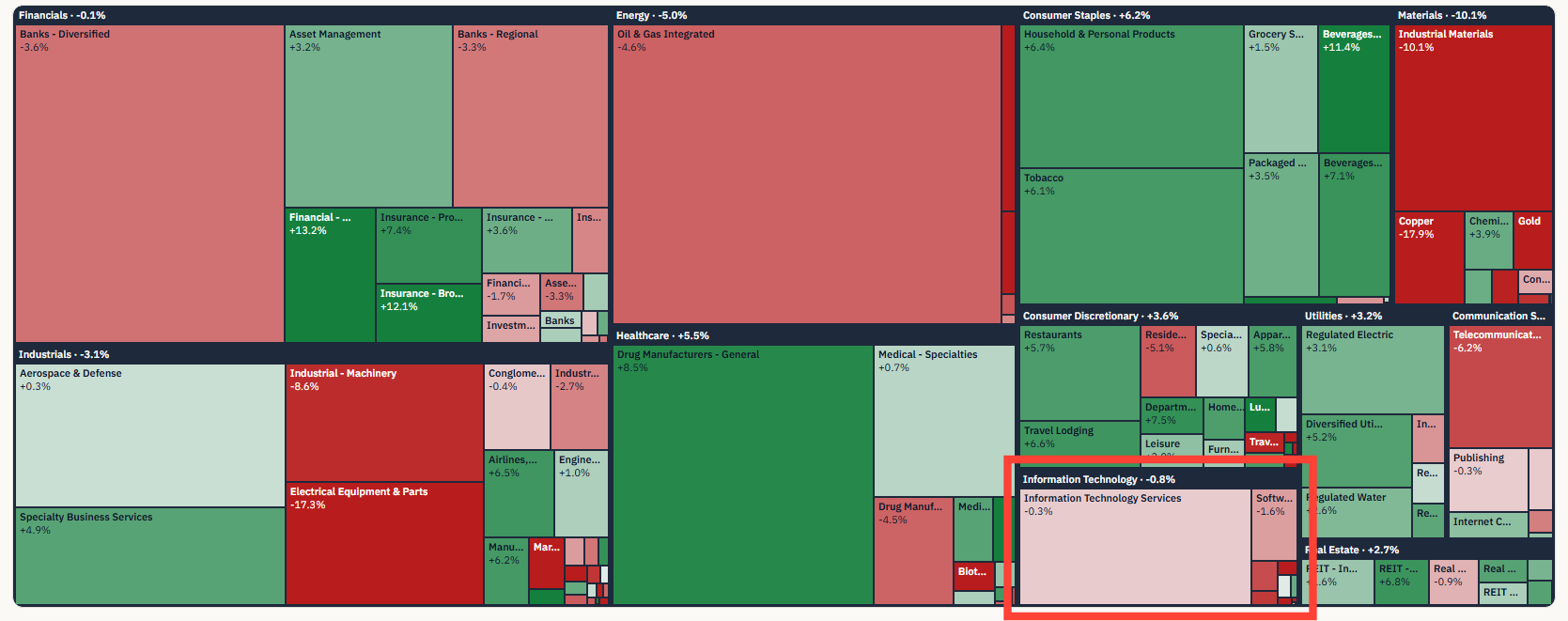
… and every name tied to the AI buildout was sold.
I covered the bond side in The AI Sell-Off Started in the Bond Market …

… and how I’m handling the drawdown in Investing Without Emotion.

So this update comes down to one question, the same one sitting under every AI name: does the buildout happen? If you think it won’t, or that it gets delayed for years, you shouldn’t own DELL or any other AI stock at any price. I think it happens, and that the builders pay more for it. That view is in my numbers, and it moves DELL back to BUY.
Table of Contents
TLDR
Dell Technologies [DELL 0.00%↑] moves from HOLD back to BUY. My target is $566 (from $601), my bear case is $209 (from $450), and the risk/reward at $297 is 1 to 3.1.
Q3 FY2027 GAAP EPS was $8.82 (+287% y/y) on revenue of $54.9B (+103%). The AI backlog reached $132B and management raised FY2027 guidance for the third time, to $202B of revenue and $29.68 of non-GAAP EPS.
The stock fell because Democrats won the midterms on data centre moratoriums. I read those moratoriums as opening bids. The builders will pay more for power, water and labour, and the buildout goes on.
My $566 already charges DELL for that, through a higher discount rate and a slower AI glide path after FY2028. Without the haircut the model says $607.
At $297 DELL trades at 10x this year’s earnings, a price that pays for server revenue that never grows again.
I haven’t added, because at 6.35% of the portfolio it’s already a large position. I haven’t trimmed either.
The sell-off assumes the buildout stops. That isn’t how politics works
Start with the facts, because they look bad. The backlash against data centres helped Democrats win the midterms, and ballot measures limiting them passed in 40 of the 41 places where they were put to a vote. In Texas, Gina Hinojosa won the governor’s race after calling for a moratorium on data centre approvals until the Legislature passes new protections. Mr. Market drew a straight line from those headlines to an empty order book, and DELL fell 41% in the last month.

Now read the terms of that moratorium. The governor-elect wants operators to hire union workers, protect local water, drop their non-disclosure agreements, keep Texans’ power bills from rising and give up their sales-tax subsidies. That’s a price list, and nobody writes a price list for something they plan to ban. The pause runs until lawmakers meet in January. The outgoing Republican governor had already frozen permits and grid connections for an audit, and he wants the tax breaks gone too. Both parties are asking for the same thing: data centres that pay their own way, which I think is fair.
Washington is writing the same deal. The Senate just passed a bill that makes data centres above 20MW cover more of the grid they use. The numbers explain the anger: operators pay 38% of infrastructure costs, and wholesale power prices near data centres have risen as much as 267% in five years, which is why some lawmakers are “arguing for a pause to negotiate for better deals”. The local coverage in Texas already describes the pause as the start of a negotiation.
Two forces push both sides to a deal. The first is money. Data centre investment in Texas went from $3.4B in 2022 to a projected $66.2B this year. No governor, of either party, sends that to another state. The second is China. If America slows its own buildout for years, it falls behind in a race it can’t afford to lose, and I think that would be a terrible outcome for the whole US economy, well beyond the AI names and the billionaires who own them. Democrats ran against data centres and won. Now they have to govern, and governing means owning the cost of falling behind. They’ll come to the table. I made the same case, with the precedents, in my post-midterm update on Sterling Infrastructure [STRL 0.00%↑]: a moratorium is an opening bid, and the negotiation ends with the owners paying more.

I expect costs for builders to go up, because they’ll pay for their own grid, water and labour and lose some tax breaks. Sometime in 2028 there’s a slowdown while projects get re-permitted and re-priced, comparable to the pauses we’ve already seen at state level. The Street has consensus hyperscaler capex growth is +82% for 2026, +29% for 2027 and +3% for 2028. I don’t think that slowdown turns out to be material. The five largest spenders are on track for $803B-$828B of capex this year, third-quarter spending rose 20% from the second, and both Alphabet [GOOGL 0.00%↑] and Amazon [AMZN 0.00%↑] have said 2027 will be higher.
DELL itself is less exposed to a US state fight than the share price suggests. On the call, management said its AI systems are going into 100 sites, half of them outside the US, for more than 7,500 customers. Each large order is vetted for capital, land and power, and no customer had rescheduled a delivery when management spoke on Tuesday.
Two days later that changed for one region. NVIDIA told Dell and Super Micro to halt server shipments to Malaysia, Singapore, Thailand and Indonesia, after a US rule that took effect on November 19 put AI chips bound for those countries under licence. Nobody has said whether the halt is temporary, and DELL hasn't said how much of the $132B backlog is headed there. This is an export-control problem, separate from the state fight, and it's the weak point in the "half outside the US" comfort. Two things limit it. Chips for US-headquartered companies are exempt, and demand runs ahead of supply, so I expect a rack that can't ship to one buyer to ship to another. Until DELL gives the number, I carry it as an open risk.
My valuation doesn’t need the politics to go perfectly. The cost of a slower, more expensive buildout is in my target as a haircut, and the version where the buildout stops is my bear case. Both are below.
The Q3 FY2027 print
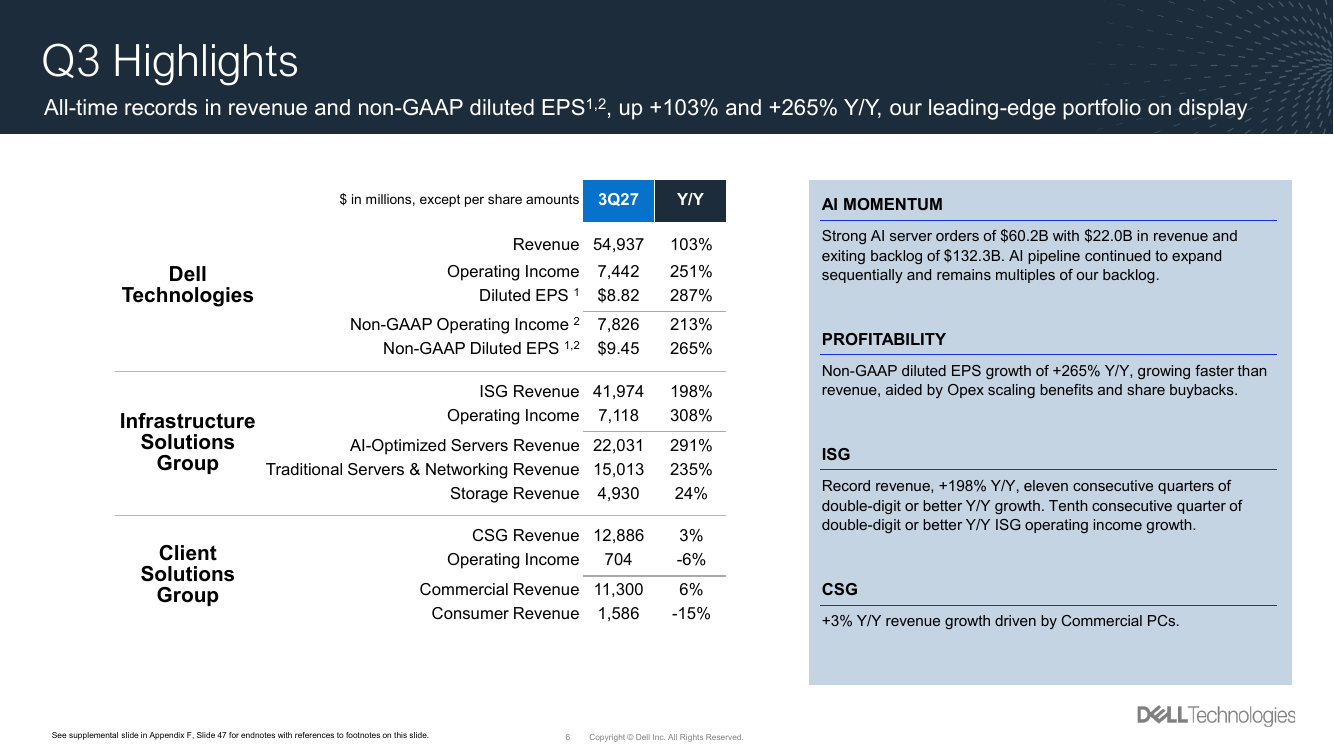
GAAP EPS came in at $8.82, up 287% y/y, on revenue of $54.9B, up 103%. A company that sold $27B in last year’s third quarter sold twice that in this one.
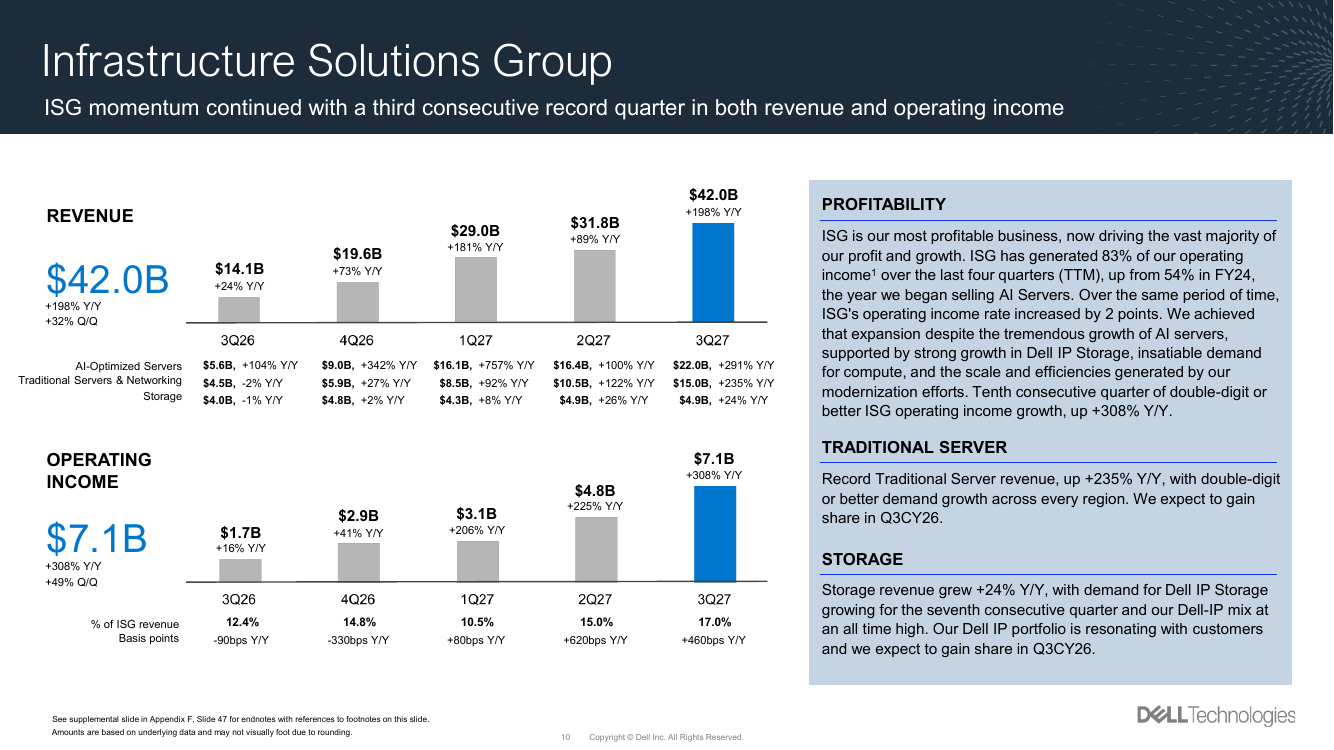
ISG, the servers and storage segment, did the work. Its margin now sits three points above the top of management’s own 11%-14% long-term range, because operating expenses grew far slower than sales.
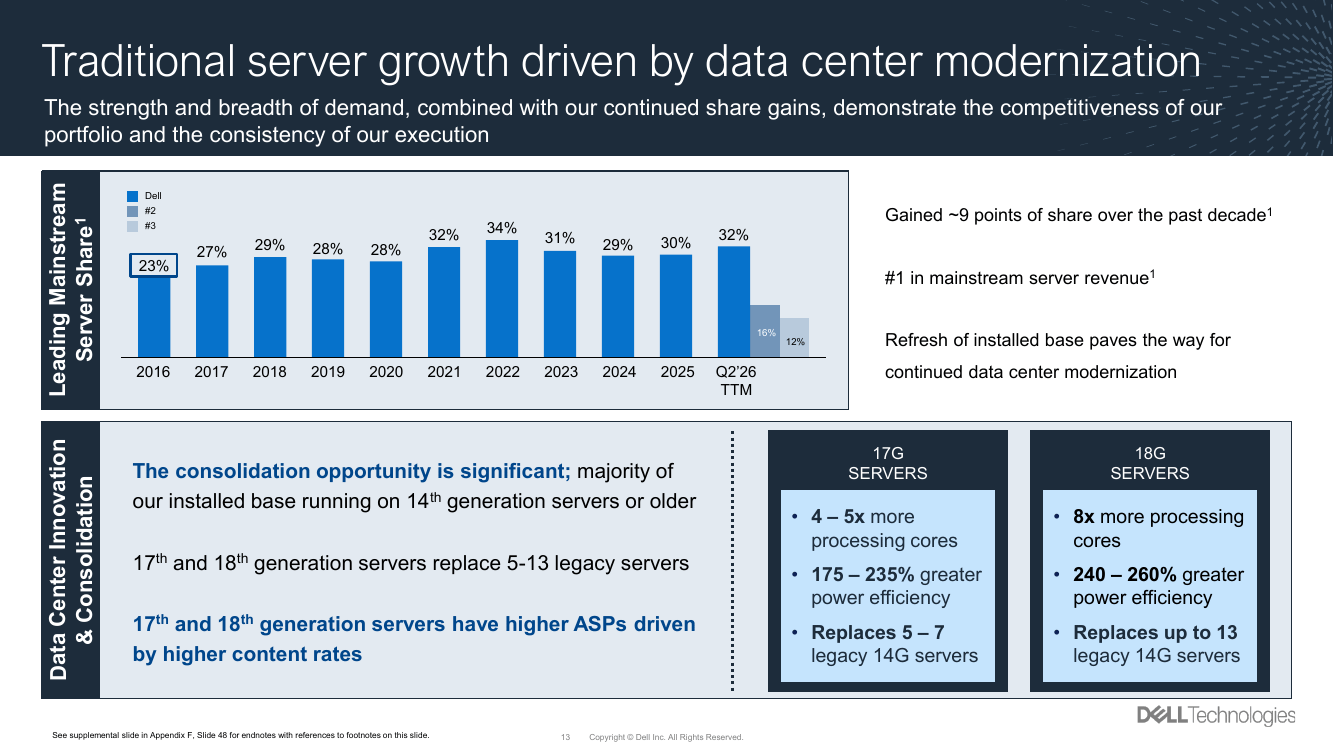
The surprise was traditional servers, the non-AI boxes. Revenue more than tripled while unit volumes fell. Each server now ships with far more memory and storage, at prices pushed up by the memory shortage, and servers built for agentic workloads sell for twice the price of a standard one. That’s price and content, the least durable kind of growth, so I’ve kept it out of my outer years: my model slows traditional servers to +10% next year and to low single digits by FY2032.
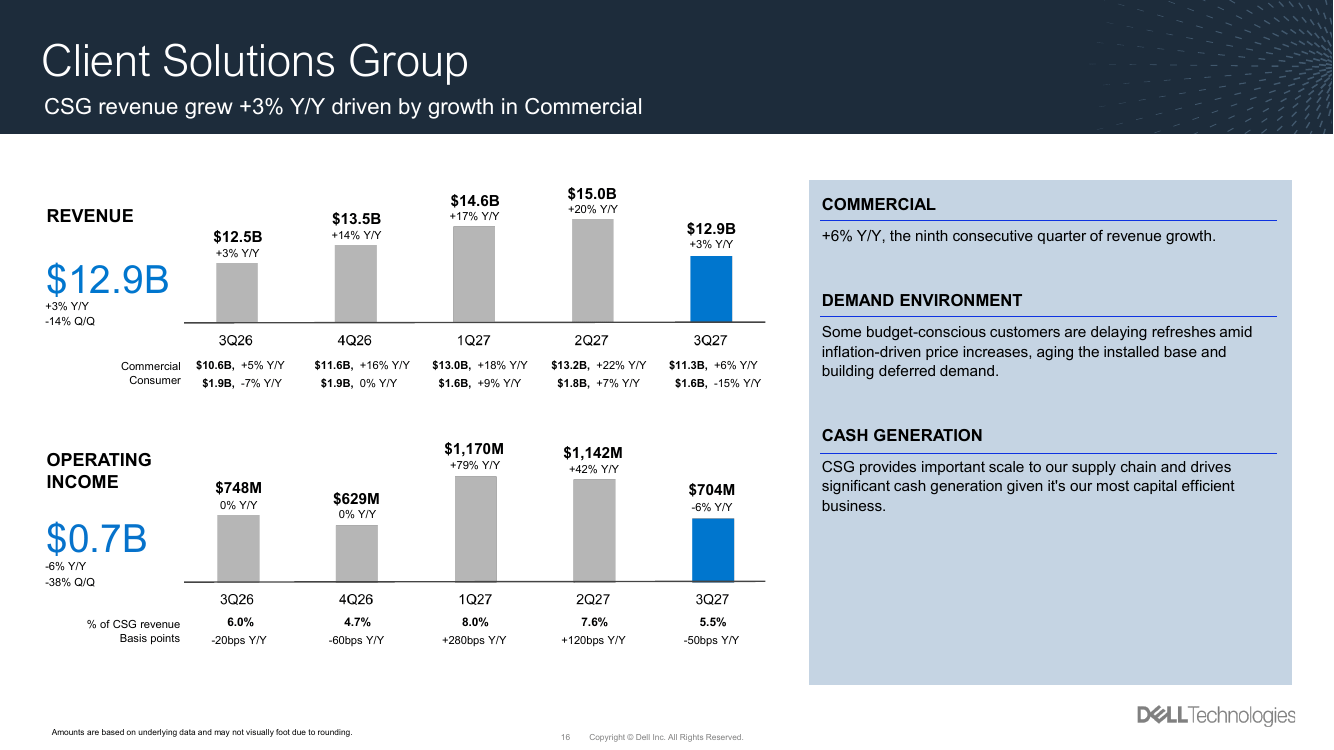
PCs are the weak spot. CSG barely grew: commercial buyers kept the segment positive while consumer sales shrank at a double-digit rate, and management expects a soft PC market next year as memory costs feed into prices. My model keeps CSG revenue flat for the next three years.
Guidance: the third raise
Management has now raised FY2027 guidance three times since February.

The year will end with EPS at more than twice what management first promised. The fourth-quarter guide is $56.25B of revenue and $8.40 of non-GAAP EPS, which is lower than the third quarter’s $9.45 on higher revenue. The gap is margin. Q3 had a rich North American mix, and the CFO expects ISG margin to moderate from here while staying above the long-term range in Q4.
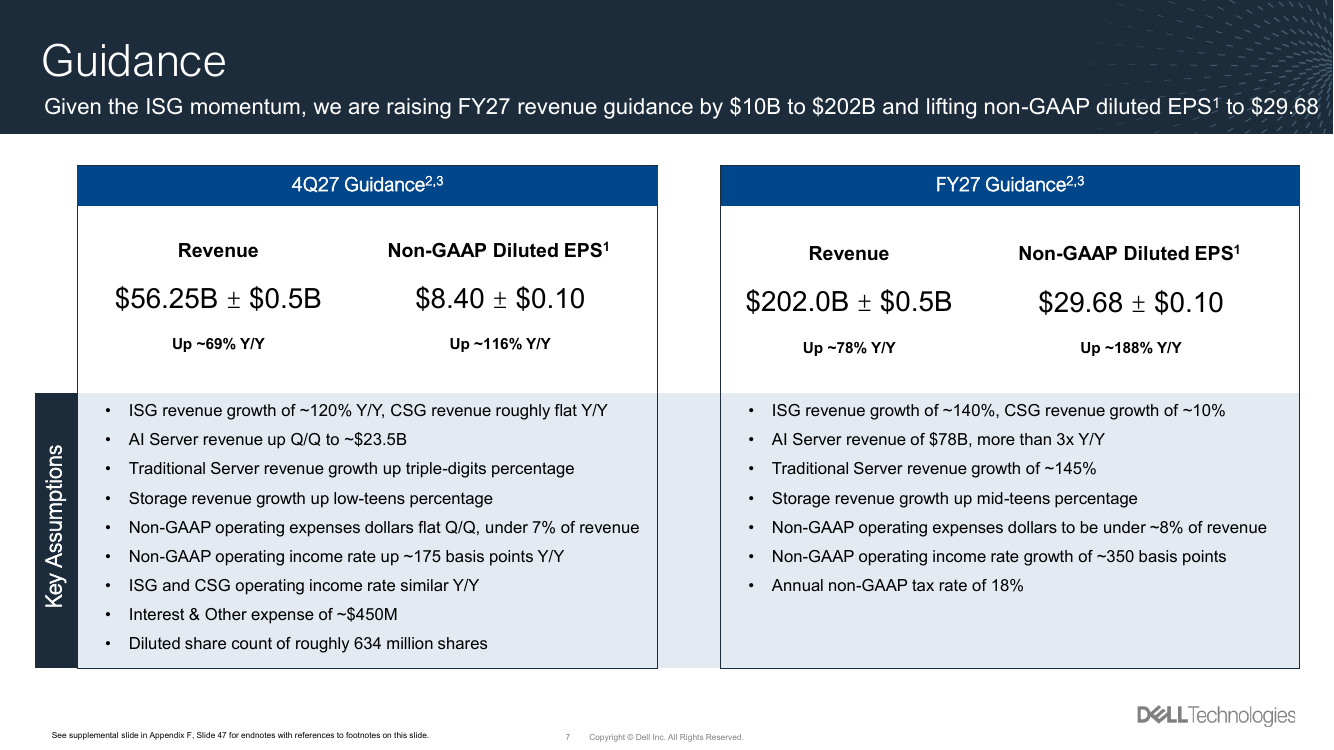
There’s no FY2028 guide yet. What management did say is that it expects demand to run further ahead of supply in calendar 2027. I’m not paying for that in the model. I have revenue growing 13% next year after 78% this year, with the operating margin slipping from 11.3% to 10.9%.
Thesis scorecard after Q3 FY2027
Three of my five original pillars are Confirmed and two are Evolving, the same split as September.
Pillar #1. Operator edge: Confirmed
Original thesis: DELL runs the lowest-cost supply chain and the largest direct sales force in enterprise hardware, so growth drops to the bottom line.
Evolution: Confirmed in every update since February.
What happened since last update: Revenue doubled and non-GAAP operating income reached $7.8B, a 14.2% margin. The cost base didn’t come close to doubling.
Assessment: Confirmed. Doubling revenue without doubling costs is the whole point of this pillar.
Pillar #2. AI demand wave: Confirmed
Original thesis: AI server demand spreads from a handful of hyperscalers to neoclouds, governments and enterprises, and DELL is the integrator they call.
Evolution: Confirmed, and stronger each quarter. The backlog was $51B in May and $95B in September.
What happened since last update: Orders over the past four quarters total $180B, and the backlog covers 1.7 years of this year’s AI server revenue.
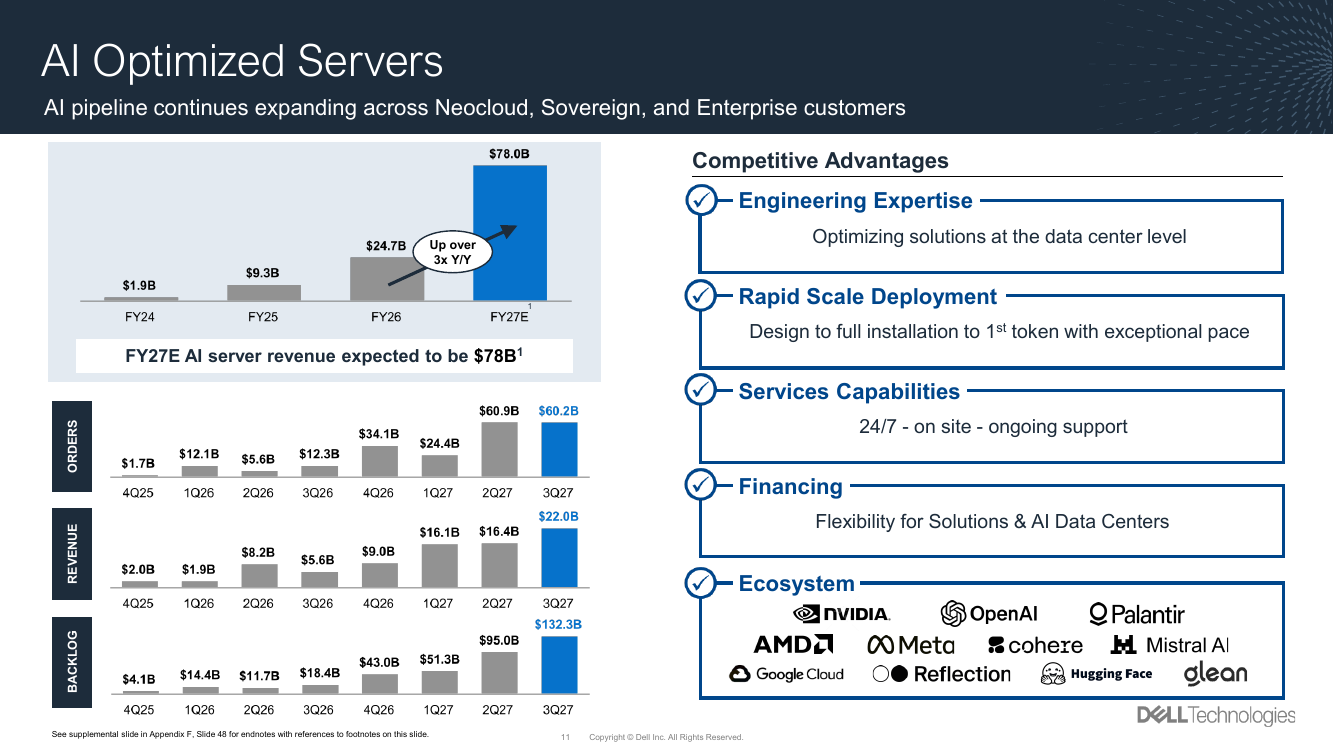
Assessment: Confirmed. The risk has moved from whether customers order to whether they’re allowed to build, which is the politics section above.
Pillar #3. AI today, attach later: Evolving
Original thesis: AI servers land at thin margins, then pull through storage, networking, services and financing at better ones.
Evolution: Evolving since February. ISG margin was 15.0% last quarter and is 17.0% now.
What happened since last update: Storage growth accelerated into the 20s, the attach I’ve been waiting for.
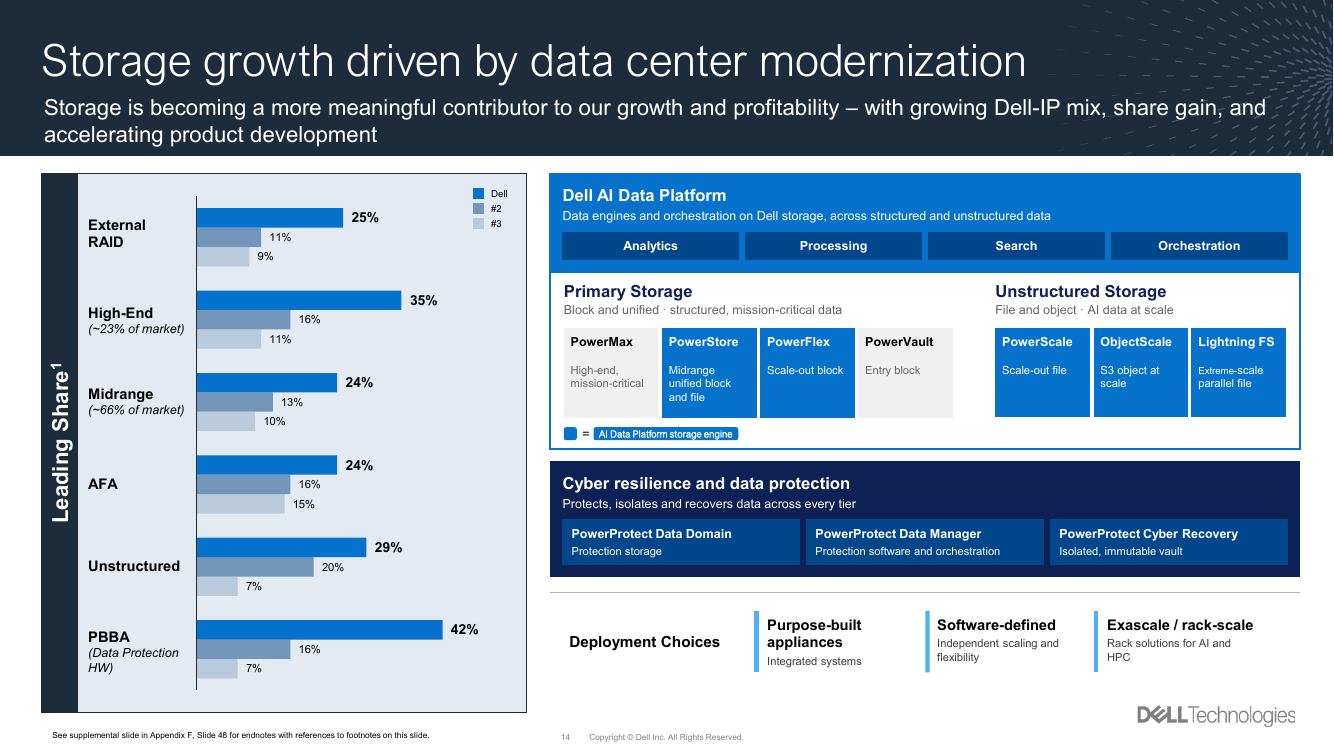
Management guides storage to low-teens growth next quarter, and part of the ISG margin came from mix and memory pricing that won’t last.
Assessment: Evolving, and moving the right way. I want two more quarters of double-digit storage growth before I call it Confirmed.
Pillar #4. Cash machine: Evolving
Original thesis: Suppliers finance DELL’s inventory, so the business throws off more cash than it reports in earnings.
Evolution: Confirmed until September, when I downgraded it to Evolving because cash flow lagged net income.
What happened since last update: Operating cash flow recovered to $4.5B and FCF to $3.5B.
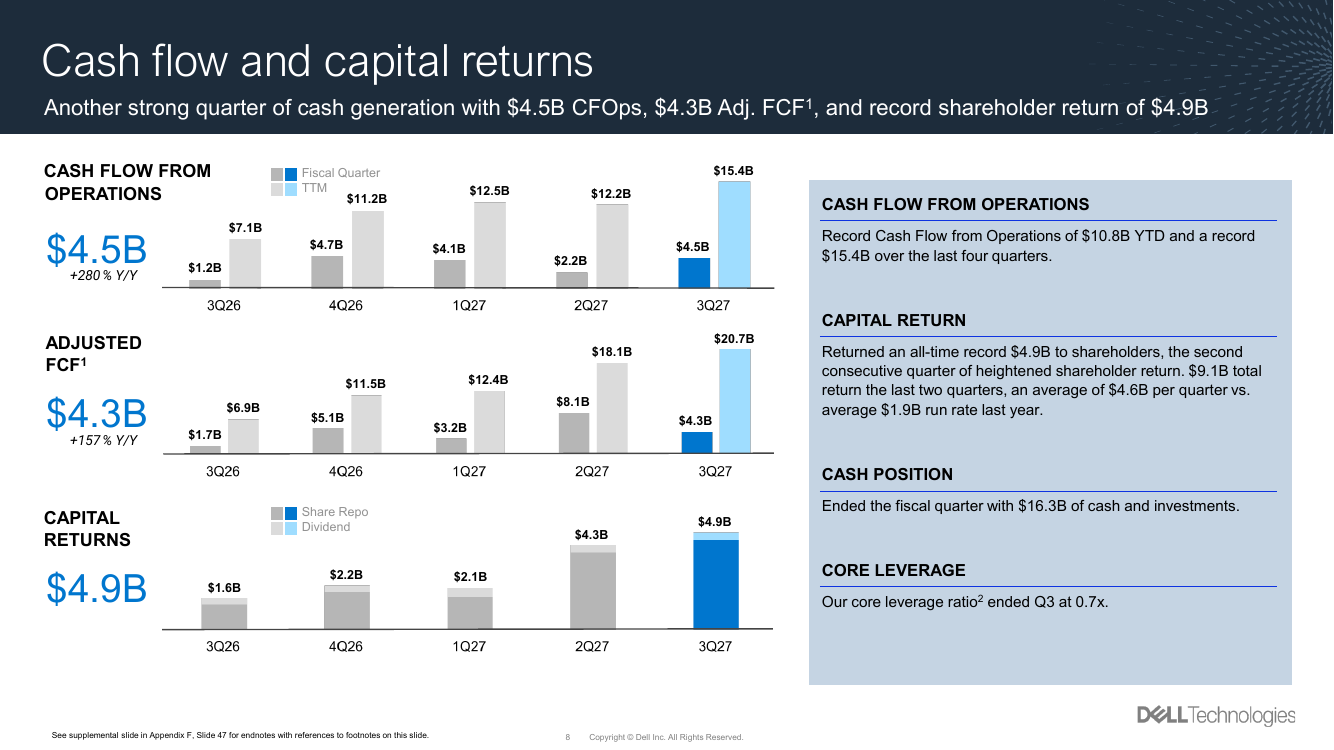
Underneath, inventory rose $8.2B in one quarter to $29.4B and payables reached $57.8B. Suppliers are funding the AI ramp. That’s a gift while revenue grows and a bill when it stops. The financing arm is the other half of this pillar: receivables held near $21B while originations more than doubled, which tells me the new loans are short. Management describes them as “selective and short-term”.
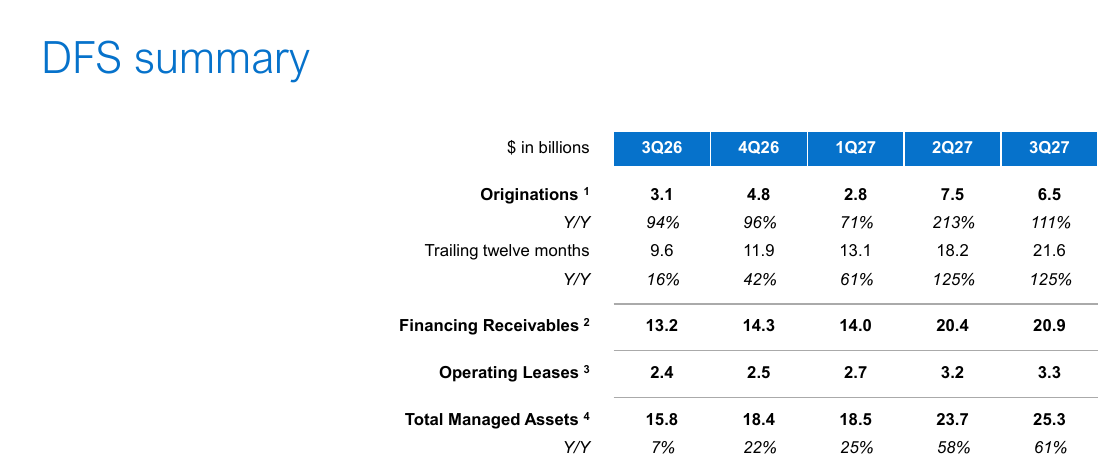
Assessment: Evolving. Better than September, but DELL still lends to the customers who buy its racks, and that’s the portfolio’s main financing risk.
Pillar #5. Shareholder flywheel: Confirmed
Original thesis: Management returns more than 80% of adjusted FCF through buybacks and a growing dividend.
Evolution: Confirmed since February.
What happened since last update: DELL returned $4.9B in the quarter and the board added $25B to the buyback.
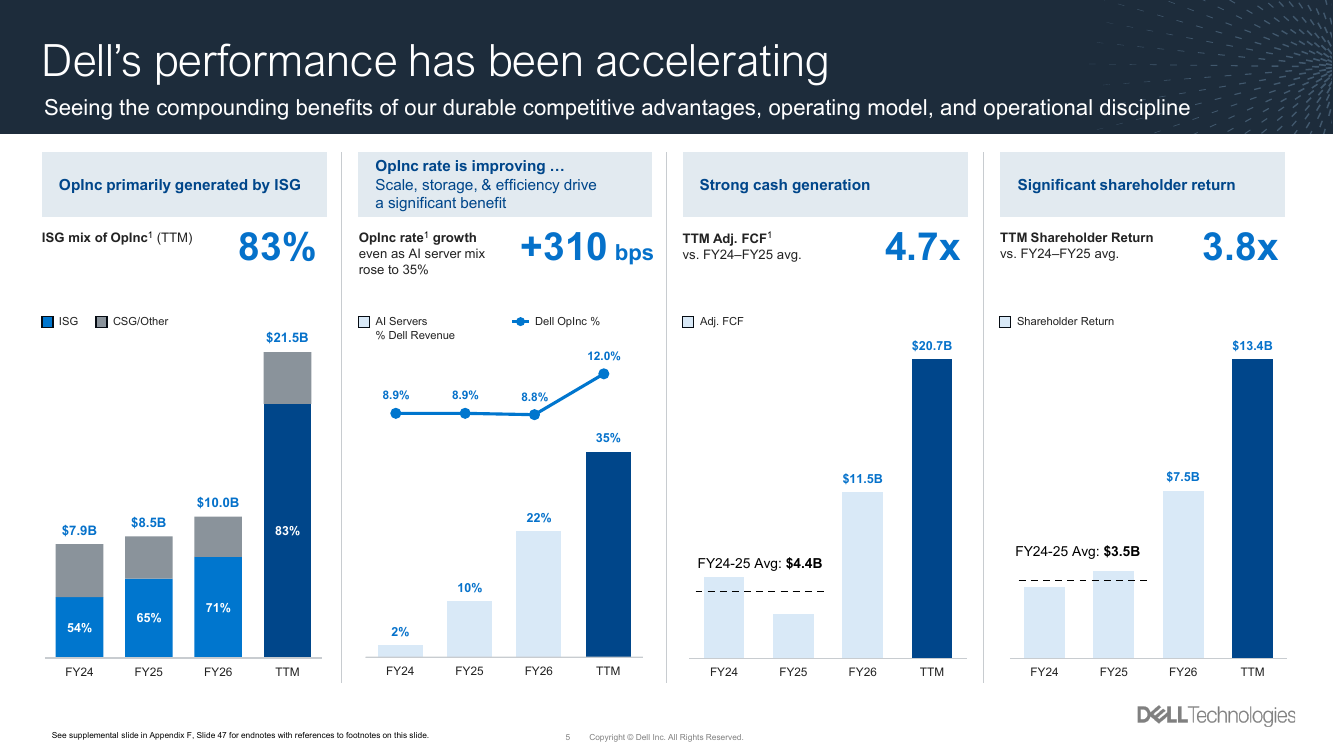
The 9M shares bought in Q3 cost an average of $488, 64% above today’s price. At $297, though, the new $25B retires 13% of the company.
Assessment: Confirmed.
How DELL ranks today
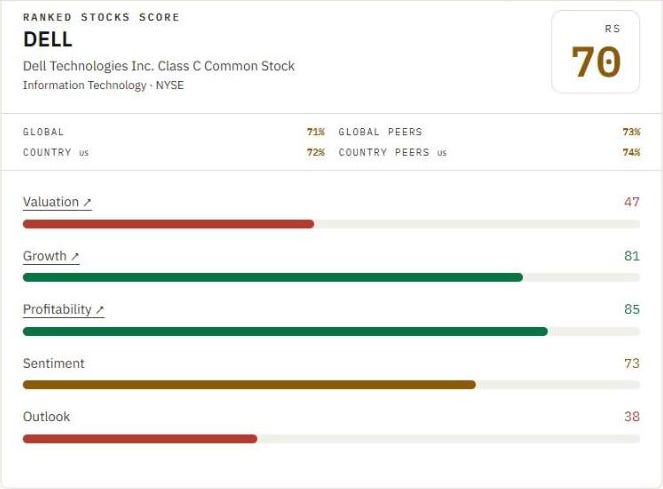
An overall 70 sits in the Strong band. Growth and Profitability, the two factors that describe the business, both score above 80. Valuation is just under the midpoint after the sell-off, and Outlook is the low score on the card.
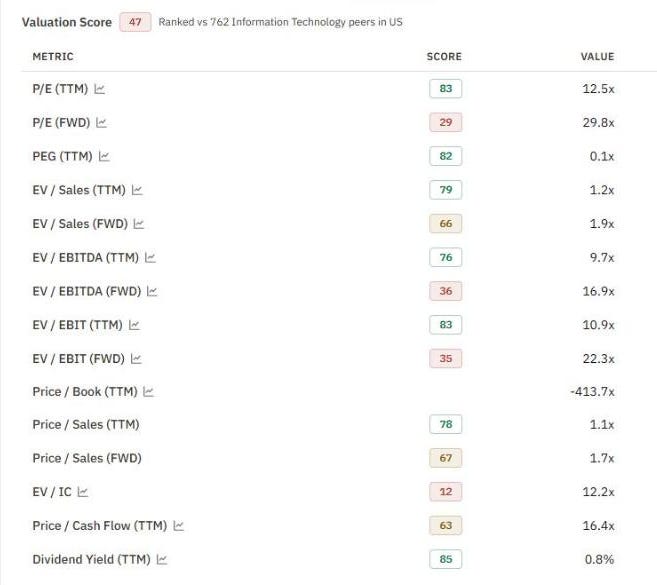
The trailing rows are where the sell-off shows. On trailing earnings DELL trades at less than half the sector median and below its own five-year average. The forward rows don’t reflect the new guidance yet: on the $29.68 guide the P/E is 10x.
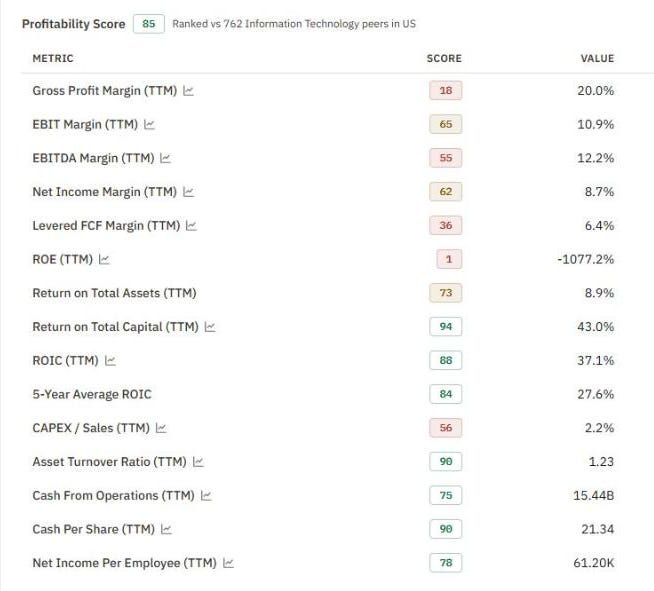
This is what a hardware assembler with a negative cash cycle looks like: a gross margin near the bottom of the sector and returns on capital near the top. ROIC is more than ten times the sector median.
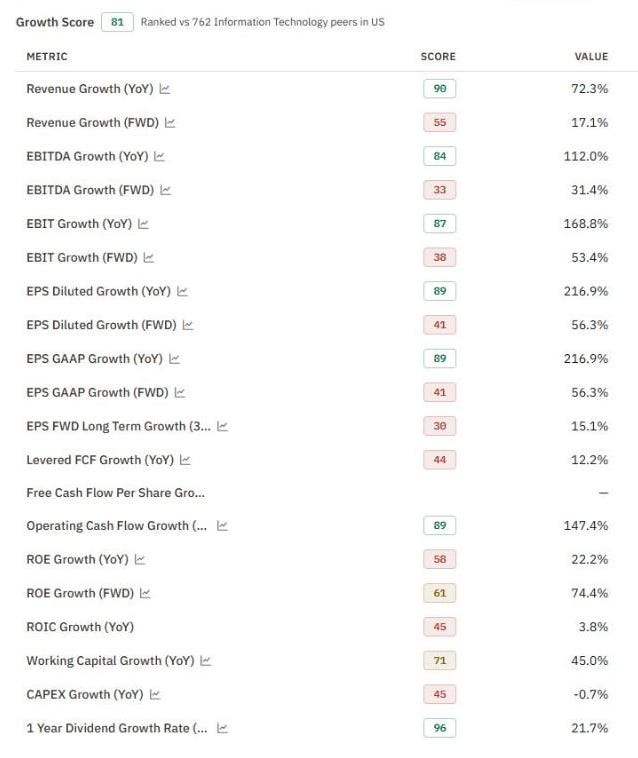
The trailing revenue, EBITDA, EBIT and EPS rows all score in the mid-80s or higher, and the forward versions of the same rows all score below 60. That gap is the buildout debate in table form: the Street already assumes revenue growth drops to the teens.
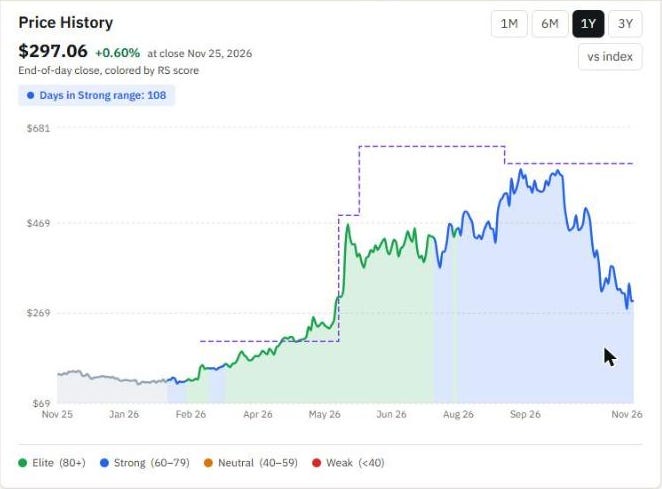
The line is coloured by score band and the dashed line is my published target. The price ran up toward that target in September, which is when I moved to HOLD, and has since fallen to half of it.
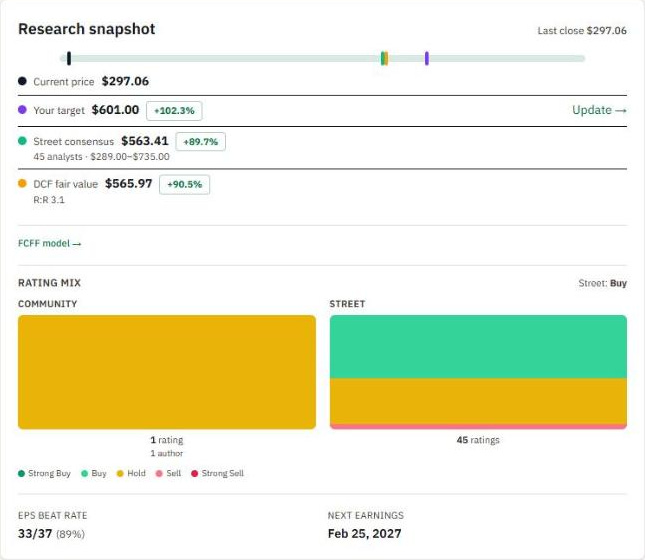
Three values sit close together in that snapshot: my DCF value, the Street’s average target and the $601 target I set in September, which this update replaces. Notice that the price is the outlier.
Strong business scores and a mid-table valuation, with a price far below every estimate of value on the page, is the setup I like to buy.
Valuation: from $601 to $566
My full model is here.

The business added $50 a share to my target in three months, and the bond market took away more than that. The 80 basis points I added to the risk-free rate is the largest move in the bridge, larger than the third guidance raise. DELL’s operations got better while the price of money got worse.
At $297 the upside to my target is 90% and the downside to my bear case is 30%.
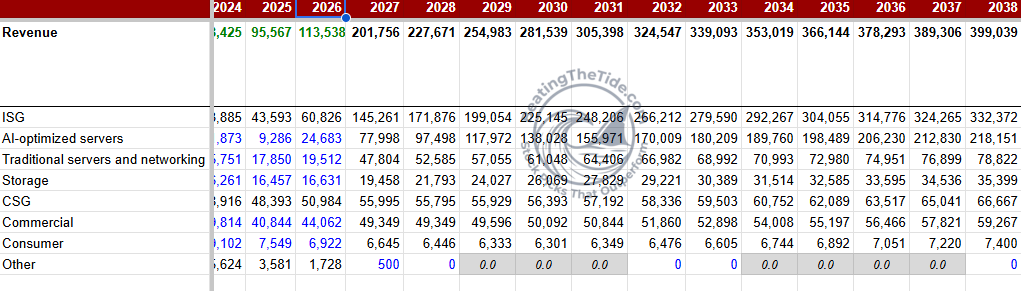
The base case takes revenue to $339B in FY2033 and AI servers to $180B. AI server growth steps down every year: +25% in FY2028, then +21%, +17%, +13%, +9% and +6%. The EBIT margin stays between 10.9% and 11.6%, below the 14.2% DELL just reported.
What $297 pays for
At today’s price Mr. Market is paying for a DELL whose AI and traditional server revenue never grows past this year’s level and whose ISG margin falls to 12%. Hold that against $132B of orders waiting to ship. The price says the order book converts and nothing follows it.
The haircut: $41 a share for a costlier buildout
If builders pay more for power, water, labour and taxes, each dollar of capex buys fewer racks. I can’t date the slowdown, so I lowered the whole glide path: AI server growth in FY2032 goes from +12% to +9% and in FY2033 from +8% to +6%, and traditional servers lose a point in each of those years. Every year in between slows with them.
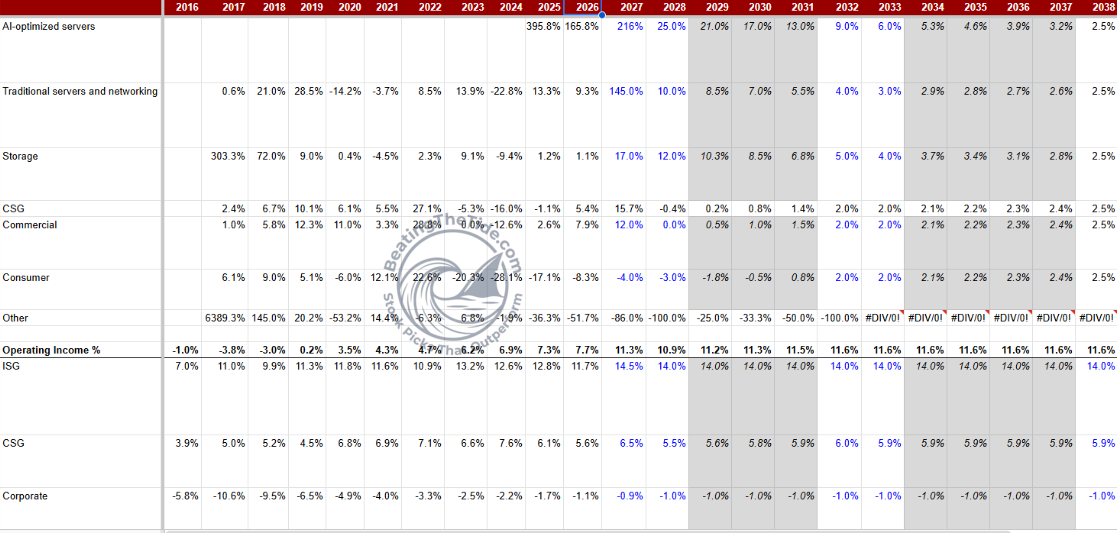
That costs $41 a share. It’s my conservatism, and I’d rather be wrong in that direction. Without it the model says $607.
The bear case: $209
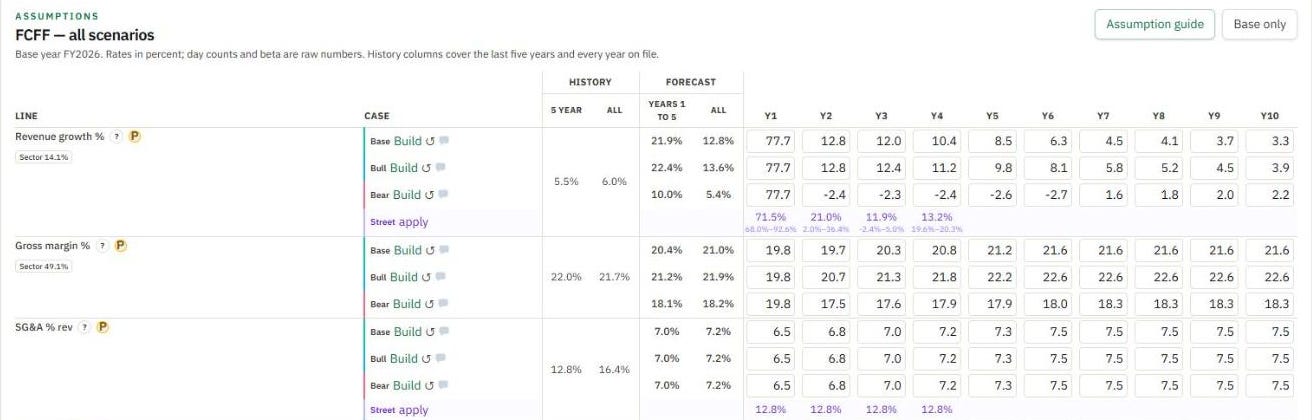
I built the same assumptions on RankedStocks, with a bull case and this bear case next to the base.

The claim: the politics go the other way. Moratoriums stick, the 2028 pause becomes a multi-year stall, and DELL’s backlog ships with nothing behind it. In numbers, AI server revenue stays at $78B next year and then shrinks to $60B by FY2032. Traditional servers fall 10% as memory prices normalize and then stop growing. Storage grows 3% a year. ISG margin drops to 11%, the bottom of management’s range, CSG margin drops to 5%, and group revenue shrinks 2%-3% a year through FY2032. That business is worth $209 a share, 30% below today’s price.
My answer: this is the harshest outcome I can build from the evidence. It needs DELL’s customers to walk away from sites that were vetted for power before the order was booked, half of them outside the US. It also needs the US to accept losing ground to China for years. Even then, the downside is less than a third of the price, on a stock that has already fallen 43%.
The Monte Carlo: 10,000 runs
Of 10,000 simulated outcomes, 98% are worth more than today’s price.
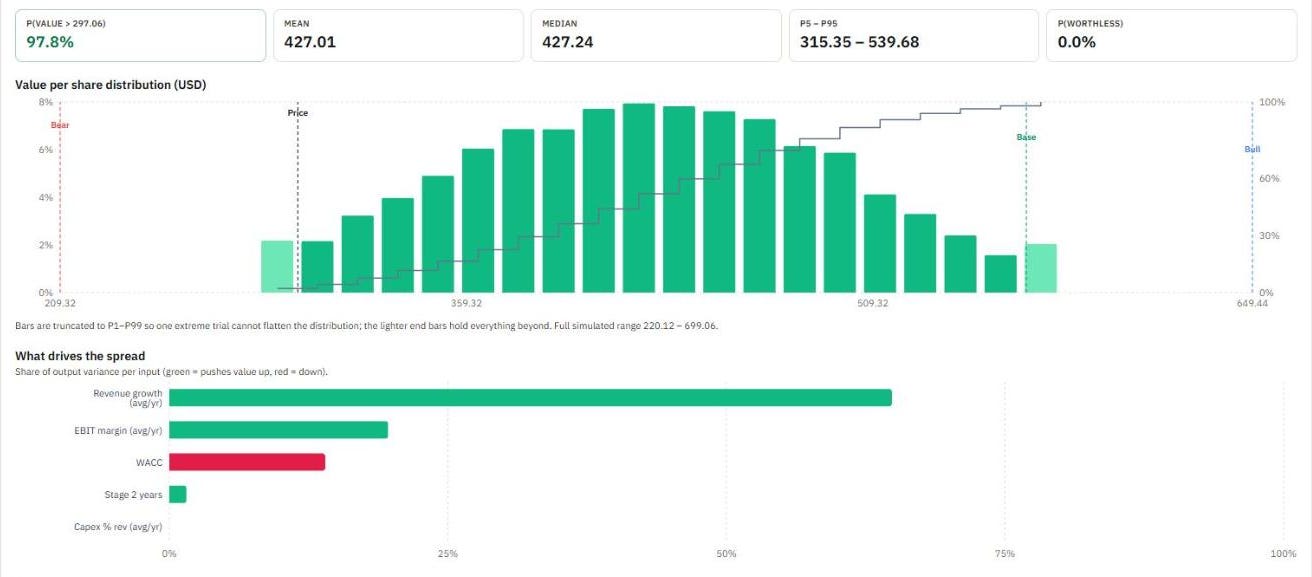
I ran the simulation on the same RankedStocks model and let it draw revenue growth, EBIT margin, the discount rate and the length of the high-growth period at random between my bear and bull cases. Even the 5th-percentile run lands above $297. The median sits well below my $566 because most draws land under my base case: the distance from bear to base is far wider than from base to bull. Two-thirds of the spread comes from one input, revenue growth, which is the buildout question again.
Risks I’m watching
Margin gives back more than guided. The Q4 EPS guide is already below Q3. If memory prices fall quickly, traditional server revenue and ISG margin fall with them.
My answer: my FY2028 EBIT margin is 10.9%, more than three points under the quarter just reported.
The financing book. DELL carries $20.9B of financing receivables, and some of its customers are building on borrowed money.
My answer: receivables grew $0.5B in a quarter with $6.5B of originations, so the book turns fast, and core debt is 0.7x EBITDA. The number I watch is receivables growing faster than revenue.
Rates. In the bridge, 80 basis points cost $54 a share, and another 80 would cost a similar amount.
My answer: that’s a risk to the target, and the price sits $269 below the target.
Export controls. NVIDIA has halted DELL’s server shipments to four Southeast Asian countries, and nobody knows how much of the backlog was headed there.
My answer: with demand ahead of supply, a blocked rack should find another buyer. The number I watch is the backlog in the Q4 report.
From HOLD to BUY
DELL is a BUY now.
In September the price was $524, my target $601 and my bear case $450. Upside 15%, downside 14%. That’s a HOLD, and I said so. Today the price is $297, my target $566 and my bear case $209. Upside 90%, downside 30%.
My view of the business barely moved. The target is 6% lower, and all of that is the discount rate and my own haircut. The price is 43% lower. A rating is the distance between price and value, and that distance went from 15% to 90%.
Two more things changed. The evidence got better: a third raise, and a backlog 39% larger than three months ago. And the political risk went from unknown to written down. The moratoriums are announced, their terms are public, and the terms are about money.
If you believe the buildout is over, DELL isn’t the stock to argue about, and you should sell every AI name you own. I believe the builders pay more and keep building, and at 10x earnings I’m paid well to hold that view.
Portfolio Update
The portfolio gained 8.5% last week and the S&P 500 gained 5.6%, its best week since April 2025. Monday did the work. NVIDIA’s board brought Jensen Huang back, the stock jumped 31% and the AI names went up with it. We gained 8.5% that day and the S&P 4.7%. We gave back 4.6% on Tuesday as the rally cooled, and it took until Friday’s half session, when we added 3.8%, to get back to Monday’s close.
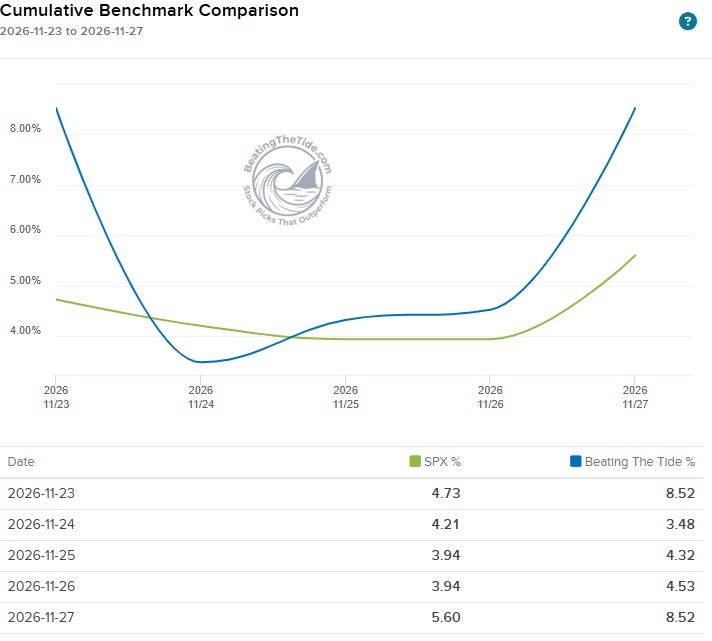
Portfolio Return
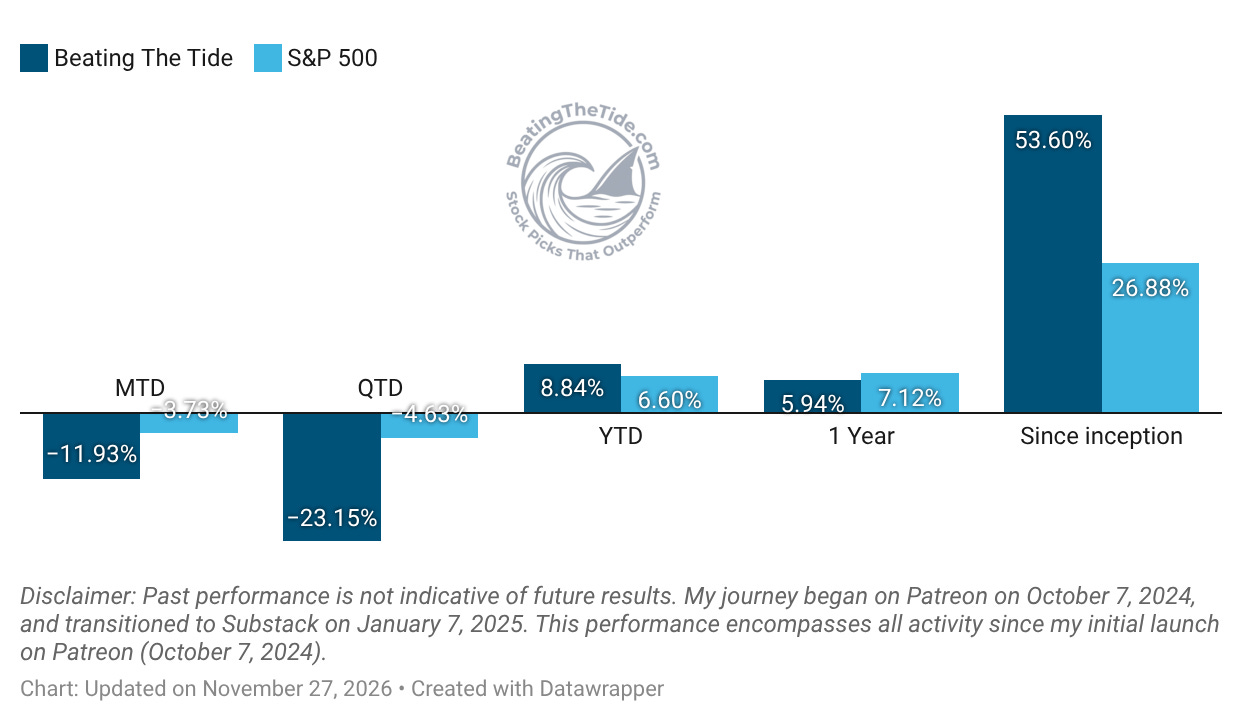
Month-to-date: -11.9% vs. the S&P 500’s -3.7%.
Year-to-date: +8.8% vs. the S&P 500’s +6.6%. That is a gap of 224 basis points.
Since inception: +53.6% vs. the S&P 500’s +26.9%. That’s 2.0x the market.
Contribution by Sector

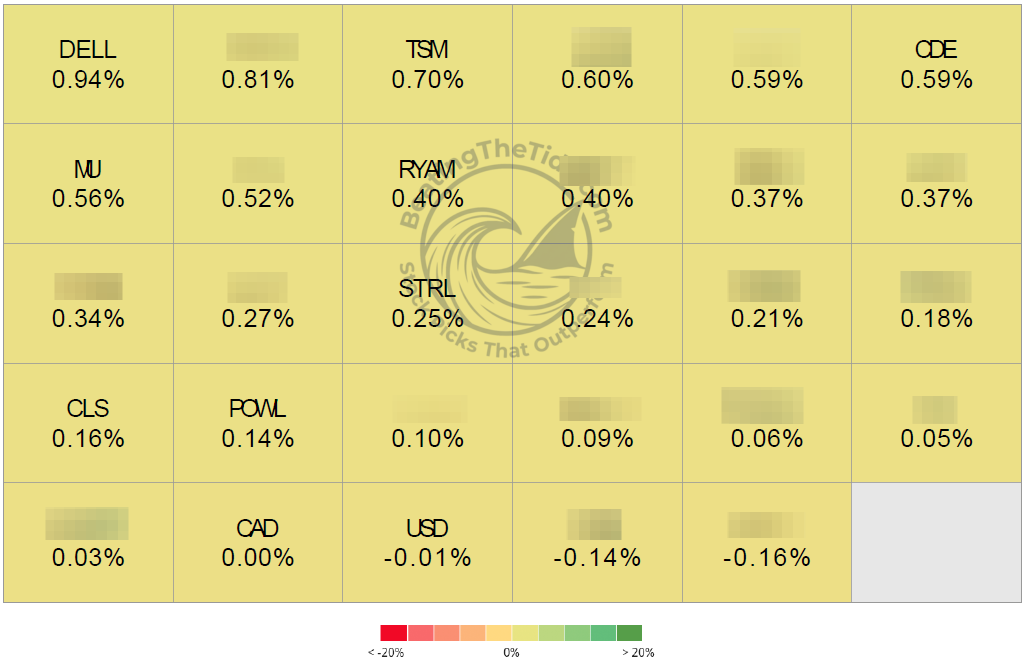
Technology added 415 bps, half of the week’s gain, as Jensen Huang’s return to NVIDIA set off a rally in the AI names that led the sell-off the week before. Basic Materials added 178 bps, helped by gold’s first weekly gain in three weeks after it touched a 15-month low on Wednesday. Industrials added 100 bps and Financials 84 bps. Consumer Non-Cyclicals was the one sector in the red, at 10 bps.
Contribution by Position
How to read the heat map? Click here.
That’s it for this week.
Stay calm. Stay focused. And remember to stay sharp, fellow Sharks!