


Hello fellow Sharks,
We started the week strong on Monday, but the tech selloff that followed hit the portfolio. If you want to skip straight to the numbers, jump to the Portfolio Update.
Last week was a busy one, on Monday I sent the trade alert and deep dive for the August stock pick.

The debate on this company is a referendum on one reported ratio, while the line that actually decides who keeps the money is bigger, behaves differently, and gets almost no coverage. The business is growing at more than 40% in a market that is shrinking around it, and my DCF puts fair value 50% above where it trades.
Then on Wednesday, I published an update on a position that already returned 61%. It hit the target I set in the deep dive, so I refreshed the model against the Q2 results, raised fair value, and moved the position onto my trim list: the risk / reward profile is balanced now.

And finally on Thursday, I published a post-mortem on STRT, we closed the position at a +75.7% gain.

After Q2, I cut my target from $125 to $95, growth now waits on the 2029-model-year awards, and at the exit price the risk/reward had turned negatively skewed. I took the money and moved it into the August pick.
We are getting close to Weekly #100! Only four weeks away. I want to prepare a special Thought of the Week for it, and I want your input: leave a comment with what you would like me to cover, I will take everything into consideration.
The following two weeks, expect fewer updates from me and a bit of a shorter Weekly. I am travelling to Chile on Thursday, August 28, to sign a paper (yes, ridiculous, but to sell a property in Chile you cannot sign online). I plan to return as soon as possible, but to take advantage of being there, I will close some other open items, including setting up the Latam leg of RankedStocks.com. As I mentioned a couple of times, my objective for RankedStocks.com is to become the financial hub where you find gems and run your research on equities (and ETFs) across the globe. I started covering the US and have expanded to Canada and the UK. The next leg is Chile, followed by the rest of Latam. After that, I will keep opening countries by the market cap of their exchanges. But if you have an interest in a specific region, please vote on the poll below!
As per the Thought of the Week: I try to stay away from macro and from just reporting the news (there are many outlets that already do that), but I am making an exception this week as it plays into my long-term view on the US and gold.
Enjoy the read, and have a great Sunday.
~George
Table of Contents:
Thought Of The Week
A $4B Answer to a $40T Question
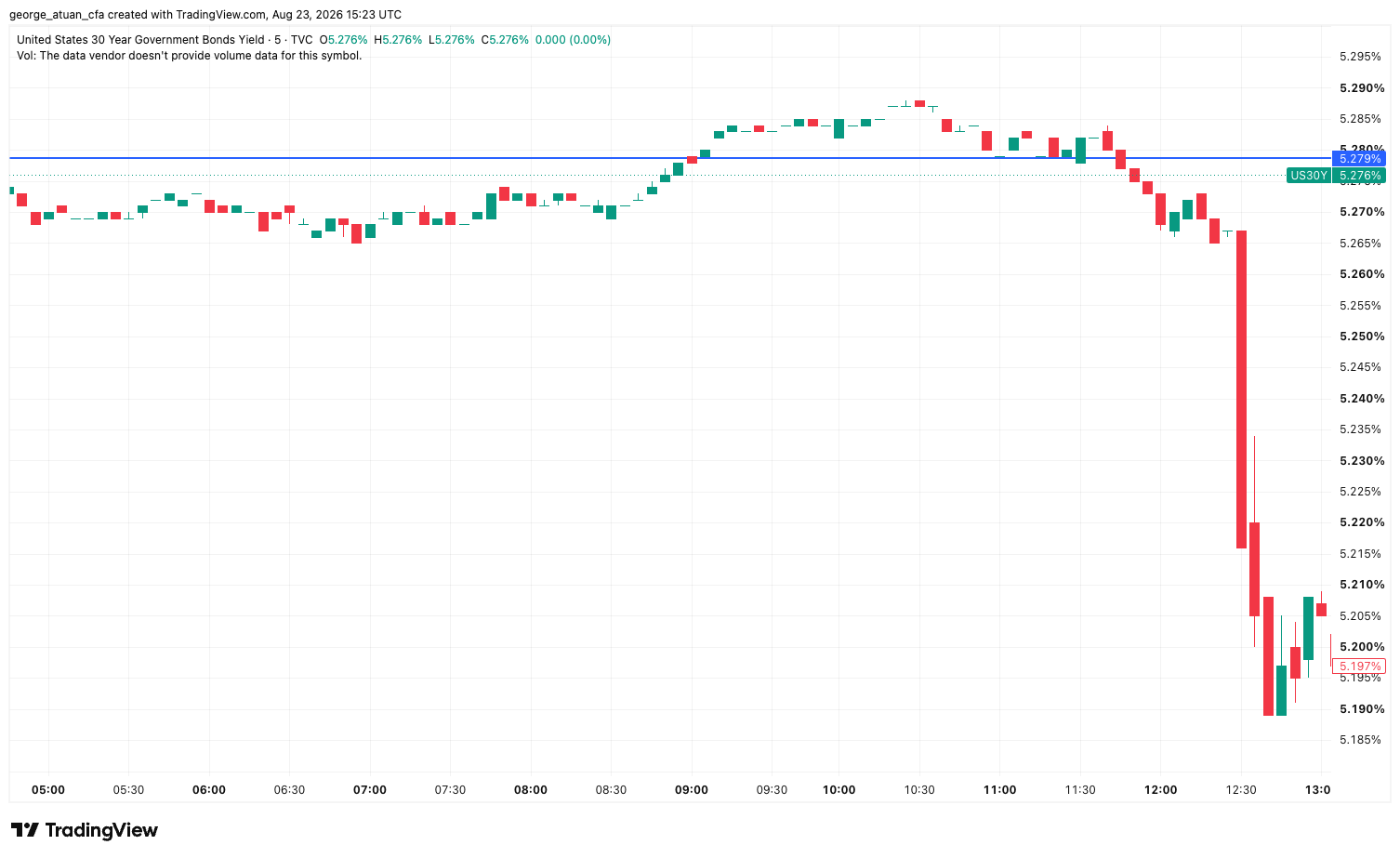
Last Wednesday, while half of Wall Street was on a beach, the US Treasury announced it will at least double the buybacks of its own long-dated bonds. Yields fell within minutes…
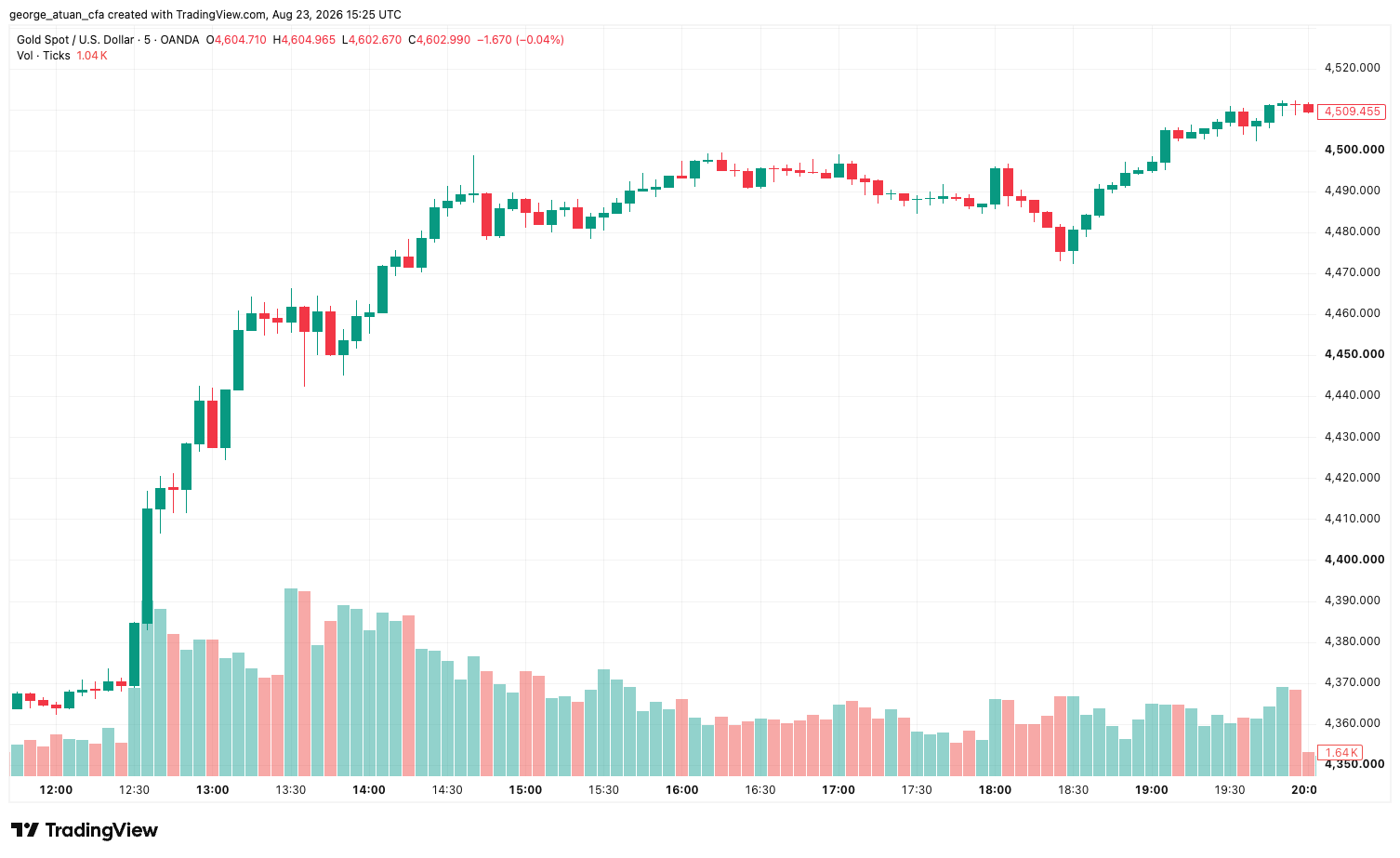
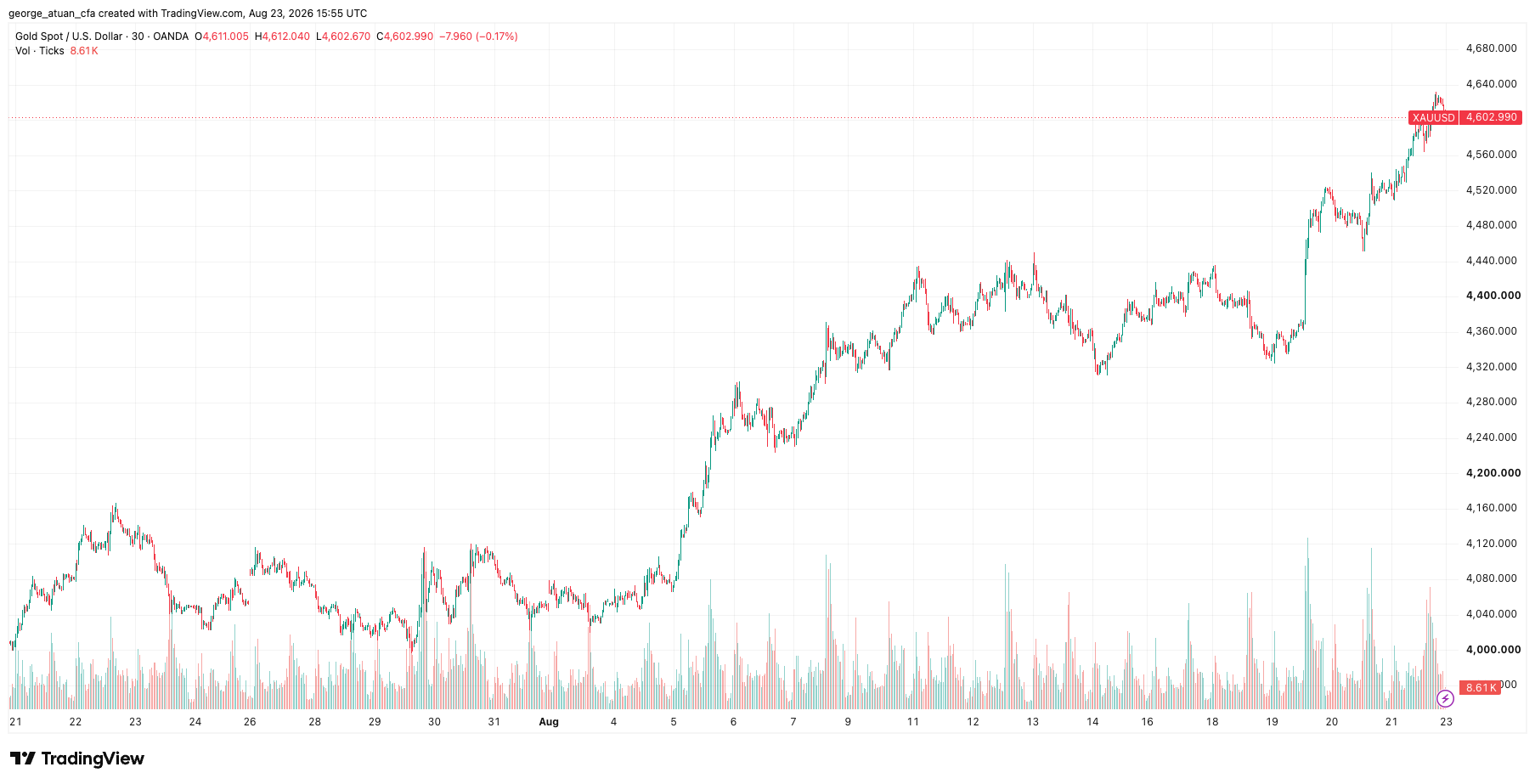
… gold jumped through $4,500.
By Thursday, traders had already given the move a name: the Bessent Put.
Jumping to my conclusion: this is a liquidity patch, probably a necessary one, but it removes zero dollars of debt. It shifts the pressure from the bond market to the dollar, and the currency and gold markets understood that within 48 hours. I am not changing a single position because of it, though it does re-rank the tailwinds and risks inside the portfolio. First, I will explain what the Treasury did and how it pays for it. Then I’ll explain why it barely worked, what it did to the dollar and gold, and what it means for equity valuations in the short and the long run.
Finally, I will go through some of our positions.
I started my career on a credit desk, and old habits die hard: when a borrower starts buying back its own bonds, my first question is always what that tells me about the borrower. Companies repurchase their debt at a discount when they want to deleverage. The US is doing something different.
What the Treasury Did, and How It Pays for It
On August 19 the Treasury announced it will at least double its liquidity-support buybacks of long bonds, in the 10-to-20 year and 20-to-30 year buckets, from $2B to at least $4B per operation, running from September 9 through November 4. One day later, Secretary Bessent said the quiet part out loud: “it could be more than $4 billion per issue.” The targets are old, off-the-run bonds, paper issued years ago that barely trades anymore. The Treasury buys them from dealers and pays by selling more short-term bills.
So is this money printing? No, and the distinction matters. QE happens when the Federal Reserve creates new money and expands its balance sheet. The Fed printed nothing here, and it cut nothing either. Total debt outstanding stays exactly the same, only the maturity mix changes: less 30-year paper in the market, more short-term bills. Think of a homeowner with a 2.5% 30-year mortgage refinancing into a floating-rate loan because he does not like how the mortgage looks on his screen. The monthly payment goes UP, the screen looks better.
That homeowner detail is the part almost nobody mentioned last week. Those seasoned long bonds trade at deep discounts because they carry coupons locked in below 3% during another era, which makes them the cheapest funding the United States has ever secured. Retiring them and replacing them with bills priced at today’s short rates raises the actual cash interest bill. A company that retired its cheapest, longest debt to fund itself with commercial paper would get hard questions on its next earnings call. The United States got a one-day relief rally.
The US just retired its cheapest debt and refinanced it with more expensive debt. So why do it? Because the goal was never to save interest. The Treasury is buying duration risk out of the market: every old 30-year it retires is 30 years of rate risk nobody has to hold anymore, and that is what caps the long yield. The cost shows up later, in two forms. The cash interest bill rises immediately, because bills priced at today’s short rates replace coupons locked below 3% in another era. And the rollover risk rises with it, because bills come due every few months and have to be refinanced at whatever rate the market charges then. It is a bet that short rates fall before the extra cost compounds, made by a borrower that controls neither inflation nor the Fed.
Why Step In Now?
The backdrop is a debt stock that crossed $40 trillion this year, with close to $2T of new borrowing added every year on top. That is more than $5B of new debt every single day, weekends included. Someone has to buy all of it, and in the long maturities the buyers have been walking away. In mid-August the 30-year yield touched 5.33%, its highest level since 2007…
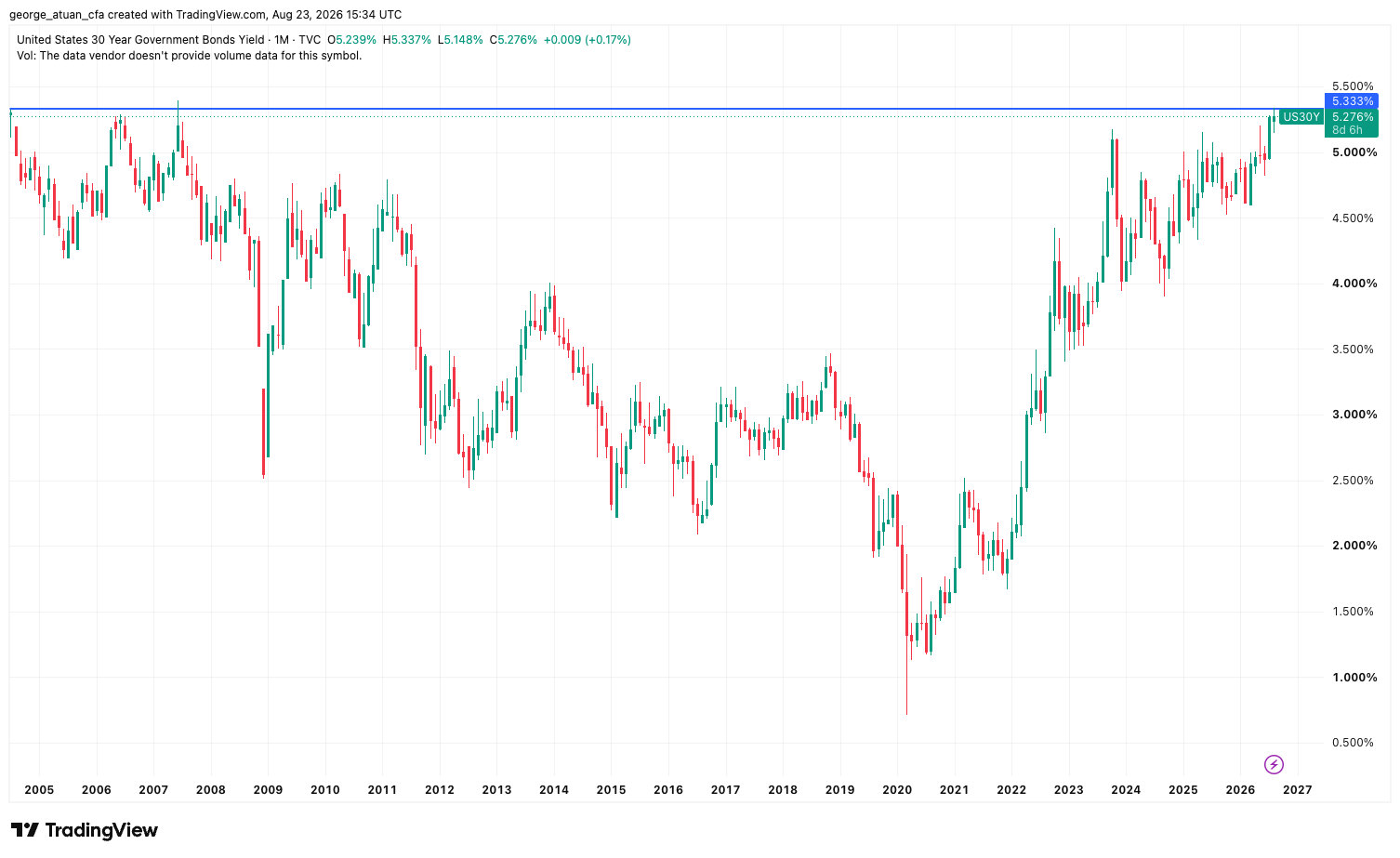
… and the 10-year pressed above 4.7%.
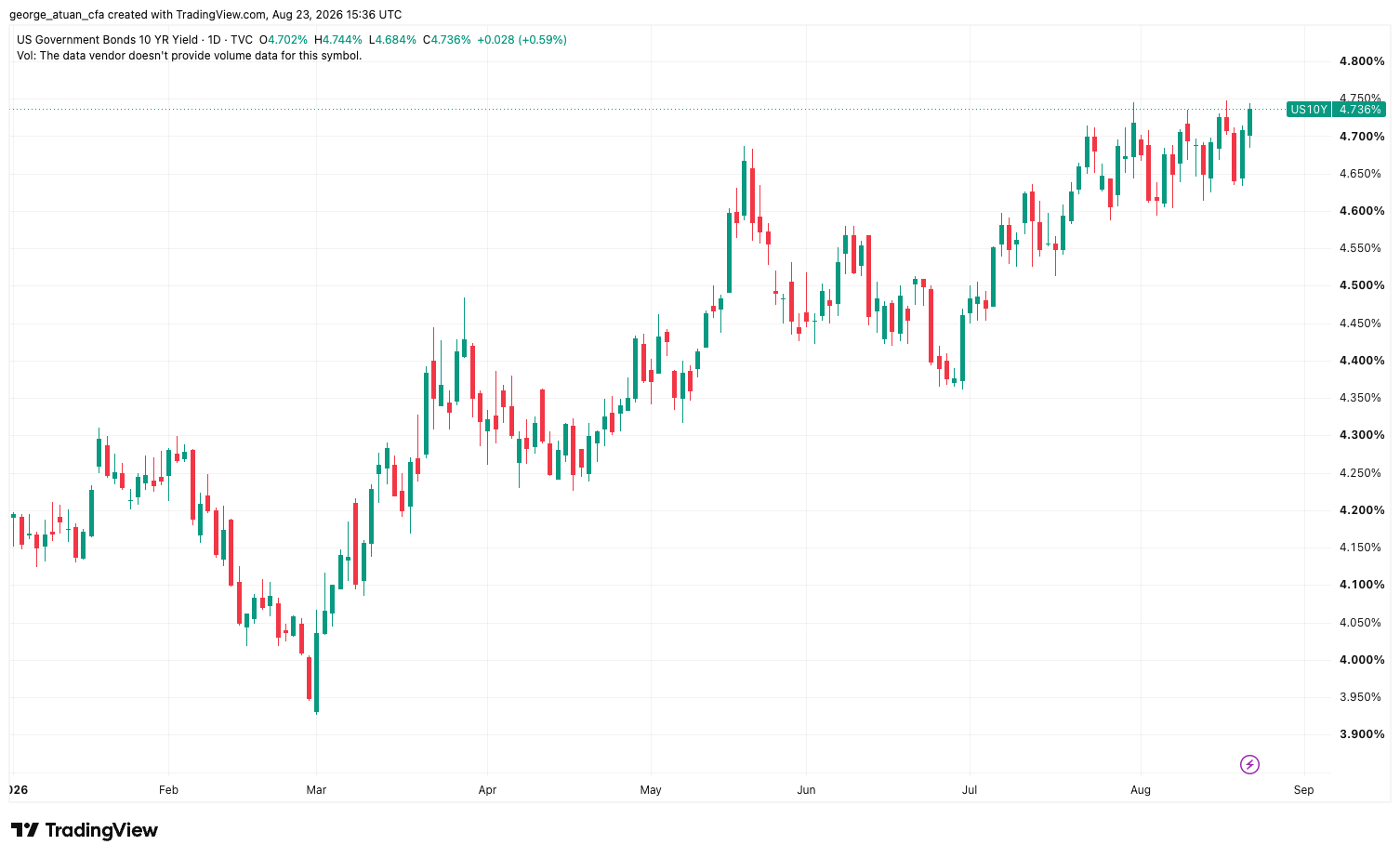
The technical name for what widened is the term premium, the extra yield the market demands just for the risk of holding a bond for 30 years instead of rolling short bills. In plain English, bondholders started charging the US extra for time. Part of the blame sits with the Fed as Warsh has abandoned forward guidance almost entirely; the market gets no signal about where policy is heading, and an unanchored long end drifts wherever fear takes it. With the Fed silent, the Treasury decided to anchor the curve itself.
And the fiscal arithmetic explains the urgency: net interest cost the government a whopping $963B in the first ten months of the fiscal year, inside a $1.8T deficit over the same stretch. Every basis point on the long end compounds into that number for decades.
Did the Bessent Put Work?
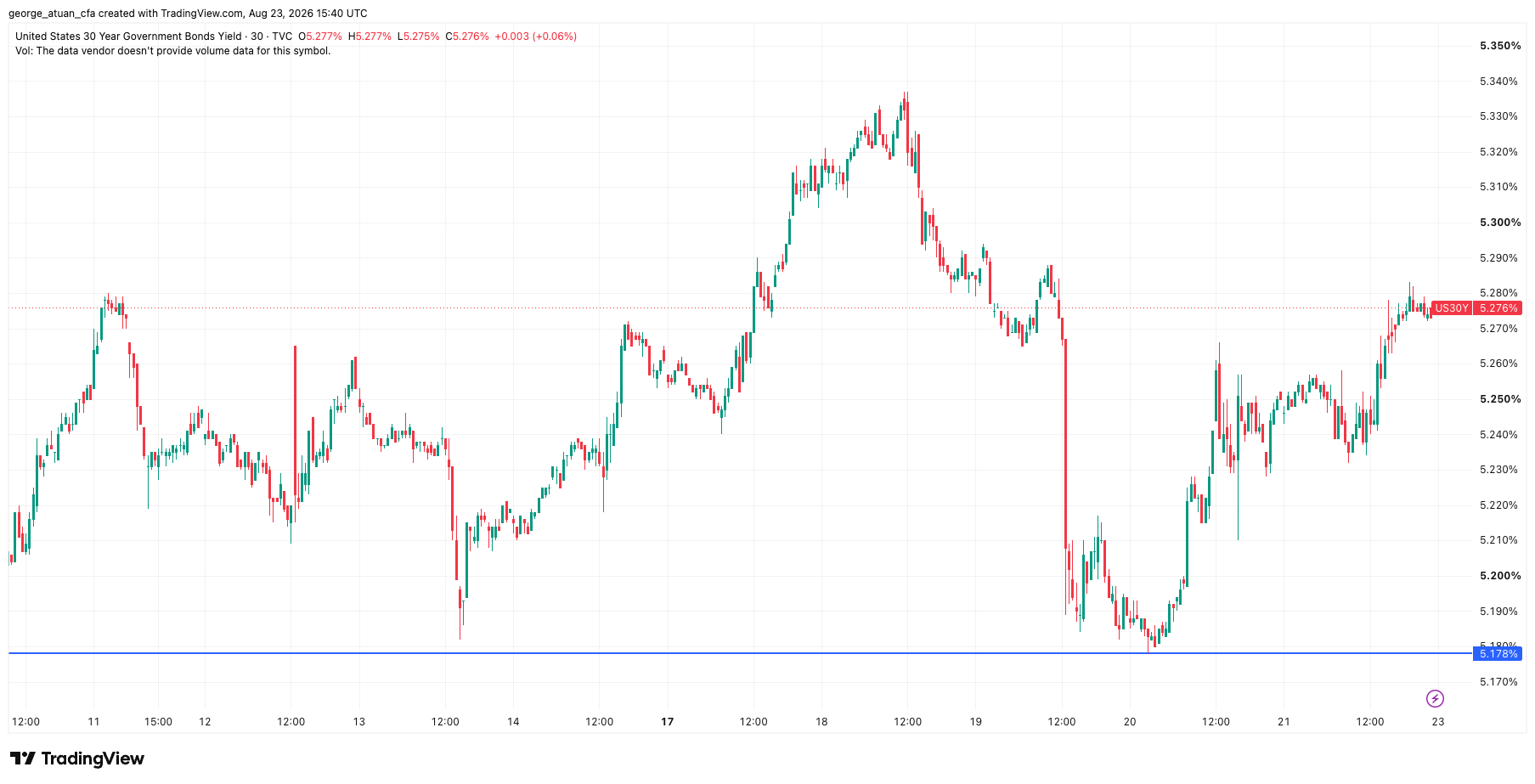
For a few hours, perfectly. The 30-year dropped to 5.178%...
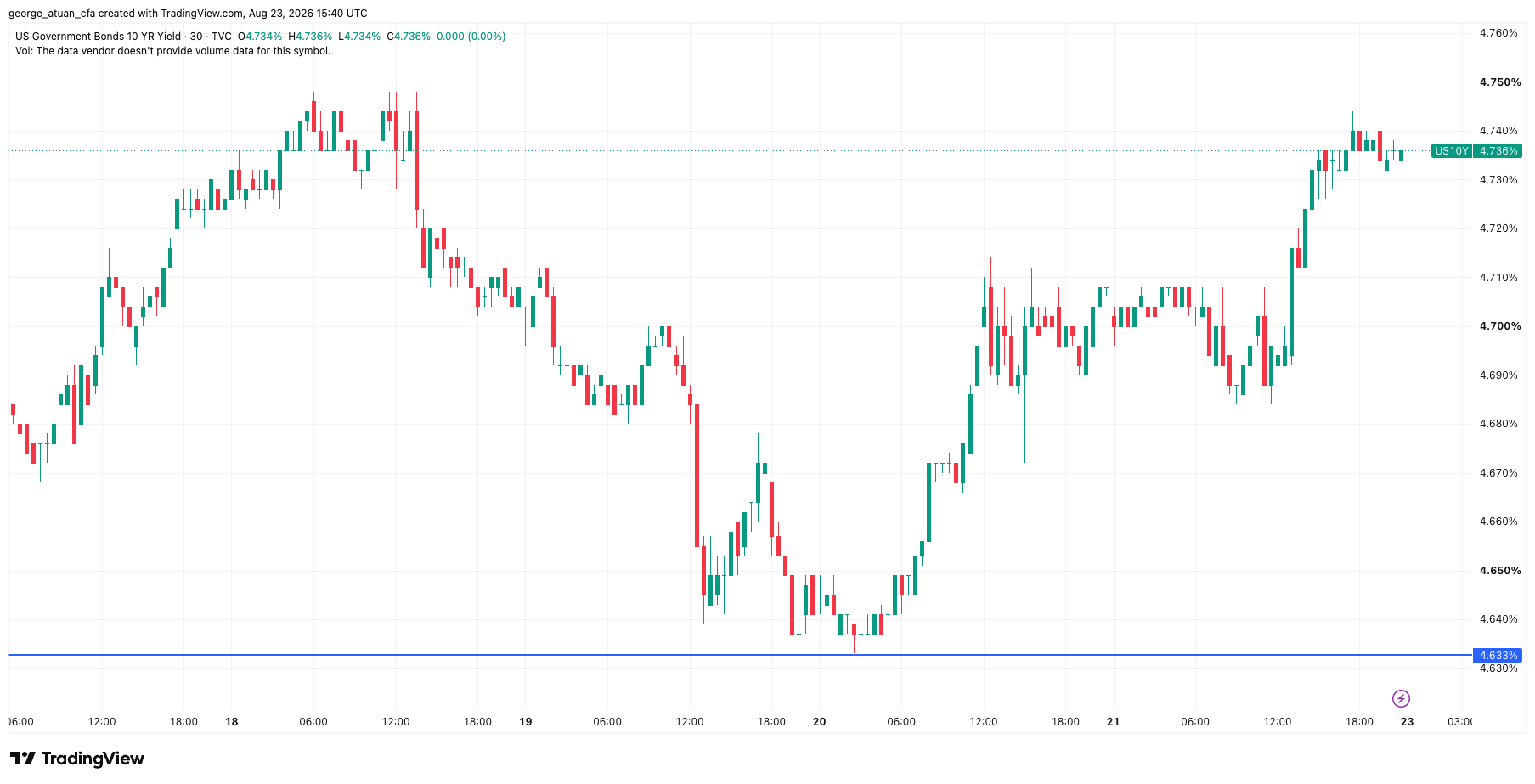
… the 10-year fell six basis points to 4.633%...
… and stocks ticked up with the S&P 500 holding near its record.
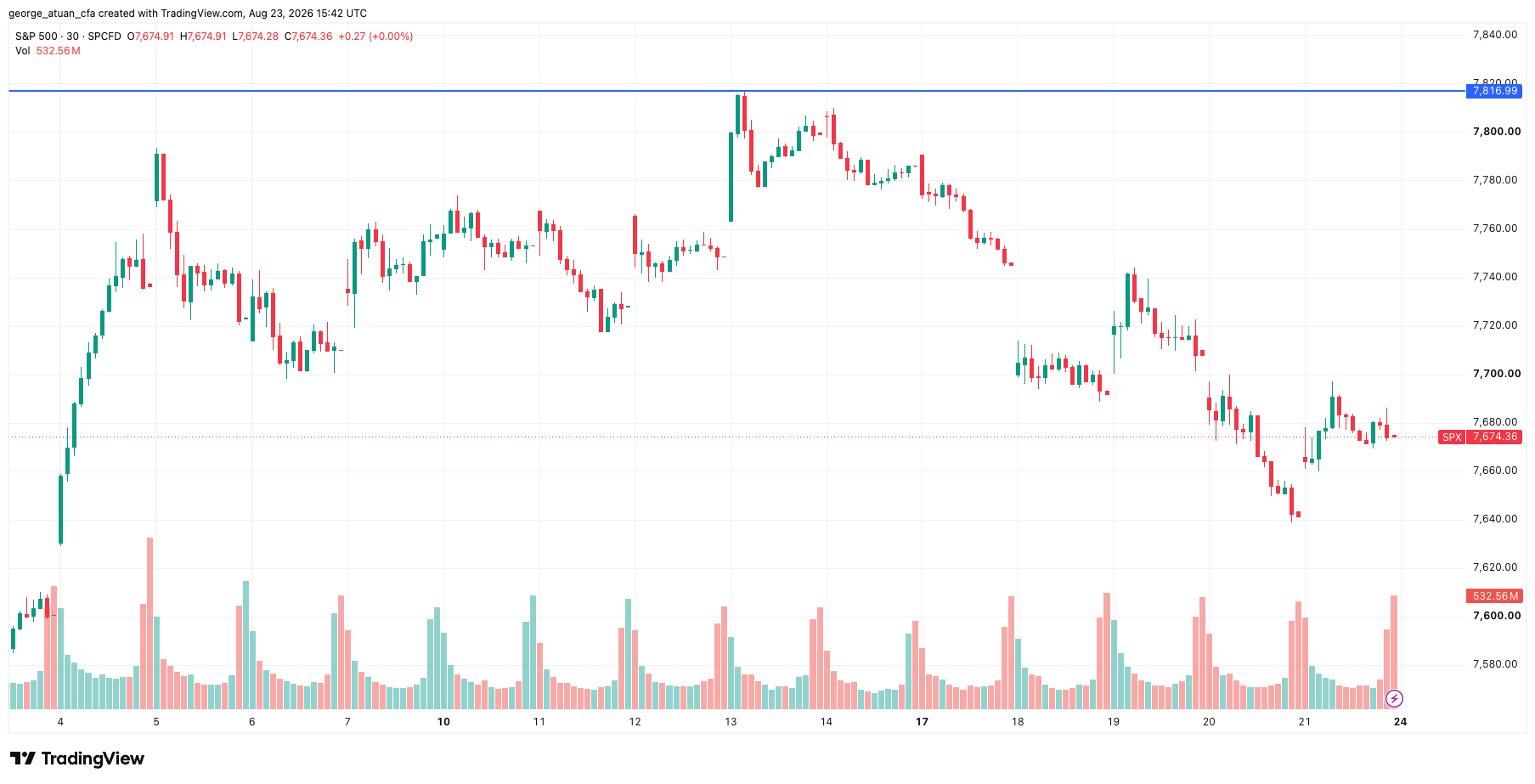
By the next session the whole move had retraced, with the long bond back at 5.24%. After the initial reaction of Mr. Market, it sat down to do the math and realized that $4B per operation against a $40T debt stock is a rounding error.
History agrees with the math. The closest precedent is Operation Twist in 1961, when the Fed and the Treasury together bought long bonds and sold bills to flatten the curve. I found a study of that episode (download the PDF on the site, it has lots of info): the entire program moved long-term yields by 15 basis points.
The flows never matter as much as the signal.
But the signal is real, and that is why the market named it a put. The administration told the world it will not tolerate a disorderly long end, and it showed willingness to grow the tool. For anyone betting on a yield spike, that changes the game: shorting the long bond now means fighting an opponent with a bill-issuance machine and no position limit. Yields can stay high, but the melt-up scenario got harder.
The Dollar Pays, Gold Collects
Capping yields only changes where the pressure exits. If bondholders cannot get paid through the yield, the adjustment moves to the currency. The dollar index fell to 98.556, a three-month low.
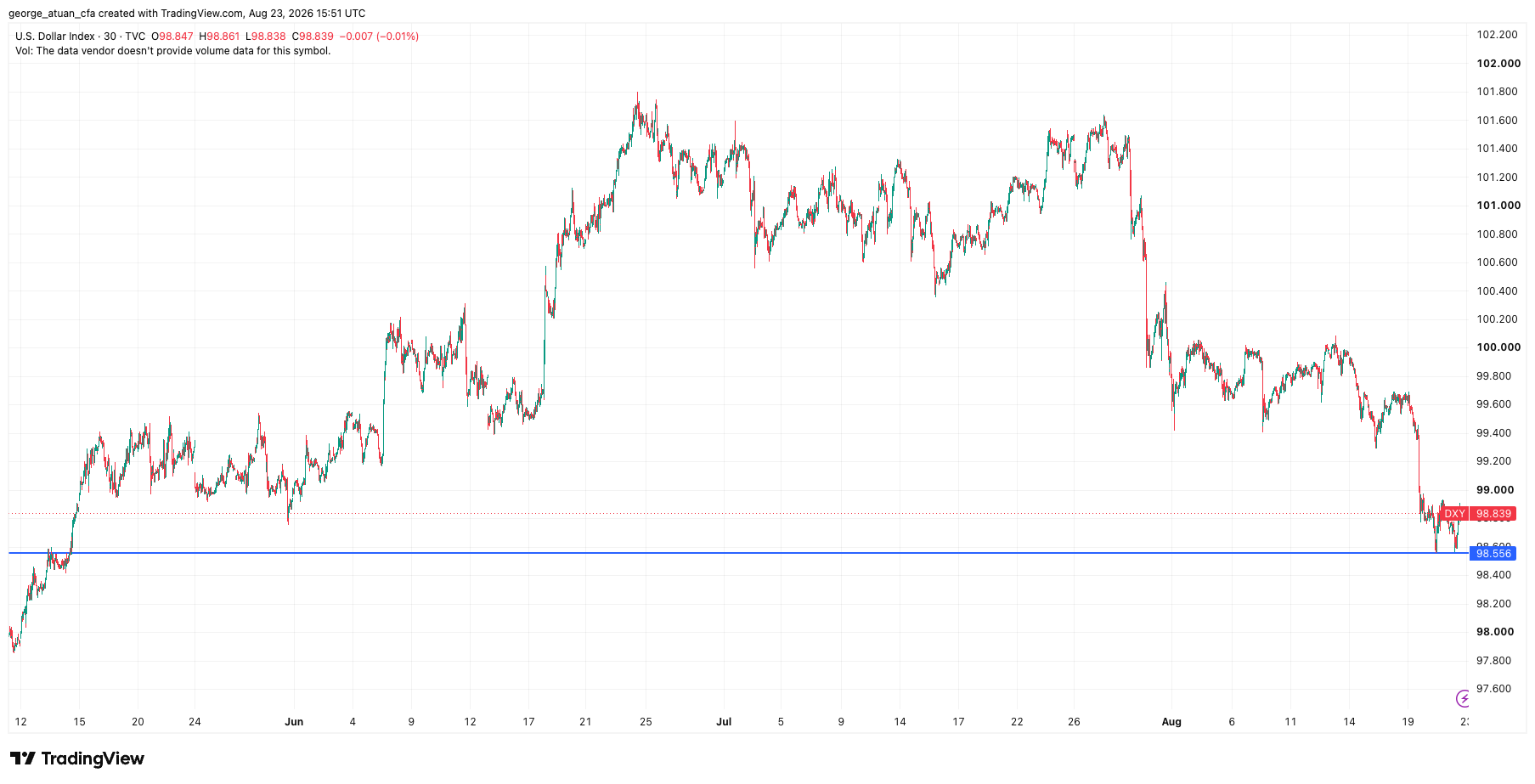
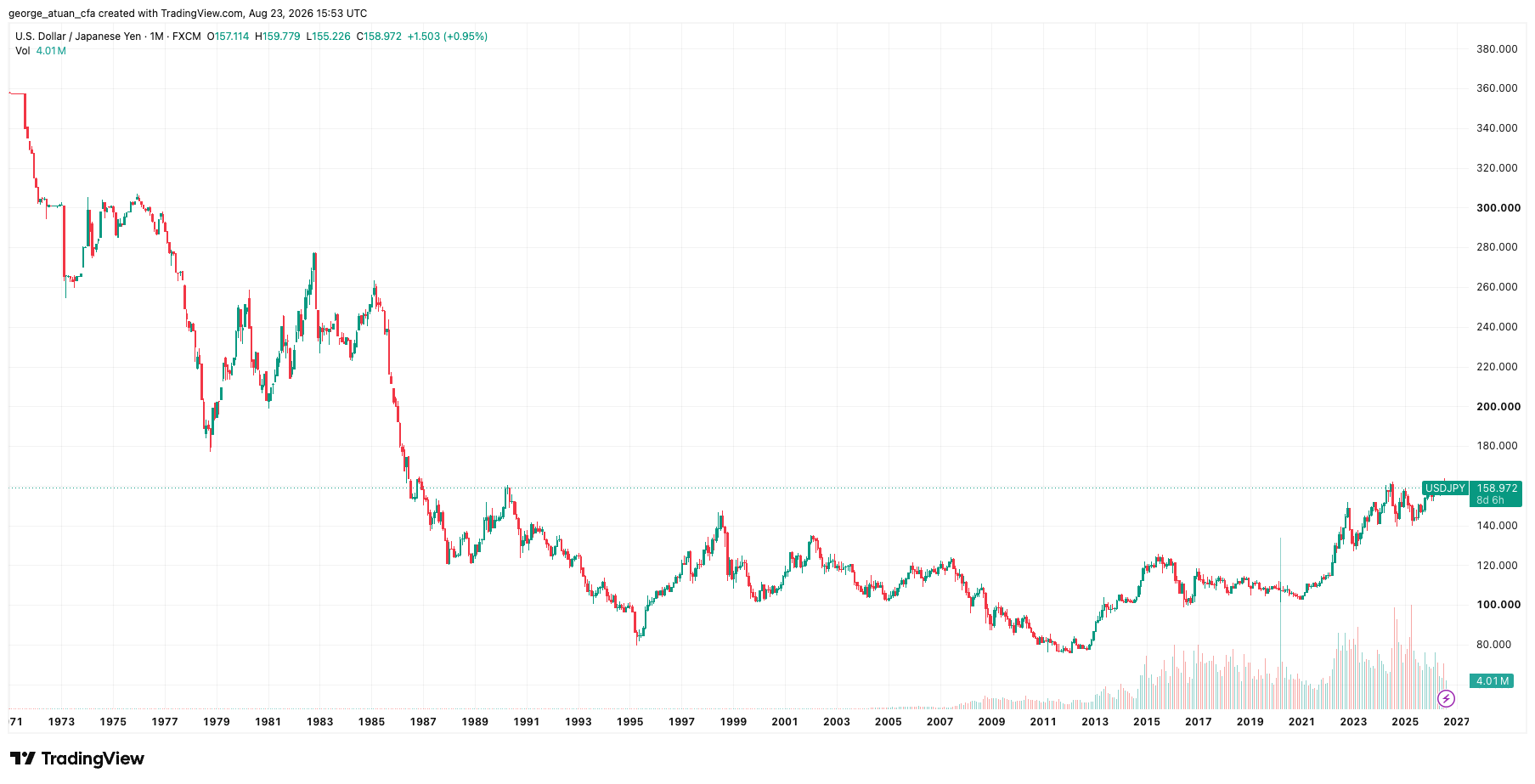
Strategists started using the phrase every emerging-market analyst knows: soft yield curve control. Every country that has tried yield curve control eventually paid for it through the currency, Japan being the polite version.
Gold understood immediately. It jumped 3%. The official line from the Treasury is still a strong dollar policy. The market is pricing a strong gold policy.
So, will the dollar be forced to absorb the punishment of a $40T debt? Over the coming months, I think the answer is mostly yes. The government has told you it will not let its borrowing costs rise naturally, and it has not yet shown a plan that shrinks borrowing. Until that second part changes (Monday may be the first attempt), the dollar is the release valve, and hard assets are the other side of that trade.
What It Does to Equity Valuations
In the short run, the put is a gift to equity multiples. The long Treasury yield is the bedrock discount rate for every asset, and a ceiling on it is a floor under valuations. Corporate borrowing keys off the same curve: investment-grade paper yields 5.41% at a spread of 0.82% over Treasuries, BBB coupons sit between 4% and the mid-5s, and BB-rated bonds pay near 6%. Lending to companies at that spread over a government running a $1.8T ten-month deficit is a thin reward, the market is reaching for income and trusting the Treasury to manage the sovereign curve. As long as that trust holds, risk assets float.
The long-run bill has three line items. The smallest is the policy premium: if buyers start doubting the predictability of US issuance, they will charge extra for that uncertainty, which defeats the original purpose. The middle one is inflation: tariffs and supply chains already keep it sticky above 2%, and a softer dollar imports more of it. The one that matters most is the Fed. A Treasury pressing long yields down while inflation stays sticky forces Warsh to hold policy tighter for longer, and higher-for-longer rates are gravity for every multiple in the market (I wrote about that force in Weekly #91).

So the equity premium compression you enjoy today is borrowed from tomorrow.
Our Positions
Now to our portfolio. The impact is uneven.
Coeur Mining [CDE 0.00%↑] is the position this entire episode was built for. The thesis (Weekly #75) was that seven mines producing gold and silver would re-rate as the market started paying for protection against exactly this: a government managing its own borrowing costs while the debt keeps growing. Gold above $4,500 does more for CDE’s cash flow than anything management could announce this quarter, and silver rides the same bid with more leverage.

Having said that, let me steel-man the other side: if Monday’s fiscal plan is credible, gold gives back part of this run and CDE goes with it. I would welcome that. The thesis never needed $4,500 gold, and a government that fixes its budget is better for every other position we own.
The AI names (Micron [MU 0.00%↑], TSMC [TSM 0.00%↑], Dell [DELL 0.00%↑], and Celestica [CLS 0.00%↑]) connect to this story through the debt market’s plumbing. Hyperscalers now account for 40% of long-duration investment-grade issuance, and Alphabet and Meta have halved their liquid asset pools to fund datacenters. The AI buildout is being financed in exactly the maturities the Treasury is now supporting, so a ceiling on long yields is a quiet subsidy to our companies’ biggest customers. The risk cuts the same way: if yields break through the ceiling despite the buybacks, capex budgets are the first thing trimmed, and our names would feel it before the hyperscalers do. The demand chain I laid out in Weekly #87 is intact, this is a financing watch item, no more than that... for now.

The grid and infrastructure names (Powell [POWL 0.00%↑], Sterling [STRL 0.00%↑], and the hidden infrastructure winner from the Q2 update) get two opposite pushes. Their projects are financed at long rates, so a ceiling helps backlogs convert into contracts. But Monday’s plan is expected to include a hard review of federal spending, and anything paid with government checks now carries a question mark. POWL and STRL live mostly on private datacenter and energy capex; the exposure sits with the civil work, and I will read the plan with that position in mind.
Rayonier Advanced Materials [RYAM 0.00%↑] is my tariff watch. Part of the fiscal package is the reconstitution of the import duty programs the Supreme Court struck down, and that puts the 50% Section 338 scenario back on the table, the landmine I flagged in Weekly #95. Nothing has happened yet. If the revived program touches RYAM’s lanes, my numbers move down.

The June pick, the boring middleman that prints when markets panic, is quietly the purest winner here: rate volatility, FX swings, and a running gold market are its raw material. Nothing changes for DXPE 0.00%↑, Stride [LRN 0.00%↑], or the July pick; those are domestic margin stories that do not care where the dollar index trades.

Why I Keep Diversifying Away From the US
Last week is one more data point in a view I have held for a while: I am bearish on the US over the long term. The debt is $40T and growing, the interest bill is approaching a trillion dollars a year, and the government just showed it will manage its own borrowing costs rather than shrink them. I still think the US hosts the best companies in the world. I just no longer want all my eggs in one currency and one political system.
So I have been diversifying geographically, gradually. The first tool was ADRs, and it has not been sufficient: the AXIA delisting forced me out of a position I liked because most subscribers could not follow the shares onto the local exchange. The next step is buying directly on local exchanges, as I discussed in Weekly #94.

The poll results made the case for me: half of you have already traded outside the US, and only 18% have no interest in doing so.
I will do it through Interactive Brokers, the best and cheapest platform I know. If you do not have an account and want one, use my referral code 🙂 (and earn up to $1000 of IBKR Stock for free).
Verdict
No trades from me on this. The buyback buys time, and time is all it buys: you cannot repurchase your way out of a deficit; you can only choose who pays, and this round the dollar paid. I am watching three dates: Monday, August 24, when Bessent and Russ Vought present the fiscal consolidation plan (the real event, everything above is prologue); September 9, when the first $4B operation runs; and November 4, when the program ends and we learn whether the Treasury extends it. Whatever those dates bring, they do not change the direction: the debt math above is exactly why I keep moving money out of the US.
Portfolio Update
The portfolio fell 4.35% last week against 1.43% for the S&P 500. We were up 1.23% on Monday while the index was down, then gave it all back through Thursday’s low, and Friday clawed back almost a full point.
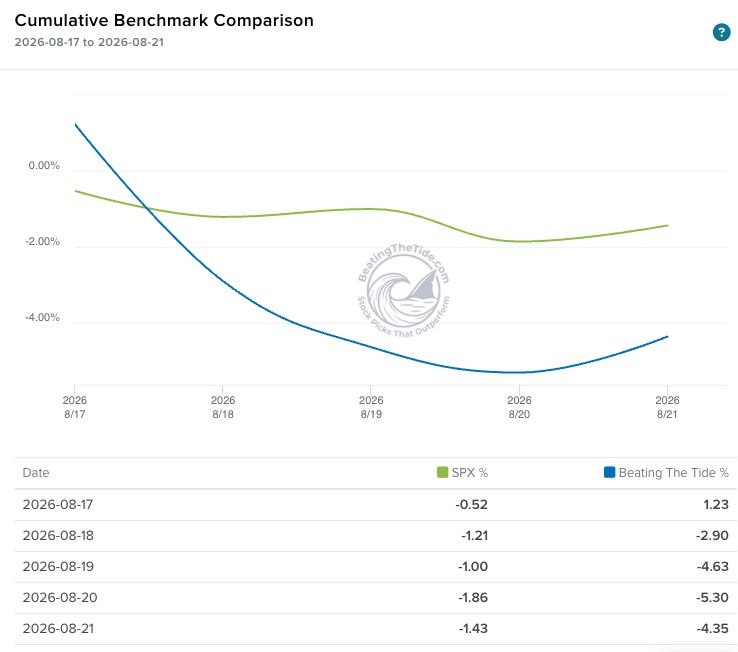
Portfolio Return
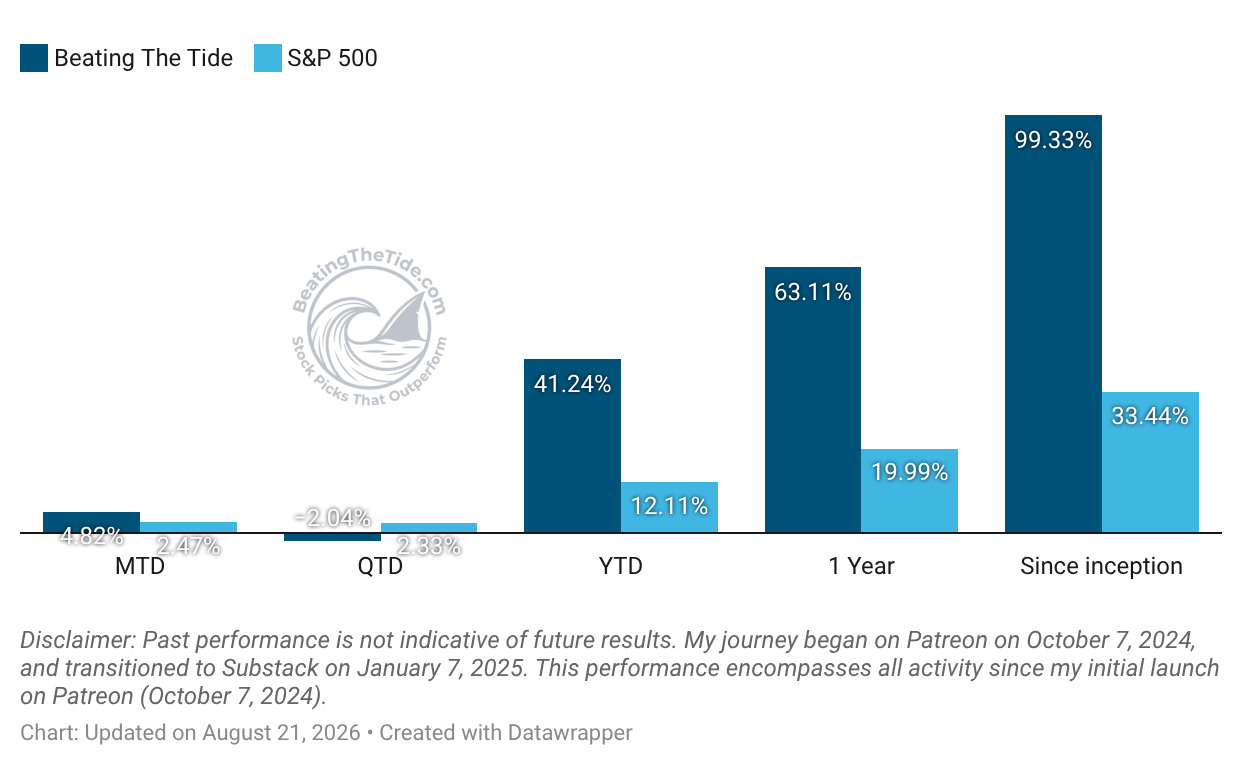
Month-to-date: +4.8% vs. the S&P 500’s +2.5%.
Year-to-date: +41.2% vs. the S&P 500’s +12.1%. That is a gap of 2,913 basis points.
Since inception: +99.3% vs. the S&P 500’s +33.4%. That’s 3.0x the market.
Contribution by Sector

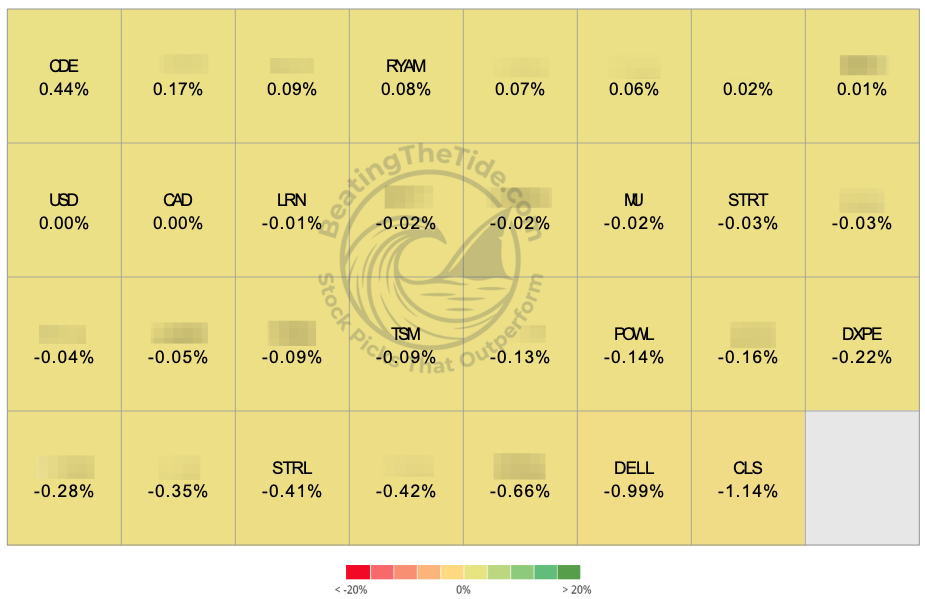
Technology did most of the damage and industrials the rest, with energy a smaller drag. Basic materials was the only sector that added anything, and that is the gold bid at work through CDE.
Contribution by Position
How to read the heat map? Click here.
That’s it for this week.
Stay calm. Stay focused. And remember to stay sharp, fellow Sharks!
Weekly 100 couls be a good time to announce the (re)launch of your book(s) 😄
Weekly 100 thought of the week: the durability of different investment styles and methods. What is timeless, what is not.