


I just closed my position in GAP.

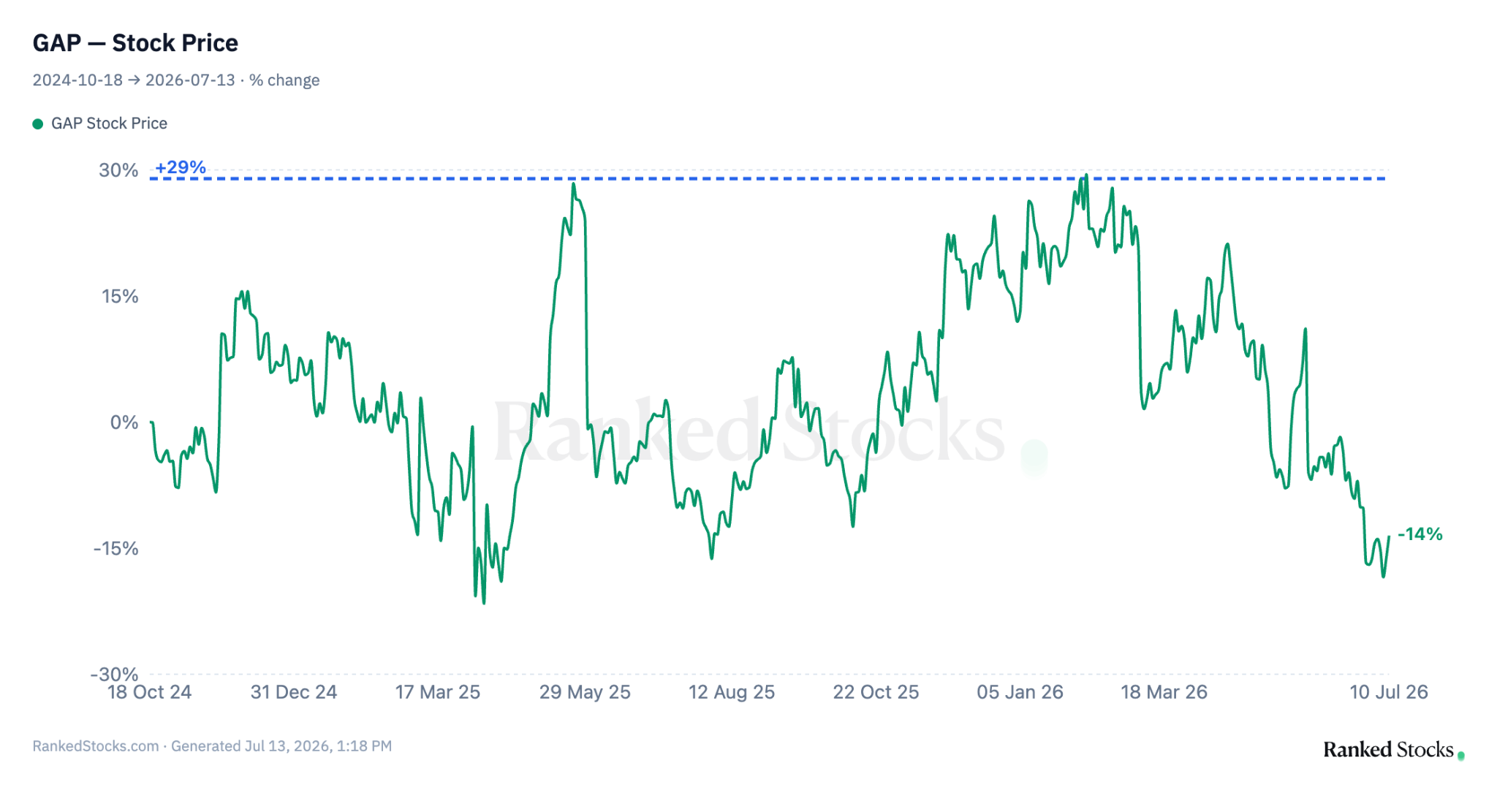
I’m down 12% on GAP [GAP 0.00%↑].

That small loss in not the real problem and if I hold the position…eventually…it will show a +50% gain. But the reality is that it has gone nowhere while the rest of the book has worked.
Yes, GAP is cheap, not just optically cheap. My base case says it is worth about $30 against a price under $20, and even my bear case barely loses money.
So why am I selling it?
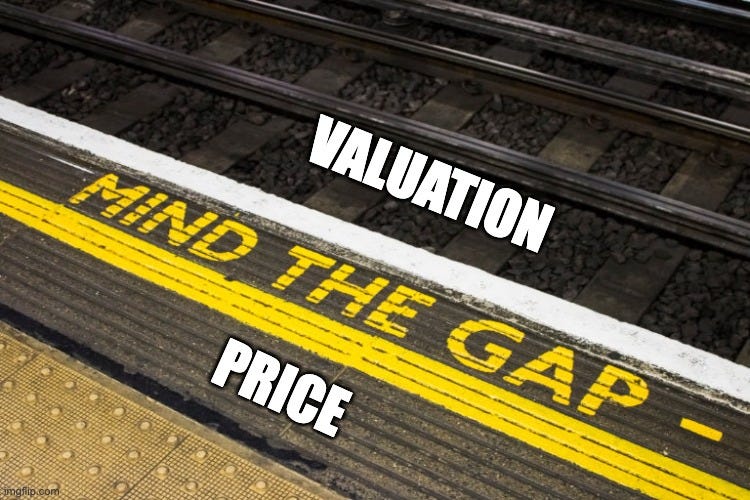
Because cheap and going up are two different things. GAP is a good business with nothing to close the gap between what it is worth and what it trades for. The risk here isn’t losing money. It is sitting in dead money for two years while better ideas compound. In other words, the gap between price and valuation in the top image is the lack of catalysts.
This came out of a portfolio review. I’m hunting for cash to fund new positions, so I’m asking what to let go. GAP made the list, not because it is broken, but because I just don’t see anything happening here any time soon.
TLDR
The trigger: a portfolio review. I’m freeing up cash, and GAP is the one holding where I went looking for a catalyst and found nothing.
The scorecard: of the five reasons I owned it, two still hold, one is fading, two are stuck. The value is real. The growth and the re-rating aren’t.
The one change that matters: they raised EPS and cut the sales guide in the same breath. The raise came from tax, interest income and buybacks, not the business.
Valuation: base case $29.95 (+51%), bear $13.94 (-32%), bull $47.74 (+144%). Risk/reward is a healthy 1 to 1.6.
Verdict: sell and redeploy. Nothing is broken. There is just no catalyst to turn a cheap stock into a rising one, and the cash works harder elsewhere.
What this update covers
Ranked Stocks
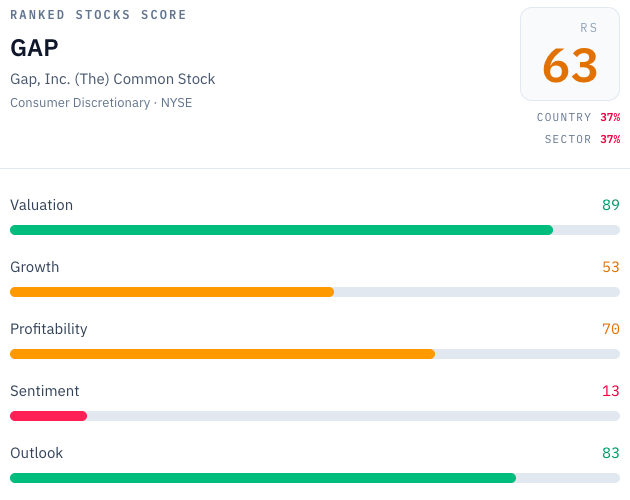
GAP scores 63 out of 100 on RankedStocks, top third of the market and 37th percentile of its sector. The shape tells the story. Valuation 89 and Outlook 83 are near the top, because it is cheap with a decent setup. Profitability is 70, Growth a soft 53. And Sentiment? 13. Basically the floor.
Cheap, fine on the numbers, and totally unloved.
Thesis scorecard after Q1 FY2026
Pillar #1. Deep value with a floor under it: Confirmed
Original thesis: GAP was priced for a decline it wasn’t actually having. Net cash, real FCF, a single-digit multiple, four brands almost everyone knows.
What happened since: FY2025 did $15.4B in sales (+2%), a 40.8% gross margin, 7.3% operating margin, $816M net income, $2.13 EPS. As of Q1 2026, it holds $2.6B of cash (30% of its market cap). Even my bear case, margins gutted and no growth, values the stock near $14. The base is $30.
Assessment: Confirmed. The floor is real and it is made of cash. It is also why GAP is so hard to lose money in.
Pillar #2. The Dickson turnaround is real: Confirmed, normalizing
Original thesis: Richard Dickson, CEO since 2023, would make four tired brands relevant again with better product, sharper marketing and tighter costs.
Evolution: through 2025 this was the best leg of the thesis. Comps turned positive across Old Navy, Gap and Banana Republic, brand by brand.
What happened since: Q1 was the ninth straight quarter of positive comps (+2%). The Gap brand did +10%, one of its best prints in twenty years. Banana Republic put up its fourth positive quarter in a row.
Assessment: Confirmed, but normalizing. The turnaround worked. The catch is it has mostly already worked, and nobody paid up for it. A turnaround that is 80% done isn’t a catalyst any more.
Pillar #3. Margins climb toward the 10% goal: Challenged
Original thesis: cost cuts and more full-price selling would push operating margin from mid-single digits toward management’s 10% target.
What happened since: Q1 adjusted operating margin dropped 230bps to 5.2% on tariffs and investment, and gross margin slipped to 40.5%. Management held the full-year margin guide at 7.3% to 7.5%, right where FY2025 landed. My model caps it at 7.5% to 8%, nowhere near 10%.
Assessment: Challenged. Margins are stable, not climbing. The 10% goal is a stretch I won’t underwrite, and flat margins on flat sales don’t re-rate anything.
Pillar #4. Old Navy carries the company: Evolving
Original thesis: Old Navy, 56% of sales and the biggest apparel brand in the US, is both the profit engine and the growth story.
What happened since: it comped just +1% in Q1, dragged by weak women’s dresses even as denim, active and kids sold. I see about 2% comps long term and maybe 200 net new stores in a whole decade.
Assessment: Evolving toward challenged. Old Navy is fine. Fine doesn’t move a $7B company. When your biggest brand grows 1% to 2%, the whole thing grows 1% to 2%.
Pillar #5. Cheap enough to re-rate: Challenged
Original thesis: at well under 10x earnings and a fraction of intrinsic value, the discount would close.
What happened since: it hasn’t, and it hasn’t for years. GAP trades at roughly 7x trailing and 9x forward earnings, and 5.7x EV/EBITDA, the lowest in its group.
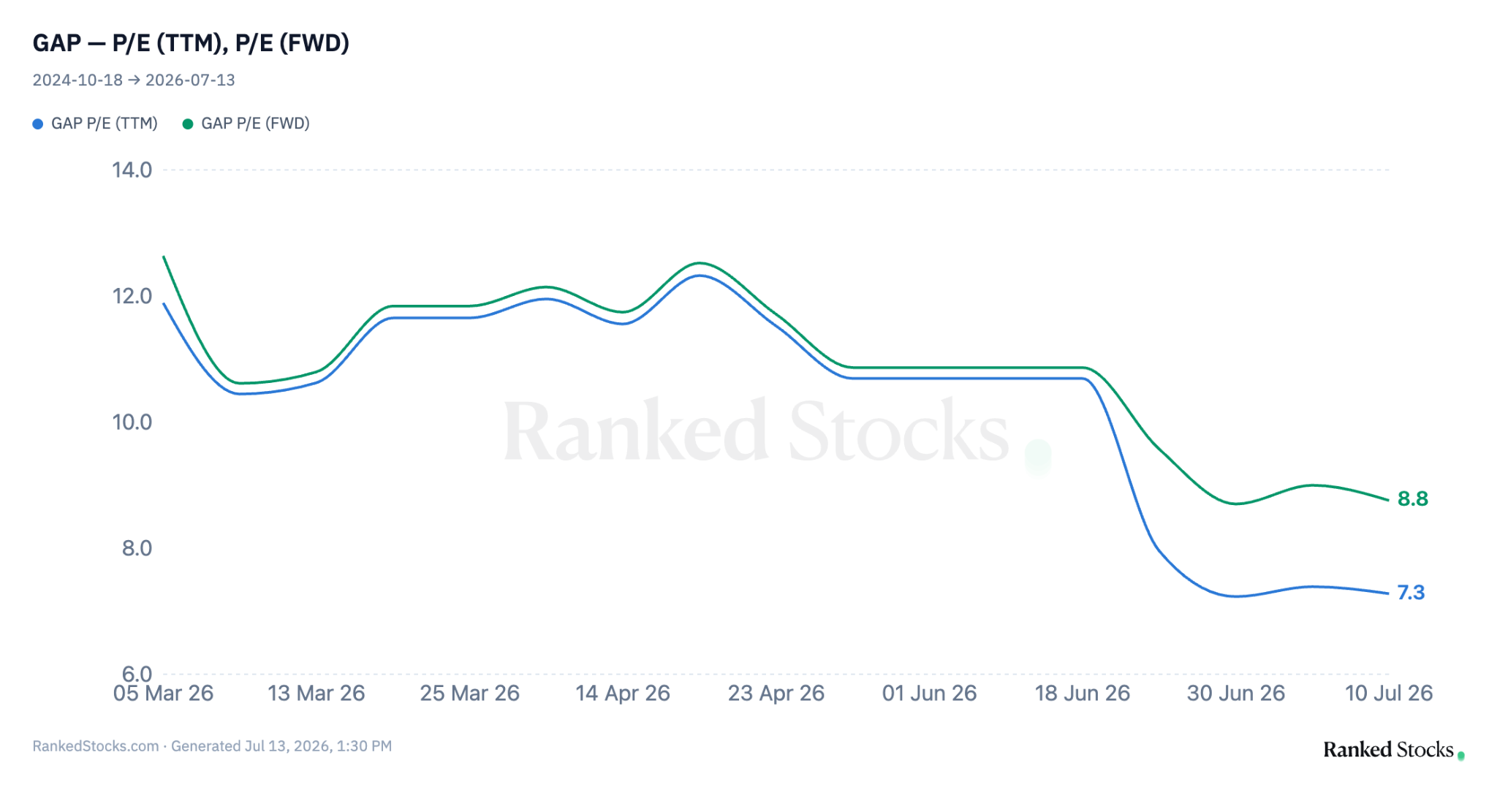
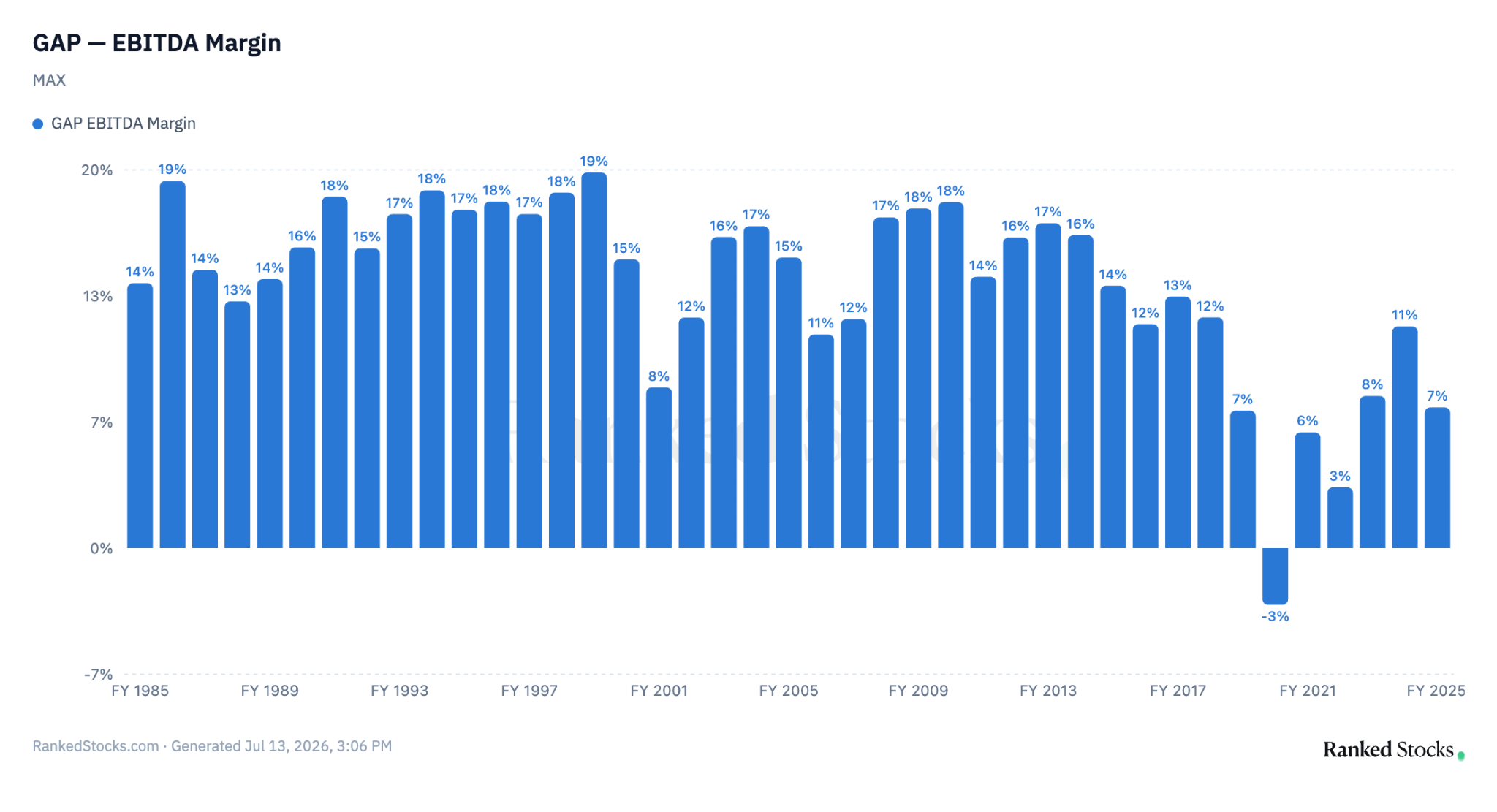
Looks like a screaming mispricing. It isn’t. GAP’s EBITDA margin has bled from the high teens in the 1990s and 2000s to about 7% today. The reasons are structural: gross margin fell from the mid-40s to around 40% as the brands lost pricing power (check out my Weekly on Brand Investing), and costs climbed from the mid-20s to 33.5% of sales as competition, online fulfilment and weaker stores piled on. A 7% margin is worth fewer turns of EBITDA than a 14% one.
Line GAP up against its peers and it is almost mechanical. Ross and TJX run 14% to 16% margins and trade near 19x to 20x. Urban Outfitters and American Eagle sit in the middle on both. GAP is stuck in the bottom-left corner, 7% margin and 5x, right on the same line as everyone else (R-squared 0.87). The market isn’t mispricing GAP. It is pricing it exactly where a low-margin retailer belongs.
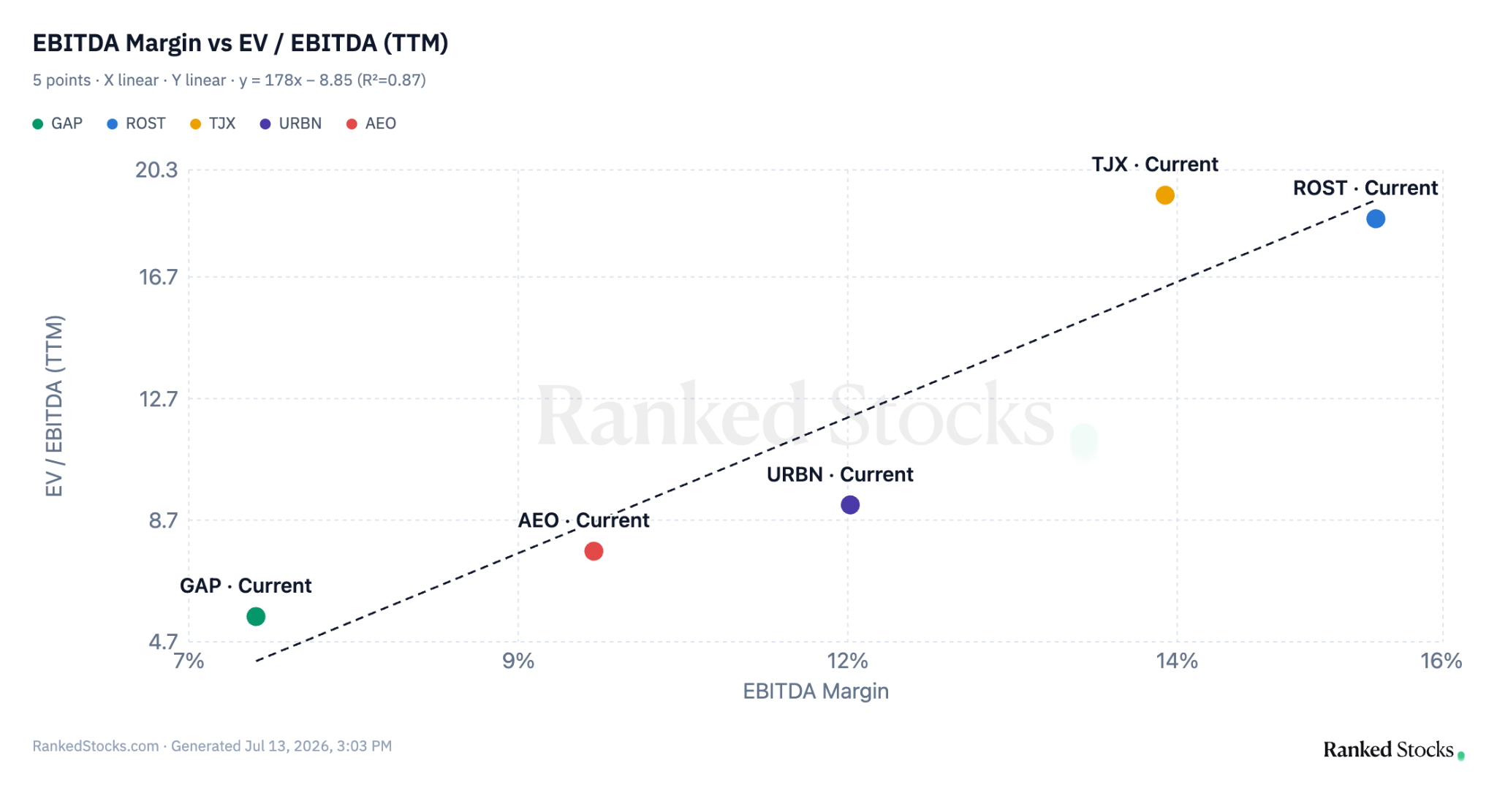
The cheap multiple is an honest read on the margin, not a gift.
Assessment: Challenged, and this is the crux. My base case says $30, so the upside is real on paper. But stocks re-rate when the margin or the growth turns, and GAP is flat on both. Cheap is the right price for a business the market has decided can’t grow into a better margin.
Q1 FY2026 in one read
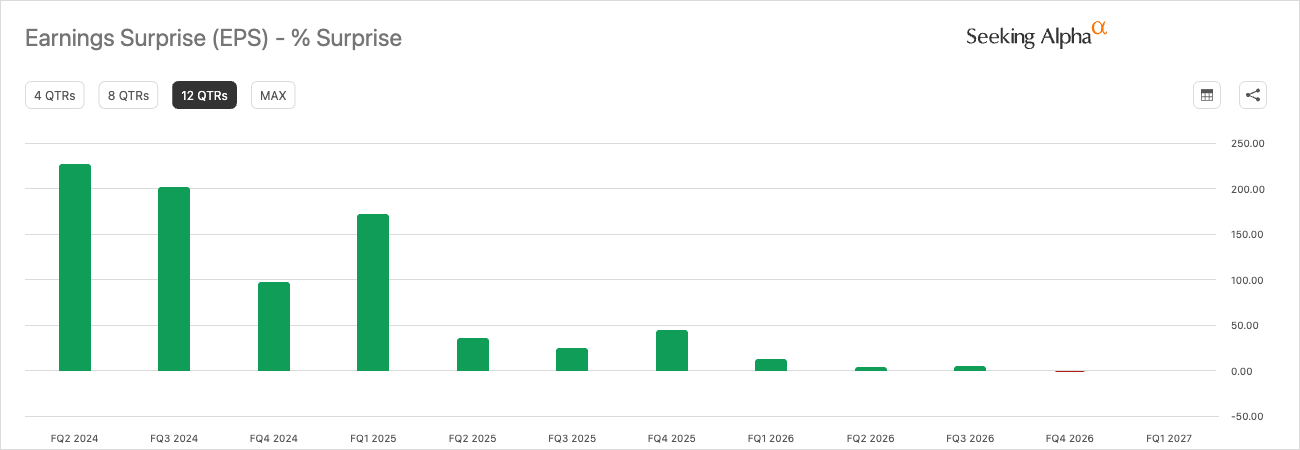
The quarter was a small operational step back dressed up as an EPS raise. Sales of $3.5B rose 1%, comps were +2%, the ninth straight positive quarter. Adjusted EPS of $0.38 met consensus. GAAP EPS was $0.90, but $313M of that was a one-off legal settlement, so the clean number is $0.38. I read it as in line, not a beat.

The brand split is the story under the headline. The Gap brand comped +10% on denim, fleece and kids. Banana Republic did +2%, its fourth positive quarter. Old Navy, 56% of sales, managed only +1% as weak women’s dresses cancelled out wins elsewhere. Athleta comped -11% and is still being rebuilt, with the new assortment landing in the back half. So the engine idled while the brand that is meant to be the kicker kept shrinking.
Margins went backwards, as management flagged they would. Gross margin of 40.5% fell 130bps on about 200bps of tariff drag, and still beat guidance. Adjusted operating margin slid 230bps to 5.2% on tariffs and investment. Not alarming. Just not a business breaking out.
Capital return did the heavy lifting. GAP handed back $464M, $401M in buybacks and $63M in dividends, with $599M left on the authorization. That same $313M settlement that flattered EPS also helped pay for the buybacks. The dividend is $0.175 a quarter and well covered.
The guidance tells the real story
![Gap [GAP] FY2026 outlook table, current versus prior versus FY2025 actuals, showing raised EPS but cut sales growth.](https://substackcdn.com/image/fetch/$s_!zh0R!,w_1456,c_limit,f_webp,q_auto:good,fl_progressive:steep/https%3A%2F%2Fsubstack-post-media.s3.amazonaws.com%2Fpublic%2Fimages%2Fee983b39-eac2-4129-978b-af419e8e2ab6_587x169.png "Gap [GAP] FY2026 outlook table, current versus prior versus FY2025 actuals, showing raised EPS but cut sales growth.")
The EPS went up while the business guide went down. They lifted adjusted EPS to $2.30 to $2.40 and, in the same release, cut sales growth to 1% to 2% from 2% to 3%. The margin guide didn’t move. So where did the extra EPS come from? A lower tax rate (about 25% from 27%), more interest income on the cash (about $25M), and fewer shares from buybacks. Every dollar of it sits below the operating line. Meanwhile capex jumps to about $650M from $470M, which keeps FCF in check this year.
On credibility, the team has earned some trust. Dickson and the CFO have hit their numbers at least for the last 12 quarters, so I take the guide at face value. That is the problem. When you trust the guide and the guide is flat, you are underwriting flat.
What Gap is worth: base, bear and bull
I ran all three on my new DCF calculator on RankedStocks.com, free for you to use. The assumptions come straight from GAP’s own history and guidance: low-single-digit growth, a gross margin near 40.5%, an operating margin that tops out around 8%. Every input has a note in the model; the summary is below.
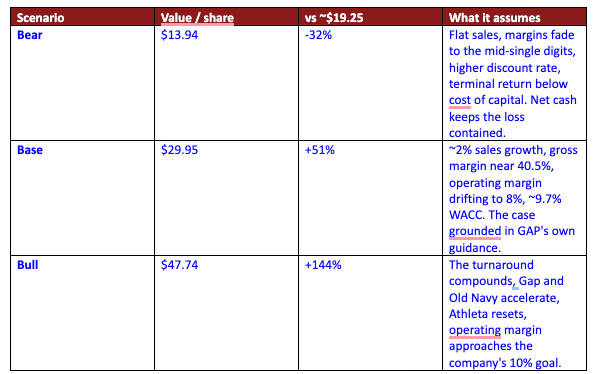
The implied-expectations read is where it gets interesting. At about $20 the market sits between my bear and my base, closer to bear. It is pricing a business that never grows and never expands margins, basically permanent decline, which the last nine quarters argue against. That gap is the bull case.
The risk/reward is okay. About $10 of upside to base against $6 of downside to bear, roughly 1 to 1.6, and the probability-weighted average is around $30. Fine, but short of the 1 to 2 I want before I open a position. So even as a fresh idea, GAP wouldn’t clear my bar.
Odds are that a few years out, GAP will be trading near $30, about 50% above today's price. Get there in a year and that is a 50% return. Three years, it is 14.5% a year. Five years, 8.5%, which is index-fund territory for single-stock risk. The value is real. The timing is everything, and nothing I can see points to the fast end.
Which brings us to the only question that matters.
So why sell? The missing catalyst
Everything above says cheap. None of it says what makes the stock move in the next year or two. A discount closes when something forces the market to re-underwrite the earnings. I went looking for that something. I can’t find it.
Growth is capped by design. My model caps sales growth near 2% and operating margin at 7.5% to 8%, and the EBITDA-margin chart above shows why: it has been grinding down for twenty years. No moat, four brands in the most brutal corner of retail, an Old Navy store count that barely moves. Nothing here inflects.
The obvious re-rating events are dead or distant. The Old Navy spin-off that might have unlocked value was scrapped years ago. Management won’t do deals after a run of bad ones. Athleta, the one brand with real upside, is a 2027 story at best, and its new range doesn’t even hit shelves until the back half. Tariffs are a swing factor, but a resolved tariff is just relief, not growth.
The buyback supports the price but doesn’t re-rate it. GAP can buy back billions over the next decade out of FCF, which puts a floor under the shares. It is not a spark, and the company has a habit of buying higher than today.
The market has already seen the good news. Nine positive comps, a +10% Gap quarter, stable margins, all public, and it still trades at 7x earnings. When a business does everything right for two years and the multiple won’t budge, the multiple is telling you something. GAP has been stuck in single digits for years.
Add it up: a cheap, safe, well-run stock with no engine. The downside is protected, but so is the upside, by a lack of a catalyst. I can be right on value and still make nothing for two years.
Risks to the redeploy call
Selling something cheap has its own risks. Here is the honest register, including the case against me.
Materialized: the sales slowdown I worried about showed up. The full-year guide got cut to 1% to 2%, and Q2 is guided flat to down 1%.
Faded: balance-sheet risk. Net cash, nothing due until 2029, a covered dividend, rising interest income. Not a stressed company, which is exactly why the downside is shallow.
Unchanged: tariffs. Still a swing factor on gross margin, now softened by a new 10% Section 122 assumption worth about $80M, or 50bps, this year.
New risk, and it’s mine: I am selling at about two-thirds of what I think it is worth. If a catalyst I can’t see shows up, an activist, a buyer, an Athleta reset that actually works, or the market just deciding to close the gap, I hand back +51% to base. That is the real cost, and I am making the call with eyes open. The bet is that clearer stories deliver that +51% with a lot less waiting.
Performance versus the sector
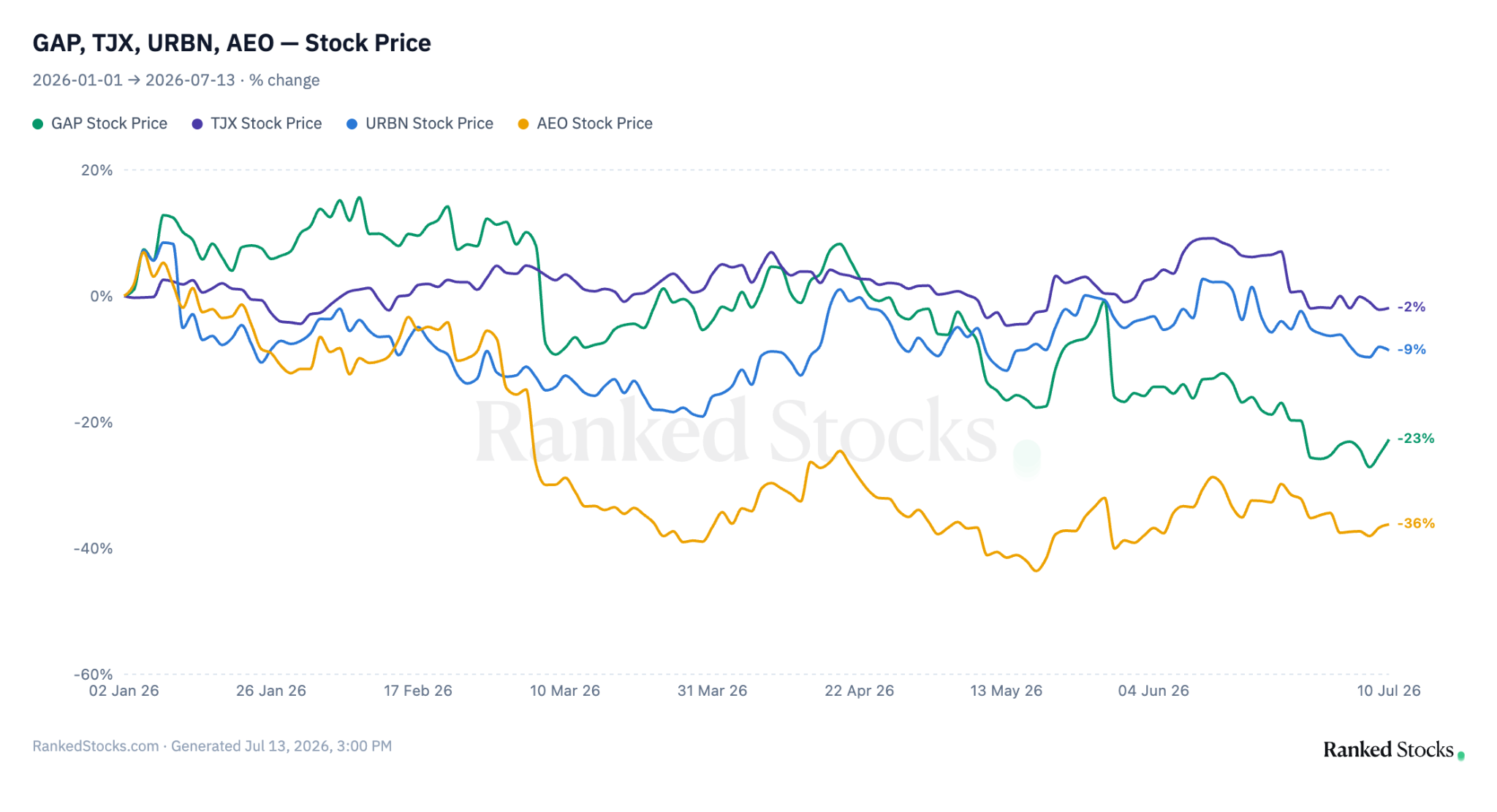
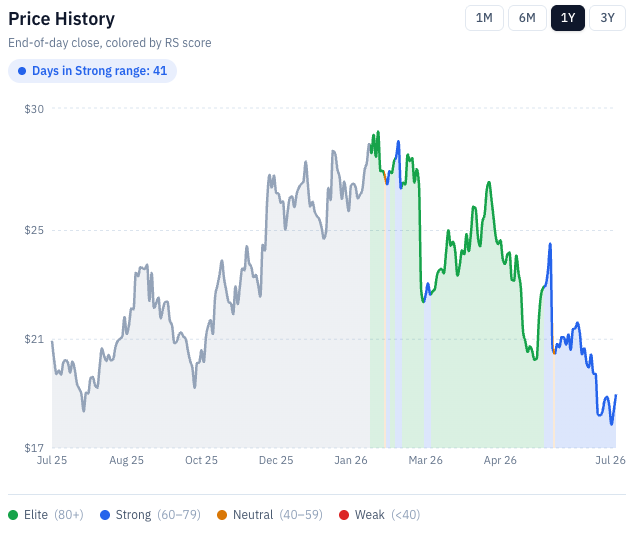
Since I bought it, GAP has drifted down. It is off 23% year to date, worse than TJX [TJX 0.00%↑] at -2% and Urban Outfitters [URBN 0.00%↑] at -9%, though not as bad as American Eagle [AEO 0.00%↑] at -36%. Same margin story: TJX, the highest-margin name, holds up best; the low-margin turnarounds take the beating. The market is paying for durable margins and punishing everything else, and GAP is on the wrong side of it.
Verdict
I’m closing GAP. It is worth about $30 and trades under $20, and I still can’t tell you what moves it there inside two years.